Key Points
-
Eli Lilly is the leader in the GLP-1 weight-loss space, with Novo Nordisk working hard to regain lost market share.
-
Pfizer had to drop its GLP-1 drug candidate, but quickly pivoted by acquiring a new GLP-1 drug still in development.
-
Pfizer’s pipeline is getting closer to producing an approved GLP-1 weight-loss product.
-
Eli Lilly (NYSE: LLY) is much loved on Wall Street because of its highly successful GLP-1 weight-loss business. Novo Nordisk (NYSE: NVO) is much less appreciated because it lost the GLP-1 lead to Eli Lilly. But they aren’t the only companies competing in this still-developing drug category. Pfizer (NYSE: PFE), which is deeply out of favor among investors, could be a surprise contender as it advances its GLP-1 drugs through the approval process. Here’s what you need to know.
Pfizer flubbed it worse than Novo Nordisk
Eli Lilly’s stock is up more than 420% over the past five years, as of this writing. While it was second to market with a GLP-1 weight-loss drug, it quickly overtook Novo Nordisk’s lead. Being passed by Eli Lilly hasn’t gone over well with investors, which is why Novo Nordisk’s stock is down 27% over the past five years. However, Novo Nordisk’s GLP-1 pill has been performing well, so there’s still hope for the business.
Missed AI’s “Act 1”? Act 2 Could Be 15x Bigger. Most investors think they missed the AI boat because they didn’t buy Nvidia in 2005. But according to our analysts, we’re only at the end of “Act 1″—the R&D phase. “Act 2” is the global rollout. Continue »
Left out in the cold has been Pfizer. Despite being a highly respected pharmaceutical company, Pfizer’s stock is down nearly 30% over the past five years. A big part of the problem is that Pfizer’s internally developed GLP-1 drug was dropped, which was a huge black eye for the company. Investors may be taking too dim a view of the future here.
Competition in the healthcare sector is intense, and innovation doesn’t always work out as hoped. Well-run companies know how to deal with both issues. This is why it is important to note that Pfizer quickly turned around and acquired a company with an attractive GLP-1 drug still in development.
Pfizer is moving closer to an approved GLP-1 product
Buying a drug that’s still in development isn’t a guarantee of success. So the company still has a lot of work to do, but it is work that Pfizer knows well. The company now has multiple clinical trials going on in the weight-loss space. The key to Pfizer’s approach is convenience.
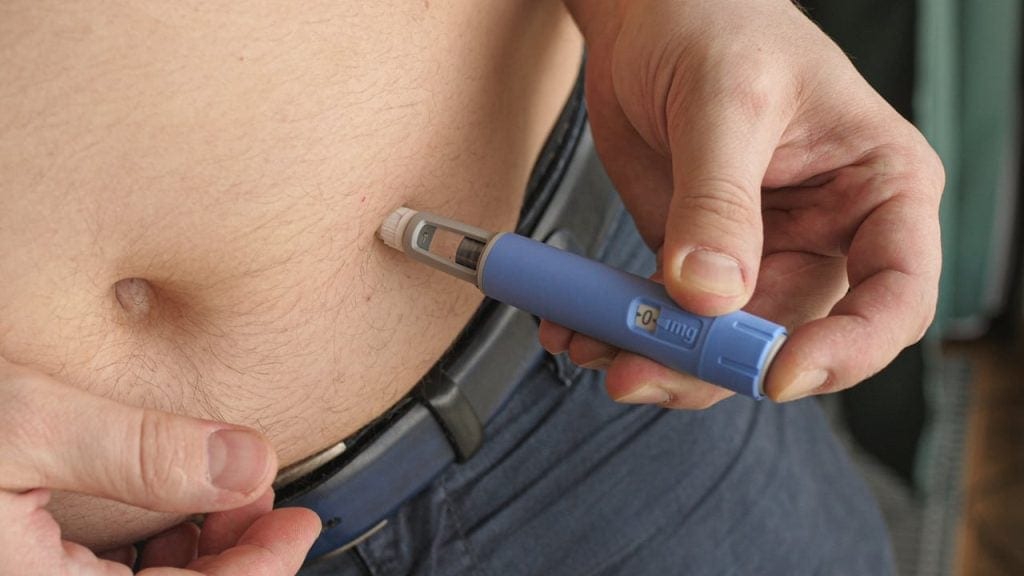
Currently, Novo Nordisk and Eli Lilly GLP-1 weight-loss drugs are taken either weekly by injection or daily by pill. Pfizer is looking to offer patients a monthly shot option. In recent trials, Pfizer’s GLP-1 drug helped to reduce weight by 12% even after shifting to monthly shots. Patients don’t like taking shots, so selling a GLP-1 shot with a monthly cadence may be highly desirable. Once-a-month dosing may even beat daily pills, since it means remembering to take medicine far less often. The power of convenience can’t be overstated.
All in, Pfizer has 10 late-stage trials in its weight-loss portfolio. Each of those trials will help bring it closer to having an approved GLP-1 product to sell. But the real investment story here isn’t the trials; it’s that Wall Street appears to have written Pfizer off as an also-ran. That’s particularly notable for dividend investors, given the stock’s lofty 5.5% yield. The average pharma stock yields 1.3%, while Eli Lilly’s yield is even lower at 0.5%. Novo Nordisk’s yield is roughly 4.4%, which is attractive but not as high as Pfizer’s.
Pfizer is standing by its dividend and working on the pipeline
Maintaining and growing the dividend over time are key priorities for Pfizer. While it is working from behind right now, the company’s long history of success in the drug space suggests it will eventually turn things around. And the late-stage GLP-1 trials it has underway strongly suggest that the inflection point could be closer than Wall Street currently believes. If you are a long-term dividend investor, now could be a good time to get to know Pfizer. The yield may not be as attractive if you wait until the company actually enters the GLP-1 race with an approved product.
Should you buy stock in Pfizer right now?
Before you buy stock in Pfizer, consider this:
The Motley Fool Stock Advisor analyst team just identified what they believe are the 10 best stocks for investors to buy now… and Pfizer wasn’t one of them. The 10 stocks that made the cut could produce monster returns in the coming years.
Consider when Netflix made this list on December 17, 2004… if you invested $1,000 at the time of our recommendation, you’d have $341,966!* Or when Nvidia made this list on April 15, 2005… if you invested $1,000 at the time of our recommendation, you’d have $1,146,819!*
Now, it’s worth noting Stock Advisor’s total average return is 852% — a market-crushing outperformance compared to 203% for the S&P 500. Don’t miss the latest top 10 list, available with Stock Advisor, and join an investing community built by individual investors for individual investors.
See the 10 stocks »
*Stock Advisor returns as of November 7, 2026.
Reuben Gregg Brewer has no position in any of the stocks mentioned. The Motley Fool has positions in and recommends Eli Lilly, Novo Nordisk, and Pfizer. The Motley Fool has a disclosure policy.