Over the long haul, the U.S. stock market has been one of the greatest wealth creation machines in history. And the rise of generative artificial intelligence (AI) has recently taken things into overdrive, with the benchmark S&P 500 (SNPINDEX: ^GSPC) soaring 115% since the release of OpenAI’s ChatGPT in late 2022. The tech-heavy Nasdaq Composite (NASDAQINDEX: ^IXIC) has performed even better, rising 150%.
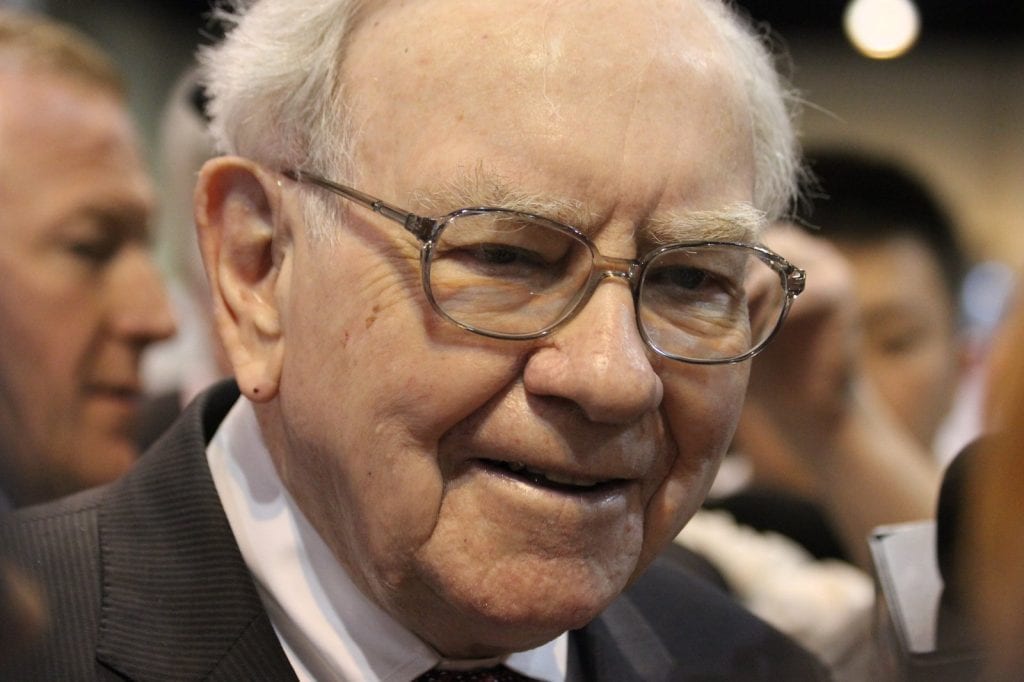
But roller-coaster rides are just as scary as they are exhilarating. And the previous decades of financial history show that severe drawdowns have often followed similar periods of explosive equity growth. No one knows this better than investing legend Warren Buffett.
Missed Nvidia in 2009? This Rare Signal Is Flashing Again. In 2009, a “Double Down” signal flashed for a little-known chipmaker called Nvidia. For the first time in years, that same “Total Conviction” signal is flashing for a company 1/100th the size of Nvidia. Continue »
Let’s explore what could happen next in the stock market, using Buffett’s advice as a guide on what investors should do to stay ahead.
Stocks are pricey
There are many methods investors use to gauge how expensive stocks are relative to other periods in history. But the cyclically adjusted price-to-earnings (CAPE) ratio is one of the most useful, as it accounts for inflation and the business cycle to reduce the impact of short-term fluctuations in corporate earnings.
Right now, the S&P 500 trades at a CAPE ratio of 40.1, well above its historic average of 17.4. This is important because the metric has only spiked above 32.6 twice in history. The first was in 1929, right before the stock market crash that led to the Great Depression. And the second time was in late 1999, when it peaked at 44.2 shortly before the dot-com bubble burst, and the market entered a multiyear decline.
The current generative AI situation has stark similarities to the dot-com bubble because both were sparked by a transformative new technology. But whether they end the same remains to be seen.
A crash could be coming
A November Barron’s survey found that only 37% of professional investors believe that current AI infrastructure spending will produce positive returns in two years. It’s easy to see why people are getting pessimistic.
According to The Wall Street Journal, U.S. consumers and businesses will have to spend $3.5 trillion annually by 2032 to justify the capital currently being invested in the opportunity. This is roughly 8.8% of gross domestic product (GDP), which sounds like a tall order because it would put spending ahead of essentials like energy and almost at the level of food.
Eventually, hyperscalers may come to realize they are spending money they may not recoup while also cannibalizing their high-margin software revenue in favor of new, highly uncertain growth drivers. These issues recently came to a head at Alphabet, which saw its stock price fall by almost 13% shortly after third-quarter earnings revealed rising AI spending coupled with slowing growth in the search business.
What would Warren Buffett do?
With over six decades of investing experience, Warren Buffett is no stranger to booms and busts. He navigated the dot-com bubble and the Great Recession, as well as multiple financial crises in the 1970s and 1980s. But one of his remarks during a 1999 interview with Fortune Magazine might be the most relevant to the situation today:
The key to investing is not assessing how much an industry will affect society or how much it will grow, but rather determining the competitive advantage of any given company and, above all, the durability of that advantage. Products or services with wide, sustainable moats deliver rewards to investors.
The lesson is to avoid the temptation of unquestioningly jumping into every fast-growing AI stock. While many of these companies are doing well now, they may struggle to hold on to their market shares as the industry matures and competition intensifies over the long haul.
Should you buy stock in S&P 500 Index right now?
Before you buy stock in S&P 500 Index, consider this:
The Motley Fool Stock Advisor analyst team just identified what they believe are the 10 best stocks for investors to buy now… and S&P 500 Index wasn’t one of them. The 10 stocks that made the cut could produce monster returns in the coming years.
Consider when Netflix made this list on December 17, 2004… if you invested $1,000 at the time of our recommendation, you’d have $353,560!* Or when Nvidia made this list on April 15, 2005… if you invested $1,000 at the time of our recommendation, you’d have $1,115,850!*
Now, it’s worth noting Stock Advisor’s total average return is 852% — a market-crushing outperformance compared to 203% for the S&P 500. Don’t miss the latest top 10 list, available with Stock Advisor, and join an investing community built by individual investors for individual investors.
See the 10 stocks »
*Stock Advisor returns as of November 6, 2026.
Will Ebiefung has no position in any of the stocks mentioned. The Motley Fool has positions in and recommends Alphabet. The Motley Fool has a disclosure policy.