Key Points
-
Boeing’s backlog and improving defense business signal long-term potential.
-
Management’s free cash flow guidance may be conservative, offering upside.
-
Ramping up the 737 MAX, certification, and the first delivery of the 777X in 2027 are key benchmarks for the company.
-
Enter Boeing (NYSE: BA) stock in a beauty contest, and it wouldn’t get many votes. But long-term investing isn’t a beauty pageant; it’s about finding good value stocks with plenty of upside potential. Boeing is a winner in that regard, even though its recent update might have been disappointing for some. Here’s why its worth a closer look.
Boeing’s got potential
The manufacturing giant operates out of three segments, and the takeaways from the recent third-quarter earnings are that its global services (BGS) business continues to generate solid earnings to support the other two larger businesses, namely Boeing Defense, Space & Security (BDS) and Boeing Commercial Airplanes (BCA).
Missed AI’s “Act 1”? Act 2 Could Be 15x Bigger. Most investors think they missed the AI boat because they didn’t buy Nvidia in 2005. But according to our analysts, we’re only at the end of “Act 1″—the R&D phase. “Act 2” is the global rollout. Continue »
BDS has returned to profitability as it continues to work through problematic fixed-price development programs that have caused significant charges and losses in recent years. The update from Boeing’s most important business, BCA, was disappointing. Specifically, the pushback in expectations for a ramp-up in 737 MAX production. Still, I think management has reset expectations low enough now that there’s plenty of opportunity for Boeing.
|
Boeing Segment
|
9 Months Revenue
|
9 Months Earnings
|
Operating Margin
|
|
Commercial Airplanes (BCA)
|
$31.674 billion
|
($1.582 billion)
|
(5%)
|
|
Defense, Space & Security (BDS)
|
$23.017 billion
|
$710 million
|
3.1%
|
|
Global Services (BGS)
|
$16.288 billion
|
$2.958 billion
|
18.2%
|
Data source: Boeing presentations.
Investors have been able to point to the massive backlogs at the company (currently $745 billion) and at BCA ($612 billion, including more than 6,300 planes), and, to a lesser extent, at BDS, for years. Still, the reality is that the company has had issues executing on them. However, there are real signs of progress here.
Boeing’s defense business
Starting at BDS, management has previously maintained that its issues stem from a few problematic fixed-price development programs (including Air Force One and the KC-46 Tanker) that represent only 15% of its sales, with the rest of BDS generating profit. It’s taken time, but Boeing is working through key milestones on these programs. In July, CEO Kelly Ortberg told investors the KC-46 program “feels very low risk” now that “we’re getting to the end of the production, the fixed-price production that we have,” with repricing to follow.
Moreover, Ortberg recently raised expectations for BDS growth from low-single-digit annual growth to “middle-single-digit or higher.” Ortberg also believes BDS is booking better orders than the problematic ones noted above, as evidence of an improving environment between government and defense companies. I would strongly recommend reviewing the provisions in Lockheed Martin’s (NYSE: LMT) recent agreements with the DOD.
Boeing commercial airplanes
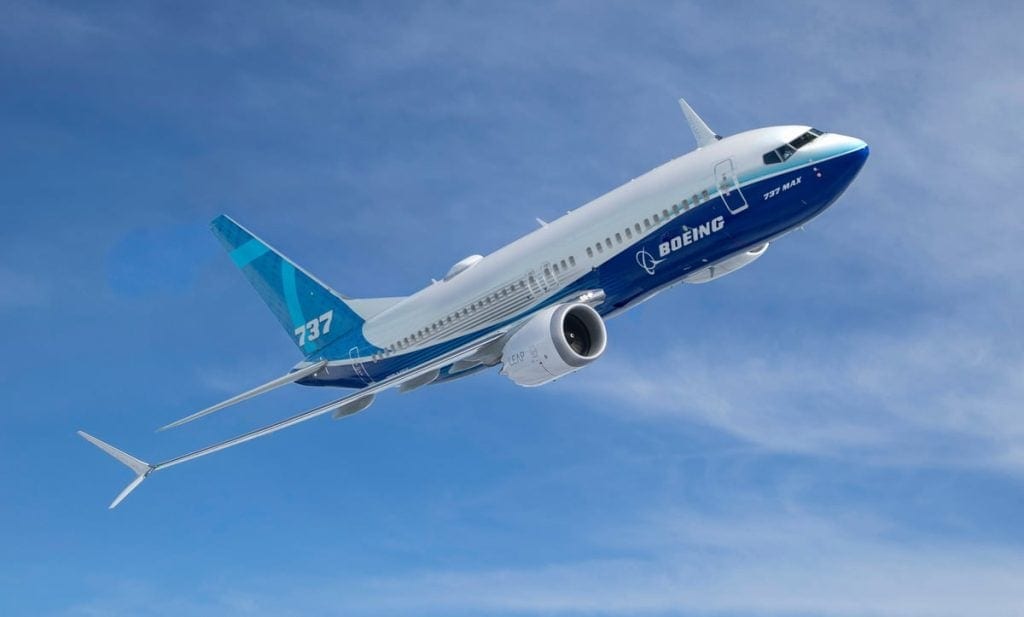
The game plan here is simple: Ramp up production of the narrow-body 737 MAX, and, less importantly, the wide-body 787 Dreamliner. Meanwhile, BCA is aiming for the new wide-body 777X, with certification in 2027 and first delivery to follow.
All three are crucial for free-cash-flow generation, as more deliveries mean more revenue and usually margin expansion as more units are spread around Boeing’s fixed costs. Meanwhile, any delay in the first delivery of the 777X simply increases cash burn on the program.
Unfortunately, management pushed back expectations for 737 MAX deliveries, telling investors that it would now take until 2027 to stabilize the production rate at 47 a month before targeting “52 in the back half of 2027.”
As a reminder, BCA started 2026 with a stabilized rate of 42 a month on the 737 MAX, and expected to hit a rate of 47 a month by the summer. Naturally, this kind of pushout of expectations also led to a pushout of the market’s penciled-in free cash flow (FCF) for Boeing. Here’s management’s FCF guidance on the recent call:
|
Boeing Guidance
|
2026
|
2027
|
2028
|
2029
|
|
Free cash flow
|
$2 billion
|
$3 billion
|
$6 billion
|
$10 billion
|
|
Price to free cash flow*
|
68.4x
|
45.6x
|
22.8x
|
13.68x
|
Data source: Boeing presentations, author’s analysis. *Based on current market cap.
However, based on management’s commentary, this guidance may prove conservative. For example, CFO Jesus Malave said the “building blocks of a $10 billion free cash flow on a normalized basis” are:
- 52 deliveries a month on the 737 MAX
- 10 deliveries a month on the 787
- Deliveries and cash generation on the 777X
Still, he also said that in 2029:
- Deliveries on the 737 MAX would be “mid- to high 50s” a month
- Closer to 12 a month on the 787
- Positive FCF on the 777X
The 2029 conditions significantly exceed what’s required for the “building blocks” of $10 billion in FCF, and note that management is guiding toward a production rate of 52 a month on the 737 MAX in the second half of 2027.
In other words, the main condition (737 MAX) for $10 billion in FCF will be satisfied in terms of production (deliveries will follow) by the end of 2027, and management has set a target of increasing production from 52 per month in 2027 to the “mid to high 50s” in 2029. This may prove conservative.

Image source: Getty Images.
A stock to buy?
Putting it all together, BGS is solid, BDS has returned to profitability, and there’s evidence that the Department of Defense is being more accommodating in its contracts with defense companies. Finally, BCA guidance may prove conservative, and if the building blocks for $10 billion in FCF are met in 2027, the market won’t waste any time pricing it in. As such, the stock is attractive for value-oriented investors.
Should you buy stock in Boeing right now?
Before you buy stock in Boeing, consider this:
The Motley Fool Stock Advisor analyst team just identified what they believe are the 10 best stocks for investors to buy now… and Boeing wasn’t one of them. The 10 stocks that made the cut could produce monster returns in the coming years.
Consider when Netflix made this list on December 17, 2004… if you invested $1,000 at the time of our recommendation, you’d have $334,793!* Or when Nvidia made this list on April 15, 2005… if you invested $1,000 at the time of our recommendation, you’d have $1,257,420!*
Now, it’s worth noting Stock Advisor’s total average return is 874% — a market-crushing outperformance compared to 209% for the S&P 500. Don’t miss the latest top 10 list, available with Stock Advisor, and join an investing community built by individual investors for individual investors.
See the 10 stocks »
*Stock Advisor returns as of November 3, 2026.
Lee Samaha has no position in any of the stocks mentioned. The Motley Fool has positions in and recommends Boeing and Lockheed Martin. The Motley Fool has a disclosure policy.