Key Points
-
Medicare launched a GLP-1 Bridge Program last month, which runs through Dec. 31, 2027.
-
Qualifying seniors will be able to get GLP-1s for weight loss for $50 per month.
-
You must meet specific health and insurance criteria to qualify.
It’s hard to overstate how much the rising popularity of GLP-1s has shaped healthcare over the last few years. Demand for these drugs has grown sharply, but access remains a challenge for many, due to limited insurance coverage.
Until recently, seniors on Medicare had to pay out of pocket if they wanted to try these drugs for weight loss. But the new GLP-1 Bridge Program launched last month is changing that, and the effects on seniors’ health and wallets could be significant.
Missed Nvidia in 2009? This Rare Signal Is Flashing Again. In 2009, a “Double Down” signal flashed for a little-known chipmaker called Nvidia. For the first time in years, that same “Total Conviction” signal is flashing for a company 1/100th the size of Nvidia. Continue »
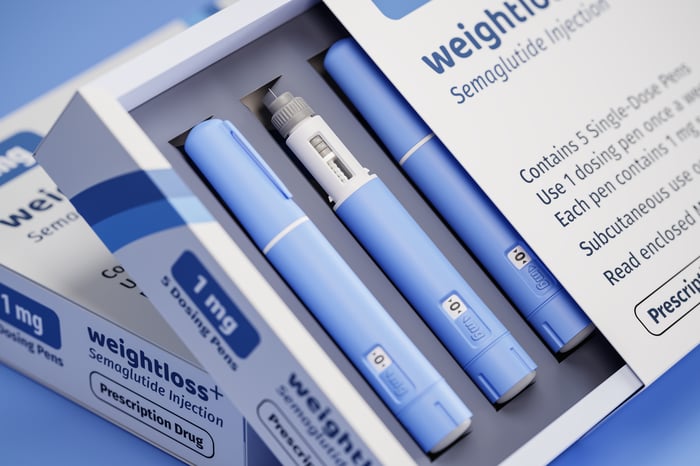
Image source: Getty Images.
How the Medicare GLP-1 Bridge Program works
The Medicare GLP-1 Bridge Program gives qualifying Medicare beneficiaries access to select GLP-1s for weight loss from July 1, 2026, to Dec. 31, 2027, for $50 per month. Currently, the covered drugs include:
- Foundayo (tablet)
- Wegovy (injection or tablet)
- Zepbound (KwikPen only)
To qualify for this, you’ll need a prescription from your doctor, and you’ll also have to meet the following criteria:
- You have a Medicare Part D plan or a Medicare Advantage plan with prescription drug coverage.
- You’re not eligible to receive a GLP-1 through your Medicare drug plan.
- You don’t have type 2 diabetes, moderate to severe sleep apnea, or fatty liver disease.
- You’re at least 18 or older, and one of the following is true:
- You have a body mass index (BMI) of 35 or higher.
- Your BMI is 30 or higher, and you have certain types of heart failure, high blood pressure that’s hard to control, or chronic kidney disease (stage 3a or above).
- Your BMI is 27 or higher, and you have prediabetes, or you’ve had a heart attack, stroke, or blocked arteries in your legs or arms.
Your doctor will also have to submit a prior authorization form to Medicare.
The savings could be pretty significant
Paying for GLP-1s out of pocket can cost hundreds of dollars per month, so the GLP-1 Bridge Program is an option worth exploring if you’re interested in these medications. Because this program is separate from your Part D plan, the monthly co-pays won’t count toward your Part D out-of-pocket maximum for the year, but the predictable $50 payments can still help keep your retirement healthcare costs manageable.
If the medications help you lose weight, this could also decrease your risk of other costly health conditions as you age. That could help you stretch your savings even further, which is useful if you’re worried about running out of money early.
Start by checking with your doctor to see if you qualify for the GLP-1 Bridge Program, and reach out to the Centers for Medicare & Medicaid Services if you have any questions about how the program works.
The $23,760 Social Security bonus most retirees completely overlook
If you’re like most Americans, you’re a few years (or more) behind on your retirement savings. But a handful of little-known “Social Security secrets” could help ensure a boost in your retirement income.
One easy trick could pay you as much as $23,760 more… each year! Once you learn how to maximize your Social Security benefits, we think you could retire confidently with the peace of mind we’re all after. Join Stock Advisor to learn more about these strategies.
View the “Social Security secrets” »
The Motley Fool has a disclosure policy.