Key Points
-
Coca-Cola’s brands keep winning share and fund a dividend that has grown for 64 years.
-
Lowe’s has stayed resilient in a weak housing market, and its dividend has plenty of room to grow.
-
Procter & Gamble’s trusted brands are growing again, supporting a dividend that has been raised for 70 straight years.
-
The best passive income comes from companies that keep raising their dividends, regardless of the economy. Coca-Cola (NYSE: KO), Lowe’s (NYSE: LOW), and Procter & Gamble (NYSE: PG) back their dividends with durable competitive advantages.
Here’s why they are three top dividend stocks to buy in November for a lifetime of dividend income.
Missed Nvidia in 2009? This Rare Signal Is Flashing Again. In 2009, a “Double Down” signal flashed for a little-known chipmaker called Nvidia. For the first time in years, that same “Total Conviction” signal is flashing for a company 1/100th the size of Nvidia. Continue »
Coca-Cola
Coca-Cola owns 32 brands that each generate at least $1 billion in annual revenue. Strong brands, innovation, and distribution are why the company continues to grow sales in a challenging macroeconomic environment.
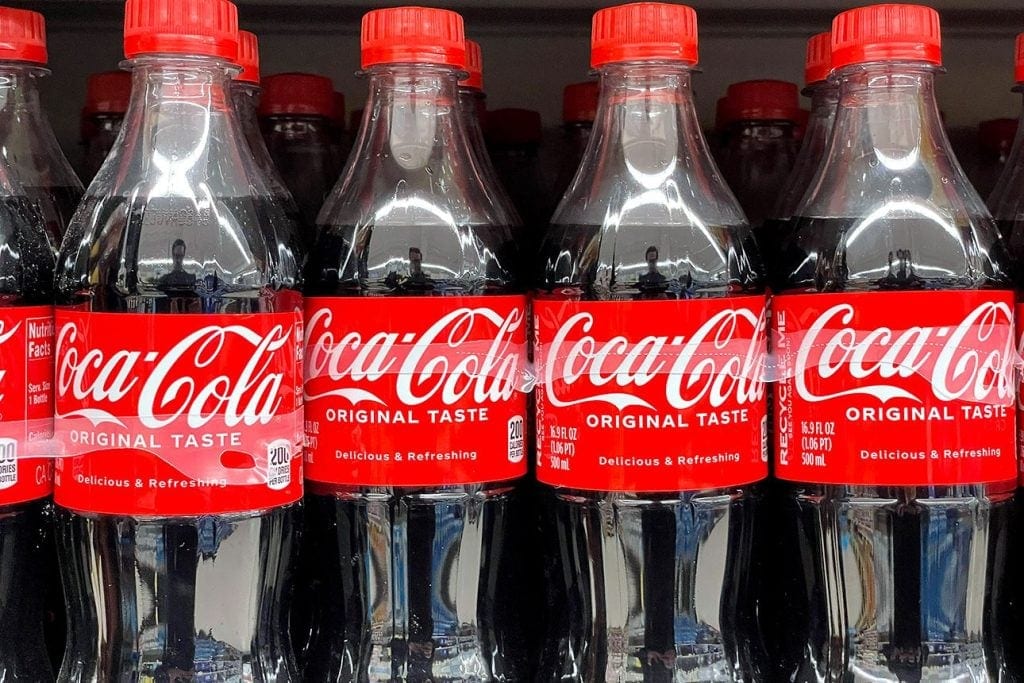
New products like Coca-Cola Zero Sugar and Coca-Cola Original Taste are winning over consumers. Unit case volume has grown 5% year over year for two straight quarters.
Coca-Cola grew organic revenue, which excludes foreign currency fluctuations, 7% year over year in the third quarter. It has gained value share for 22 consecutive quarters, and its operating margin increased last quarter even as marketing expenses grew in the double digits.
Management plans to return capital mostly through dividends, where it distributed about 78% of free cash flow over the past year — in line with its past payout rate. With 64 consecutive annual increases and a 2.2% dividend yield, Coca-Cola remains a dependable source of rising income.
Lowe’s
Lowe’s serves do-it-yourself (DIY) homeowners and professional contractors. Despite a weak housing market, it has posted five consecutive quarters of positive comparable sales. Online sales grew about 16% last quarter, and there could be a big opportunity to accelerate growth when the housing market rebounds.
CEO Marvin Ellison cited estimates of $20 billion to $50 billion in pent-up demand for home improvement projects. He also noted that the U.S. has the oldest housing stock on record. “We’re better positioned today … than we’ve ever been in the history of this company,” he said.
Investments in e-commerce, loyalty, and fulfillment position Lowe’s to grow when demand returns, and Ellison has said the company can grow disproportionately when the market recovers.
The dividend has plenty of room to grow. Lowe’s has distributed only 38% of trailing free cash flow and has raised its payout for more than 25 consecutive years. The stock yields about 2.2% and trades about 22% below its 52-week high.
Procter & Gamble
Procter & Gamble makes household staples like Tide, Pampers, and Charmin. This powerhouse brand portfolio, along with strong retailer partnerships and a supply chain, is the company’s competitive edge.
Those advantages are paying off. Organic sales grew 4% year over year last quarter, with volume up 2.4%. P&G is holding or growing market share with over 70% of its top U.S. retail customers, up from less than 10% in the first half of fiscal 2026, indicating growing demand for its brands.
That growth can lift margins over time. Schulten said that when sales grow around 4% with volume up at least 2%, “we have always seen leverage” — meaning profits grow faster than sales as fixed costs get spread over more volume.
Steady cash flow supports the dividend. Dividends used about two-thirds of trailing free cash flow, and management plans to return $15 billion to shareholders this fiscal year, including over $10 billion in dividends. P&G has raised its payout for 70 consecutive years, and the stock yields about 2.6%.
Should you buy stock in Coca-Cola right now?
Before you buy stock in Coca-Cola, consider this:
The Motley Fool Stock Advisor analyst team just identified what they believe are the 10 best stocks for investors to buy now… and Coca-Cola wasn’t one of them. The 10 stocks that made the cut could produce monster returns in the coming years.
Consider when Netflix made this list on December 17, 2004… if you invested $1,000 at the time of our recommendation, you’d have $341,966!* Or when Nvidia made this list on April 15, 2005… if you invested $1,000 at the time of our recommendation, you’d have $1,146,819!*
Now, it’s worth noting Stock Advisor’s total average return is 852% — a market-crushing outperformance compared to 203% for the S&P 500. Don’t miss the latest top 10 list, available with Stock Advisor, and join an investing community built by individual investors for individual investors.
See the 10 stocks »
*Stock Advisor returns as of November 9, 2026.
John Ballard has no position in any of the stocks mentioned. The Motley Fool recommends Lowe’s Companies. The Motley Fool has a disclosure policy.