Key Points
-
Oracle stock has shed around 42% in 2026, its biggest calendar-year slide since 2001.
-
Shares soared 84% in 1991, the year after their worst yearly loss since the 1986 IPO.
-
Oracle’s revenue growth picked up to 30% in its latest quarter.
-
Oracle (NYSE:ORCL) is having a terrible 2026. As of this writing, shares trade near $113, about 42% under the $194.91 they closed at last year, and they recently touched a new 52-week low.
Going by daily closing prices (price only, adjusted for stock splits), that puts the stock on pace for its worst calendar year since 2001. Only two full years since Oracle’s March 1986 IPO were worse: 1990, the worst of them, when shares dropped 66%, and 2001, when they fell 52%. No other year cost shareholders over 22%.
Missed AI’s “Act 1”? Act 2 Could Be 15x Bigger. Most investors think they missed the AI boat because they didn’t buy Nvidia in 2005. But according to our analysts, we’re only at the end of “Act 1″—the R&D phase. “Act 2” is the global rollout. Continue »
What came next went in opposite directions. Shares soared 84% in 1991. In 2002, they dropped another 22%.
Granted, two cases make a thin record, and I wouldn’t read either as a forecast. But what separated those two years deserves a closer look.
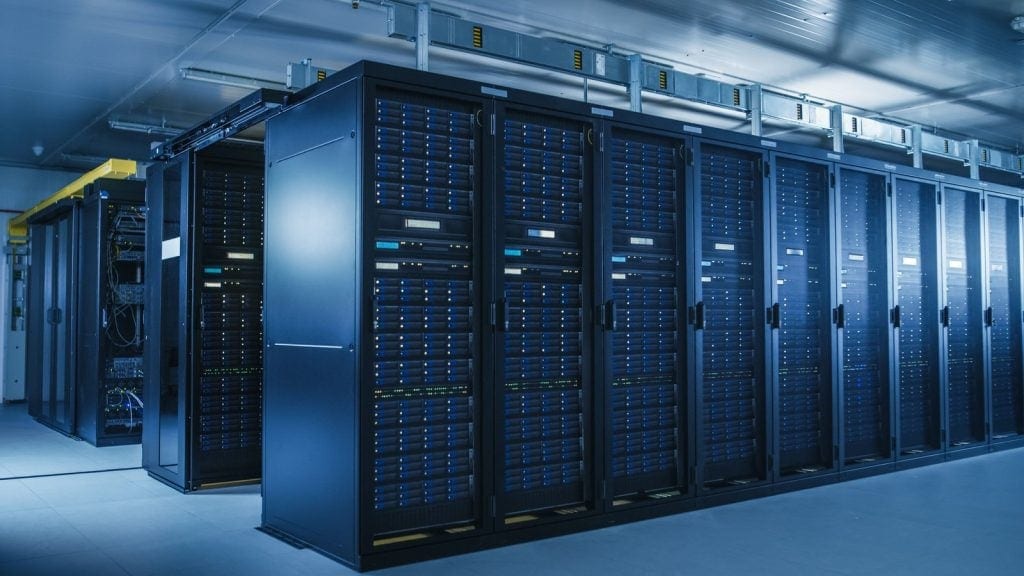
Image source: Getty Images.
1. A self-inflicted crash
Oracle’s 1990 troubles were mostly its own. Its revenue forecasts turned out too rosy, and in the quarter ended Aug. 31, 1990, it reported its first-ever quarterly loss. The company shed around 400 jobs, or about 10% of its U.S. staff, and its chief financial officer stepped down.
Before adjusting for later stock splits, shares slid from $28.125 in March 1990 to $6.875 on Sept. 17.
Still, the business itself kept growing. Oracle’s revenue climbed around 12% to $1.03 billion in fiscal 1991 (the year ended May 31, 1991), even as operating income dropped from $135 million to $18 million and the company reported a net loss of $12.4 million. A year later, revenue grew 15% and net income rebounded to $61.5 million.
And by the end of 1990, the stock was cheap. The whole company was valued at around one year’s worth of the revenue it would book in fiscal 1991.
The rebound didn’t begin right away. By mid-January 1991, shares traded around 29% below where they ended 1990. Then the stock surged, closing the year up 84%. It had help — the Nasdaq Composite (NASDAQINDEX:^IXIC) climbed 57% in 1991.
2. In 2001, the customers cut back
The 2001 fall was different. The dot-com crash hurt the companies that bought Oracle’s software, and the Nasdaq Composite dropped 21% that year.
This time, demand gave way. Oracle’s revenue fell about 12% to $9.7 billion in fiscal 2002 (the year ended May 31, 2002), then dipped again in fiscal 2003. And even after halving, the stock ended 2001 at about eight times fiscal 2002 revenue and about 35 times fiscal 2002 earnings.
Shares rallied early in 2002, then resumed falling. By June 2002, they were over 40% below their 2001 close, and they finished every trading day from mid-March 2002 through the end of 2003 under that mark.
Which year does 2026 look like?
On the two things that separated those years, 2026 arguably looks more like 1990.
First, this drop is Oracle’s own. The S&P 500 (SNPINDEX:^GSPC) has gained around 8% so far in 2026, as I write.
What’s more, demand is accelerating. Oracle’s revenue climbed 17% in fiscal 2026 (the year ended May 31, 2026) and 21% in its fourth quarter. Growth then reached 30% in the fiscal first quarter of 2027 (the period ended Aug. 31, 2026), when revenue hit $19.3 billion. Management expects at least $90 billion in revenue this fiscal year, or growth of around 34%.
The trouble is paying for it. Oracle’s capital spending topped the cash its operations took in by $23.7 billion in fiscal 2026, and by around $5 billion more in fiscal Q1 alone.
On Nov. 2, it priced $10 billion of new stock at $116 a share alongside $10 billion of notes with interest rates of 7% to 8.65%. Even the shortest of those notes, due in 2029, yields around 2.4 percentage points more than a comparable Treasury.
On price, Oracle falls between the two earlier years. Shares sell for around four times the revenue management expects this fiscal year, versus about one times sales in late 1990 and about eight times sales in late 2001.
But two cases can’t say much about 2027, and 1991’s rebound came with a tech rally that nobody could count on today. Oracle’s cash might matter more. Management expects free cash flow to turn positive in the second half of fiscal 2028.
I’ve been leery of Oracle stock for most of this year, mainly because of the cash it’s spending. But with the stock around 14 times this fiscal year’s expected non-GAAP (adjusted) earnings of $8.10 a share, I think a small stake is worth considering. I’d keep it small till the cash starts coming back.
Should you buy stock in Oracle right now?
Before you buy stock in Oracle, consider this:
The Motley Fool Stock Advisor analyst team just identified what they believe are the 10 best stocks for investors to buy now… and Oracle wasn’t one of them. The 10 stocks that made the cut could produce monster returns in the coming years.
Consider when Netflix made this list on December 17, 2004… if you invested $1,000 at the time of our recommendation, you’d have $341,966!* Or when Nvidia made this list on April 15, 2005… if you invested $1,000 at the time of our recommendation, you’d have $1,146,819!*
Now, it’s worth noting Stock Advisor’s total average return is 852% — a market-crushing outperformance compared to 203% for the S&P 500. Don’t miss the latest top 10 list, available with Stock Advisor, and join an investing community built by individual investors for individual investors.
See the 10 stocks »
*Stock Advisor returns as of November 9, 2026.
Daniel Sparks and his clients do not have positions in any of the stocks mentioned. The Motley Fool has positions in and recommends Oracle. The Motley Fool has a disclosure policy.