Key Points
-
Democrats in Ohio, Georgia, and Arizona made gains as data centers get more scrutiny.
-
Governor wins don’t guarantee swift progress. The Senate is red in Texas, Georgia, and Ohio, with the latter’s Republicans also controlling the House.
-
Expect data center developers to intensify their community efforts and tout how many jobs they are creating.
-
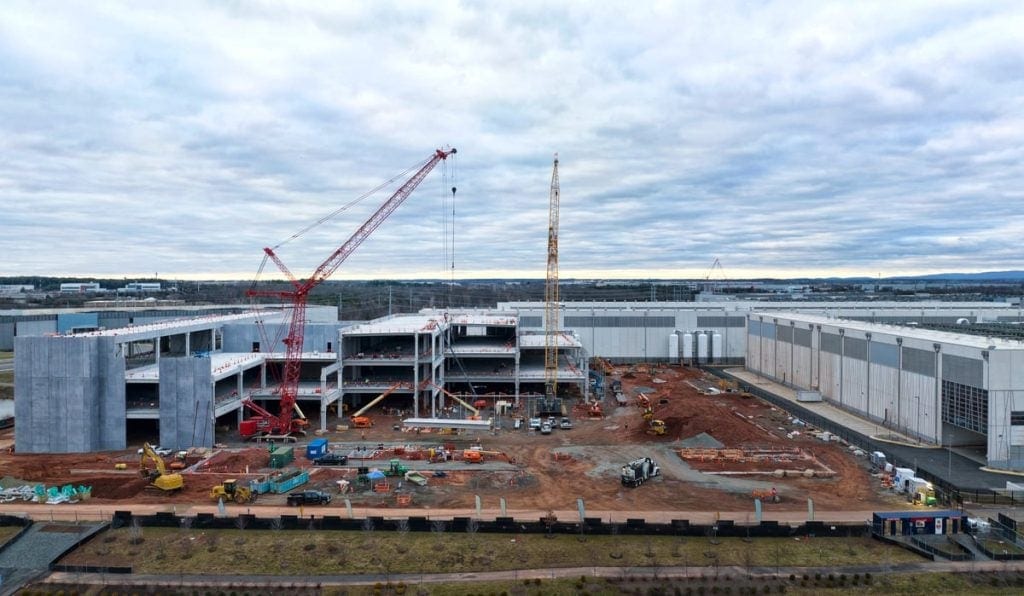
All eyes were on Texas during the midterms, and artificial intelligence (AI) stocks, especially the neoclouds, took a beating when a Democrat governor won the state. The main fear is that increased AI regulations will make it harder to build data centers in the future, and existing projects may get delayed.
It’s a legitimate concern, and Texas isn’t the only state that was affected. Ohio, Georgia, and Arizona also saw Democratic victories, and they have been instrumental states for the AI boom. Bears will argue that Democratic victories can turn into a major bottleneck for AI as construction projects are delayed or canceled. Here’s what investors should consider.
Missed AI’s “Act 1”? Act 2 Could Be 15x Bigger. Most investors think they missed the AI boat because they didn’t buy Nvidia in 2005. But according to our analysts, we’re only at the end of “Act 1″—the R&D phase. “Act 2” is the global rollout. Continue »
Governors still answer to the House and Senate
While governor victories capture headlines, each governor must still answer to their state’s House and Senate. Those two political arms introduce more variety that can result in gridlock instead of sweeping AI regulations. Here’s how it varies for the four states that have played a vital role in artificial intelligence:
- Texas: Republicans lost the House but have the Senate.
- Ohio: Republicans maintained the House and the Senate.
- Georgia: Republicans lost the House but have the Senate.
- Arizona: Democrats won the House and the Senate.
Ohio has the best political profile for tech companies. A gridlock essentially lets existing data center projects continue. Texas and Georgia can still create a gridlock due to Republicans controlling the Senate, but their political leverage isn’t as good as Ohio’s.
Data centers in Arizona won’t face the same political gridlock since Democrats have secured the House and the Senate. Arizona Democrats are in the best position to act swiftly.
Job cuts are a real risk
Although activism and protests toward data centers have gotten louder in recent months, delaying and canceling these projects comes with downsides that extend beyond lost innovation.
While an anti-big tech stance may cause people to look the other way when hyperscalers face roadblocks, those same data center delays and cancellations have a real impact on jobs.
Politicians on both sides of the aisle love to tout job growth. For instance, former President Biden was enthusiastic about a $3.3 billion data center in Wisconsin since it could create 2,000 permanent jobs once built.
If many data centers are delayed or canceled, it can lead to thousands of people losing their jobs. While regulation may become stricter, kneecapping the industry also translates into lost jobs.
Democrats may not care as much about GDP during this cycle since Trump is still the president, but slowing down AI infrastructure can result in negative GDP growth, since it’s the main catalyst powering the economy. A negative GDP growth reading won’t be a good look. The Democrats can introduce measures that make their voters happy without uprooting the entire AI trade.
Local engagement will become more valuable
Good PR will be incredibly valuable for neoclouds as the Democrats gain more control of the government in January. Investors can expect to see companies take more steps to financially support local communities beyond new jobs. These initiatives can help them win over residents and provide tangible benefits to the entire community.
Part of that may mean reduced tax breaks, a point of contention that was gaining steam before the midterm results. Some tech companies are also acquiring old infrastructure and converting it into AI data centers. For instance, Terawulf is turning a retired coal plant into an AI data center.
Those types of changes are less disruptive and let AI data center developers focus on job creation. If more neoclouds and colocation developers take this approach, it will be harder for Democrats to issue sweeping changes that stall out the industry. Investors should pay attention to how data center developers are enhancing local communities, because winning over locals will reduce uncertainty with their gigawatt pipelines.
Missed AI’s “Act 1”? Act 2 Could Be 14x Bigger
Most investors think they missed the AI boat because they didn’t buy Nvidia in 2005.
But according to our analysts, we’re only at the end of “Act 1″—the R&D phase. “Act 2” is the global rollout, a massive technology build-out that Google’s CEO says could be more profound than fire or electricity.
While everyone watches the chip designers, one “backbone” company provides the critical technology that Nvidia and AMD literally cannot function without. We’ve detailed this under-the-radar player in our new AI Playbook.
Continue »
Marc Guberti has no position in any of the stocks mentioned. The Motley Fool has no position in any of the stocks mentioned. The Motley Fool has a disclosure policy.