Key Points
-
A delay in Federal Dedrone deployments caused Axon to miss revenue estimates in the third quarter.
-
It also cut its free cash flow guidance as it invests in higher inventory levels.
-
Underlying demand remains solid despite the revenue delays.
-
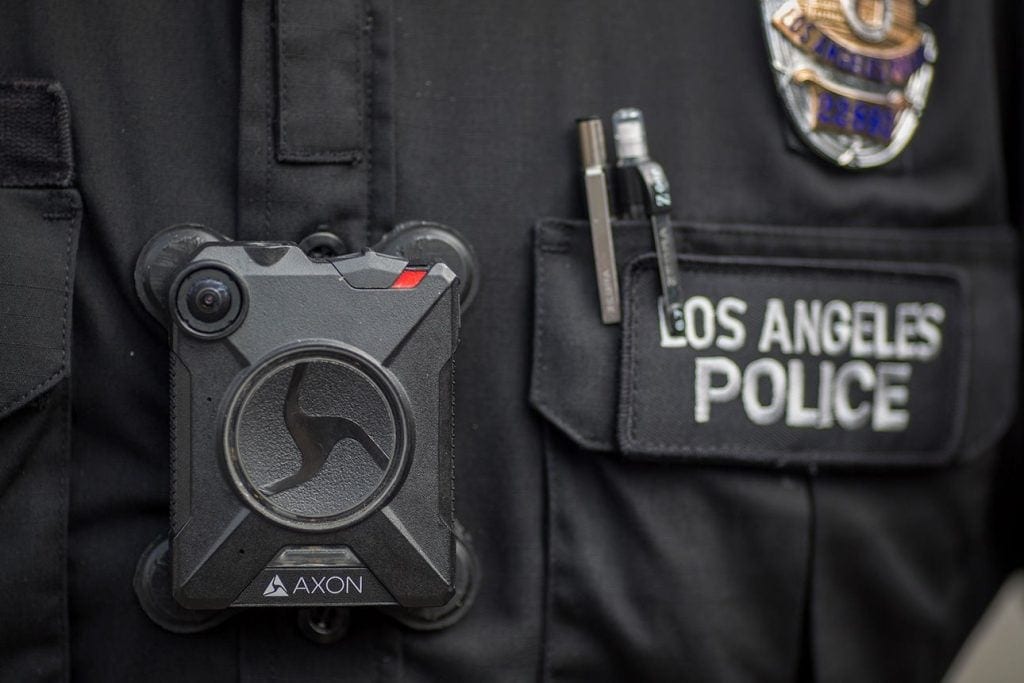
Axon Enterprise (NASDAQ:AXON), the law enforcement technology company known for Taser electrical weapons and body cameras, tumbled 18% on Friday after it reported third-quarter earnings.
At issue was a significant revenue miss and downbeat guidance for the fourth quarter. In the third quarter, revenue rose 28% to $908.6 million, well below the consensus at $934.3 million. For the fourth quarter, it called for revenue of $990 million-$1.01 billion, up 25%, which would be its slowest revenue growth since the end of 2021, and was below the consensus at $1.07 billion.
Missed AI’s “Act 1”? Act 2 Could Be 15x Bigger. Most investors think they missed the AI boat because they didn’t buy Nvidia in 2005. But according to our analysts, we’re only at the end of “Act 1″—the R&D phase. “Act 2” is the global rollout. Continue »
However, the revenue miss was due to a timing issue rather than weak demand or something more structural. The company said that the timing of a $30 million Federal Dedrone deployment was expected to be recognized in the third quarter, but was delayed.
As you can see from the numbers above, if it had booked that revenue, the company would have matched revenue estimates.
Image source: Getty Images.
What’s behind the sell-off
In addition to the Dedrone revenue being pushed out, there were some other items that left some doubts among investors.
Piper Sandler noted that gross margin in its products division, which includes Taser, was below 50%, and said that the quarter may have been Axon’s worst after Q3 2025, which led to a sharp sell-off in the stock. Craig-Hallum downgraded the stock to neutral, citing weak performance at Taser and quarter-to-quarter volatility associated with federal contracts being pushed out.
In addition to the weak revenue result, Axon cut its free cash flow guidance for the year from $450 million to $350 million-$400 million, due to accelerated inventory growth to improve product availability and supply chain resilience.
The company noted lower legacy Taser volume as revenue in connected devices rose 16.3% and adjusted gross margin fell from 52.1% to 44.6% due to increased mix of counter-drone equipment and higher memory costs. Taser sales were down 2% from the quarter a year ago.
Axon just introduced Taser Ion, its most flexible Taser device yet, which should help boost sales of the device.
The company’s fourth-quarter guidance was below expectations because it no longer includes two Federal Dedrone deployments worth $100 million.
Management was careful to explain on the earnings call that the dynamic it’s dealing with regarding lumpy one-time revenue payments with Federal Dedrone contracts is new. It said it would take a more conservative approach with guidance and better communicate the impact of timing-sensitive hardware.
However, the company defended its demand as CFO Joshua Isner said, “We’re calling this out very specifically because I don’t want it to obscure what we’re seeing in the rest of the business because the demand picture is still very, very strong.”
Is Axon a buy?
With the 18% drop on Friday, Axon is trading at its lowest point in more than two years, and the stock is now down 64% from its all-time high.
The sell-off makes sense if this business is facing a new set of challenges or its growth prospects are now diminished. However, that doesn’t seem to be the case. Aside from the Dedrone delay, revenue is where the company expected it to be, and Axon continues to invest in the future, including a $1.2 billion investment in Skydio, a leading drone technology company, adding to its existing investment and bringing its stake in the company to 37%.
Axon’s strategy historically has paid off, and there aren’t any red flags here. The stock now trades at a price-to-sales ratio of 7, which is a good value for a company with a track record of growing at 30% annually and is set to do it again this year.
Investors who take advantage of the sell-off are likely to be rewarded in time.
We just issued ‘double down’ alerts on 3 stocks — find out if Axon Enterprise made our list
Ever feel like you missed the boat in buying the most successful stocks? Then you’ll want to hear this.
On rare occasions, our expert team of analysts issues a “Double Down” stock recommendation for companies that they think are about to pop. If you’re worried you’ve already missed your chance to invest, now is the best time to buy before it’s too late. And the numbers speak for themselves:
- Nvidia: if you invested $1,000 when we doubled down in 2009, you’d have $472,123!*
- Apple: if you invested $1,000 when we doubled down in 2008, you’d have $65,653!*
- Netflix: if you invested $1,000 when we doubled down in 2004, you’d have $353,560!*
Right now, we’re issuing “Double Down” alerts for three incredible companies, available when you join Stock Advisor, and there may not be another chance like this anytime soon.
See the 3 stocks »
*Stock Advisor returns as of November 7, 2026.
Jeremy Bowman has positions in Axon Enterprise. The Motley Fool has positions in and recommends Axon Enterprise. The Motley Fool has a disclosure policy.