Key Points
-
Amazon Web Services revenue climbed 39% in the third quarter, the sixth straight quarter its growth rate rose.
-
Amazon’s operating margin of 13.9% was the highest in the company’s history.
-
Management still expects about $220 billion in cash capital spending this year, and more in 2027.
-
Shares of Amazon (NASDAQ:AMZN) trade around $250 as I write, more than 10% under their Aug. 3 closing high of $284.02. And they dipped after the company’s third-quarter report on Oct. 29, even though Amazon had the highest operating margin in its history.
Before that report, I said I’d buy half a position ahead of it and the other half after. I also listed what would make me skip the second half: growth at Amazon Web Services (AWS) dropping back toward 20%, or operating income landing below management’s guided range of $22.5 billion to $26.5 billion.
Missed Nvidia in 2009? This Rare Signal Is Flashing Again. In 2009, a “Double Down” signal flashed for a little-known chipmaker called Nvidia. For the first time in years, that same “Total Conviction” signal is flashing for a company 1/100th the size of Nvidia. Continue »
Neither happened. AWS grew 39%, and operating income was $28.1 billion. But the report also showed how fast the cost of that growth is climbing.
Image source: Getty Images.
AWS: six straight quarters of faster growth
AWS, Amazon’s cloud computing unit, is the company’s profit engine. AWS revenue climbed 39% year over year to $46.0 billion for the third quarter. Growth has now picked up for six straight quarters, from 17% for the first quarter of 2025 to 18%, 20%, 24%, 28%, 37%, and now 39%. For a business with an annualized revenue run rate of $184 billion, I think this pace is remarkable.
AWS operating income climbed 55% to $17.8 billion, and the segment’s operating margin widened to 38.7% from 34.6% for the third quarter of 2025. Sure, this margin did dip a little from the second quarter’s 39.4%.
But the forward-looking number points the other way. AWS’s backlog (customer commitments it hasn’t yet booked as revenue) hit $578 billion, more than doubling year over year. And management said it thinks AWS can grow more than 40% in both 2027 and 2028.
Profits grew, just not 61%
Amazon’s third-quarter operating income of $28.1 billion was up 61% from $17.4 billion a year ago, and it landed above even the top of the range management had guided to. Its operating margin of 13.9% compares to 9.7% for the year-ago quarter.
But the 61% number flatters the trend. Amazon’s year-ago results included two special charges — $2.5 billion for a legal settlement with the Federal Trade Commission and $1.8 billion in estimated severance costs. Without them, third-quarter 2025 operating income would have been $21.7 billion. By that measure, operating income grew around 29%.
It’s still an impressive rate for a business with almost $800 billion in sales over the last 12 months. And the retail side pulled its weight. North America segment operating income climbed to $8.7 billion from $7.3 billion a year earlier excluding the settlement charge, or around 20% growth on sales that climbed 6%.
The AI bill keeps rising
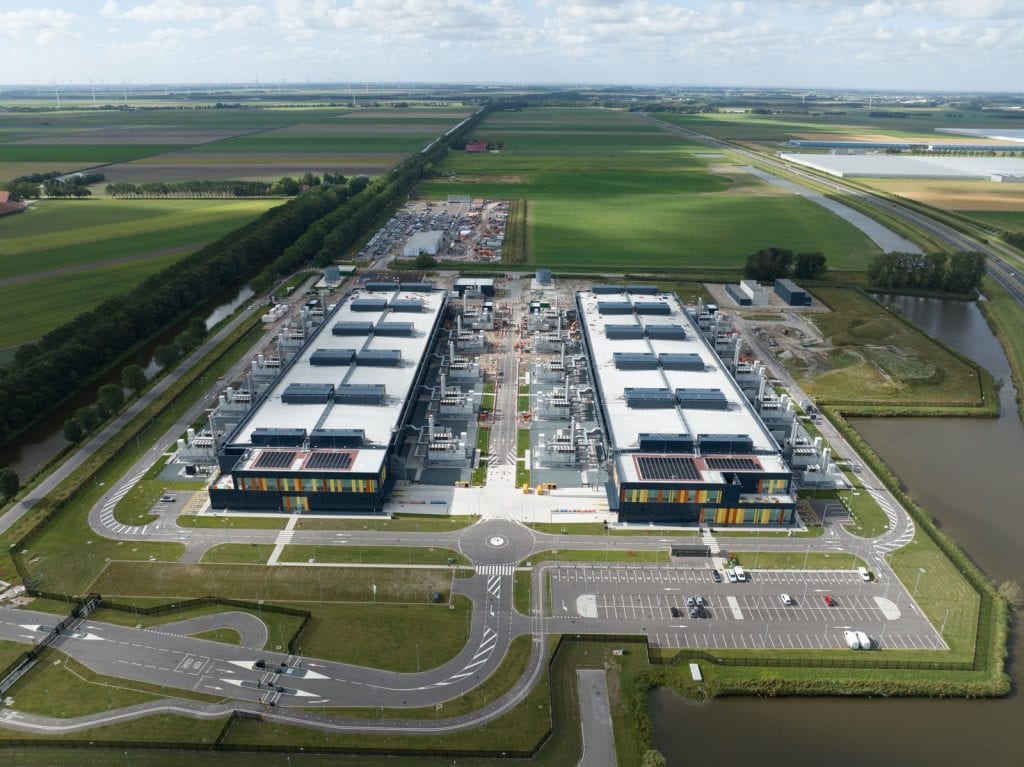
Amazon’s cash capital expenditures (spending on data centers, servers, chips, and warehouses) hit $75.9 billion in the third quarter alone, over twice the year-ago number. Management still expects around $220 billion for 2026, up from about $128 billion in 2025.
“[E]xpect to spend meaningfully more in 2027 with a clear line of sight to attractive financial returns,” CEO Andy Jassy said on the third-quarter earnings call.
This spending has turned Amazon’s free cash flow into a big outflow. For the past 12 months, free cash flow was negative $42.4 billion, compared to negative $7.6 billion through the second quarter and positive $14.8 billion a year before. Operating cash flow, meanwhile, grew 29% to $168.3 billion over the past 12 months.
In other words, the company is taking in more cash than ever. Amazon is just spending more than all of it, mainly because of the artificial intelligence (AI) build-out. True, a $578 billion backlog arguably makes that spending look less like a gamble. But free cash flow could stay negative for a while if spending grows again in 2027, and I see that as the main risk with the stock.
I’d buy the second half now
The report didn’t change my plan. Both things I said would decide the second half came through.
At around $250, Amazon’s price-to-earnings ratio on analysts’ 2027 estimates is about 23, down from about 24 when I spelled out the plan in late October. For a business whose underlying operating income rose about 29%, that valuation looks fair, even if the price still assumes the AI spending eventually turns into cash.
I’d go ahead and buy the second half of the position here. I’d just expect the free cash flow numbers to look rough for a while.
Should you buy stock in Amazon right now?
Before you buy stock in Amazon, consider this:
The Motley Fool Stock Advisor analyst team just identified what they believe are the 10 best stocks for investors to buy now… and Amazon wasn’t one of them. The 10 stocks that made the cut could produce monster returns in the coming years.
Consider when Netflix made this list on December 17, 2004… if you invested $1,000 at the time of our recommendation, you’d have $334,793!* Or when Nvidia made this list on April 15, 2005… if you invested $1,000 at the time of our recommendation, you’d have $1,257,420!*
Now, it’s worth noting Stock Advisor’s total average return is 874% — a market-crushing outperformance compared to 209% for the S&P 500. Don’t miss the latest top 10 list, available with Stock Advisor, and join an investing community built by individual investors for individual investors.
See the 10 stocks »
*Stock Advisor returns as of November 2, 2026.
Daniel Sparks and his clients do not have positions in any of the stocks mentioned. The Motley Fool has positions in and recommends Amazon. The Motley Fool has a disclosure policy.