Key Points
-
Most AI investors focus on chipmakers, but networking, power equipment, and cloud capacity are just as essential.
-
Some AI infrastructure stocks trade at premium valuations, while others have been beaten down.
-
Owning companies across different layers of the build-out can reduce the risk of betting on a single bottleneck.
-
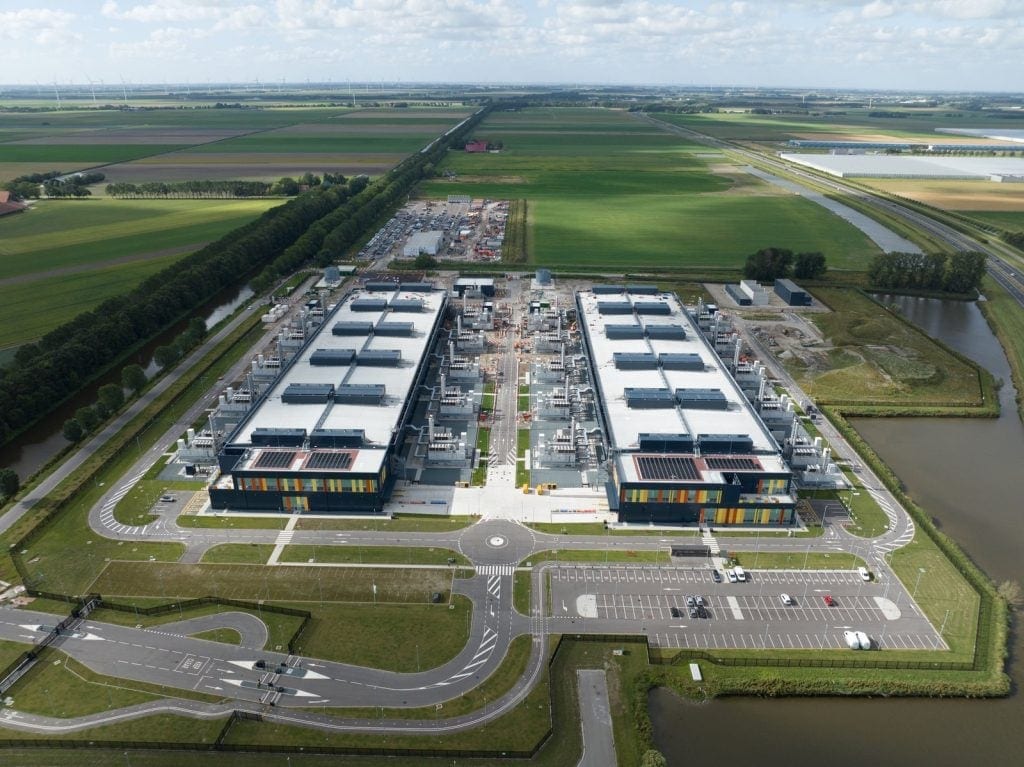
When most people think about investing in artificial intelligence, they think of chip stocks, hyperscalers, or the upcoming IPOs of the massive companies that produce AI models. But building AI capacity requires much more than the processors and models that millions of people use in their daily lives.
Data centers need not only chips but also networking equipment, enormous amounts of electricity, cloud infrastructure, and the physical buildings to house it all. With that in mind, here are five companies that cover different layers of the AI build-out, and why I think each could be a great fit for long-term investors right now. Some trade at premium valuations and others have been beaten down, so together they offer a mix of growth and value.
Missed AI’s “Act 1”? Act 2 Could Be 15x Bigger. Most investors think they missed the AI boat because they didn’t buy Nvidia in 2005. But according to our analysts, we’re only at the end of “Act 1″—the R&D phase. “Act 2” is the global rollout. Continue »
Image source: Getty Images.
1. Marvell Technology
Marvell Technology (NASDAQ:MRVL) makes the networking chips that connect thousands of processors in AI data centers and designs custom chips for large cloud providers. Its data center revenue grew 46% last quarter, accounting for 79% of total sales, and management expects revenue to reach about $3.15 billion this quarter.
The stock trades for about 30 times forward earnings, so you’re paying for future growth, but it’s still well below its 52-week high. Its custom chip business is especially interesting, since large cloud providers increasingly want processors designed for their specific workloads, and Marvell is one of the few companies with the expertise to build them. Now that the company has agreed to acquire Lumentum (NASDAQ:LITE), it could gain a significant competitive advantage amid bottlenecks in the optical component supply chain.
2. Advanced Micro Devices
Advanced Micro Devices (NASDAQ:AMD) briefly surpassed a $1 trillion market cap this fall, but has since fallen about 25% from that high.
AMD’s revenue grew 50% last quarter as data center sales more than doubled. Its Helios rack-scale systems are giving hyperscalers a credible alternative to Nvidia (NASDAQ:NVDA). At roughly 42 times forward earnings, it’s not a cheap stock, but its momentum certainly justifies it. AMD also recently agreed to acquire World Labs for $8.2 billion, a deal that brings in AI research talent led by pioneer Fei-Fei Li.
3. Forgent Power Solutions
Power has become one of the biggest bottlenecks in AI, and Forgent Power Solutions (NYSE:FPS) makes the electrical equipment data centers need. Its $3 billion backlog covers more than 90% of next year’s expected revenue, which management projects will grow about 69%. Data centers can’t run without switchgear, transformers, and other equipment that distributes power safely, and supply has struggled to keep up with demand. Forgent’s bookings jumped 375% in its latest quarter, a sign of how tight the market is.
Shares are still about 60% below their June high and recently took a dive following the company’s unexpected announcement of its CFO’s departure. But the business is firing on all cylinders, and patient investors may want to take a closer look.
4. Oracle
Oracle (NASDAQ: ORCL) has fallen about 60% from its high on worries about how it will finance its massive data center build-out. However, its remaining performance obligations, essentially contracted future revenue, total $664 billion, and the stock trades for about 14 times forward earnings.
That’s a reasonable price for a company with that kind of visibility, even if the spending makes investors nervous. If it can even capture most of its contracted revenue, it will be money well spent. Oracle’s most recent quarter was solid, with earnings per share of $1.92 beating expectations and revenue growing 30%, so the numbers are certainly heading in the right direction.
5. Brookfield Corporation
Brookfield Corporation (NYSE:BN) approaches AI from a different angle. It owns the physical assets, including data centers, power generation, and Westinghouse, the nuclear reactor company. Brookfield is planning a $100 billion AI data center campus in Kentucky in partnership with NextEra Energy (NYSE:NEE).
Brookfield is an asset manager and owns 75% of Brookfield Asset Management (NYSE:BAM). It has a fast-growing insurance services business and, in addition to its AI-related assets, owns commercial real estate, venture investments, and more. Brookfield also has about $210 billion of capital available to deploy, and its businesses earn steady, long-term contracted cash flows.
The bottom line
Of course, all five of these stocks depend on continued AI spending, and a slowdown in hyperscaler capital expenditures would hurt all of them to some degree. That’s why I like spreading my AI investments across different parts of the build-out. Oracle and Brookfield offer value, AMD and Marvell offer growth, and Forgent offers exposure to the power bottleneck. Together, they provide a well-rounded approach to investing in AI infrastructure through 2030.
Should you buy stock in Advanced Micro Devices right now?
Before you buy stock in Advanced Micro Devices, consider this:
The Motley Fool Stock Advisor analyst team just identified what they believe are the 10 best stocks for investors to buy now… and Advanced Micro Devices wasn’t one of them. The 10 stocks that made the cut could produce monster returns in the coming years.
Consider when Netflix made this list on December 17, 2004… if you invested $1,000 at the time of our recommendation, you’d have $334,793!* Or when Nvidia made this list on April 15, 2005… if you invested $1,000 at the time of our recommendation, you’d have $1,257,420!*
Now, it’s worth noting Stock Advisor’s total average return is 874% — a market-crushing outperformance compared to 209% for the S&P 500. Don’t miss the latest top 10 list, available with Stock Advisor, and join an investing community built by individual investors for individual investors.
See the 10 stocks »
*Stock Advisor returns as of November 2, 2026.
Matt Frankel, CFP® has positions in Brookfield Asset Management, Brookfield Corporation, and Forgent Power Solutions. The Motley Fool has positions in and recommends Advanced Micro Devices, Brookfield Asset Management, Brookfield Corporation, Forgent Power Solutions, Lumentum, Marvell Technology, NextEra Energy, and Nvidia. The Motley Fool has a disclosure policy.