Key Points
-
Procter & Gamble’s profits and free cash flow easily cover its dividends and share buybacks.
-
Management expects fiscal 2027 core earnings per share to rise by just 1.5% at the midpoint of its guidance.
-
The 10-year Treasury bond rate looks intriguing to investors who judge Procter & Gamble on total return.
-
Procter & Gamble (NYSE:PG) is performing well in an economic environment that’s defined by stubbornly high inflation. The business posted first-quarter 2027 (ended Sept. 30) net sales of $23.3 billion, up 4% year over year. Core earnings per share (EPS) was $2. Both figures beat Wall Street estimates.
As a competitively advantaged company that has zero issue generating free cash flow (FCF), Procter & Gamble can fund a sizable capital returns program. Last fiscal quarter, $2.6 billion was paid out in dividends. Another $1.3 billion was used to repurchase shares.
Missed Nvidia in 2009? This Rare Signal Is Flashing Again. In 2009, a “Double Down” signal flashed for a little-known chipmaker called Nvidia. For the first time in years, that same “Total Conviction” signal is flashing for a company 1/100th the size of Nvidia. Continue »
Investors can expect more where that came from. The consumer staples company plans to return $15 billion to shareholders in fiscal 2027. That’s a key part of the investment thesis.
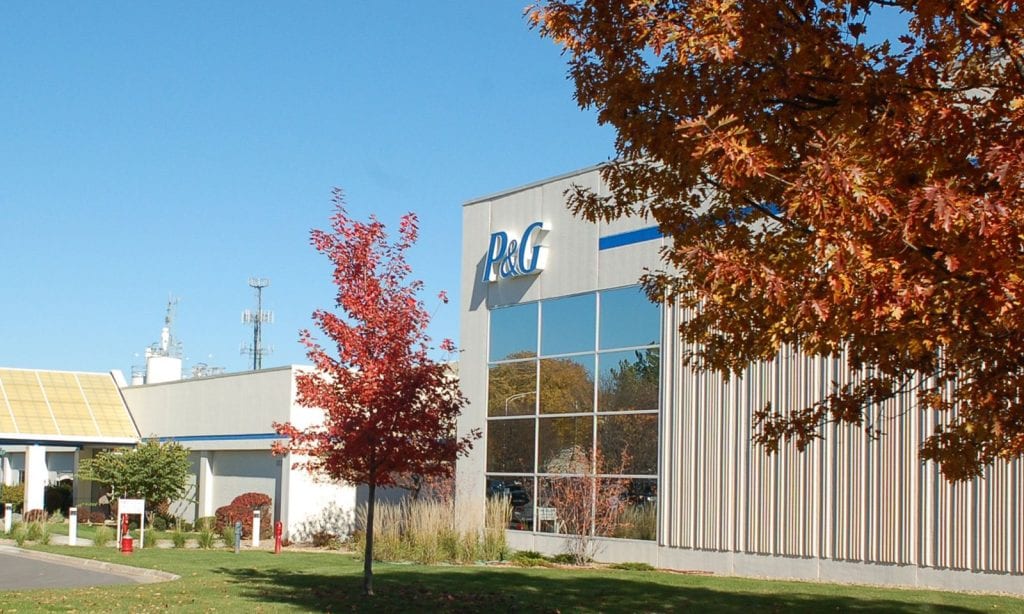
Image source: Procter & Gamble.
Cash returns are built to last
Procter & Gamble’s capital allocation playbook is simple. Management’s first priority is reinvesting in the business. Next comes “paying and ideally increasing the dividend,” Chief Financial Officer Andre Schulten said at the Nov. 19 investor day. After that, cash goes to buybacks.
That order is important. It shows that the dividend is the commitment. Share repurchases are the flexible piece.
The dividend record is hard to match. April’s 3% hike, to about $1.09 quarterly, marked 70 straight years of increases. Procter & Gamble has paid a dividend for 136 consecutive years.
The fiscal 2027 plan is a continuation of recent trends. Procter & Gamble returned more than $14 billion in dividends and buybacks in fiscal 2024, over $16 billion in fiscal 2025, and $15.3 billion in fiscal 2026. Roughly $15 billion this year is business as usual.
The profit numbers say that these payouts are safe. In fiscal 2026, Procter & Gamble registered $16.1 billion in net income and generated $15.8 billion in adjusted FCF. That covered every dollar returned. Dividends alone used about 63% of net income. First-quarter 2027 FCF of $4.4 billion exceeded the $3.9 billion returned.
Management is guiding for FCF productivity (FCF as a percentage of net income) of 85% to 90% this year. At the range’s midpoint, earnings would need to total $17.1 billion in fiscal 2027 to generate the $15 billion in adjusted FCF required to cover the planned dividend and buybacks.
Safe doesn’t mean cheap
Reliability has never been the problem. However, investors will find that the company’s growth is unremarkable.
Procter & Gamble sells products such as detergent, diapers, toothpaste, and razors in mature markets. Schulten said Procter & Gamble’s categories are growing 2.5% to 3%, below a historical range of 3% to 4%, as consumers worry about affordability.
Pricing offers little help. It added just 0.4% to Q1 sales. Meanwhile, a $1.4 billion after-tax commodity cost headwind is harming profits this year.
The result is that the fiscal 2027 forecast calls for core EPS to be flat to up 3%. The leadership team’s long-term target calls for mid- to high-single-digit bottom-line growth, still not impressive if you chase growth stocks.
Now consider the price. Shares trade at a price-to-earnings ratio of 26. The S&P 500 (SNPINDEX:^GSPC) trades at a 20.3 multiple. Investors are paying a premium valuation for low growth.
The 10-year Treasury bond yields 4.92% (as of Nov. 24). Procter & Gamble’s dividend yields 2.52%. Add the 1.5% (at the midpoint) earnings growth management expects and a 1.25% buyback yield (based on the company’s current market capitalization), and shareholders are looking at a total return of approximately 5.3%, if the valuation holds. A risk-free government bond offers something similar.
A Treasury coupon never grows. That’s a fair argument. Procter & Gamble’s dividend has grown for 70 years. If it hits its long-term profit target, the math improves quickly.
This remains a fantastic defensive business. But at the current valuation, the stock already prices in that safety.
Should you buy stock in Procter & Gamble right now?
Before you buy stock in Procter & Gamble, consider this:
The Motley Fool Stock Advisor analyst team just identified what they believe are the 10 best stocks for investors to buy now… and Procter & Gamble wasn’t one of them. The 10 stocks that made the cut could produce monster returns in the coming years.
Consider when Netflix made this list on December 17, 2004… if you invested $1,000 at the time of our recommendation, you’d have $328,591!* Or when Nvidia made this list on April 15, 2005… if you invested $1,000 at the time of our recommendation, you’d have $924,693!*
Now, it’s worth noting Stock Advisor’s total average return is 791% — a market-crushing outperformance compared to 201% for the S&P 500. Don’t miss the latest top 10 list, available with Stock Advisor, and join an investing community built by individual investors for individual investors.
See the 10 stocks »
*Stock Advisor returns as of November 29, 2026.
Neil Patel has no position in any of the stocks mentioned. The Motley Fool has no position in any of the stocks mentioned. The Motley Fool has a disclosure policy.