Key Points
-
Nvidia reinstated its CEO on Nov. 23, and he testifies before Senate Banking on Dec. 3.
-
S&P Global Ratings is reviewing Nvidia’s credit rating over governance and reliance on Huang.
-
Specific answers on tracking where chips end up will say more than reassurance.
-
Nvidia’s (NASDAQ:NVDA) board reinstated Jensen Huang as CEO on Nov. 23, less than two weeks after he resigned. Next comes Washington: closed-door sessions with three House committees on Dec. 1, then a public Senate Banking Committee hearing on Dec. 3. For shareholders, the question is narrower than the headlines. How much rides on one executive, and how well does Nvidia control where its chips go?
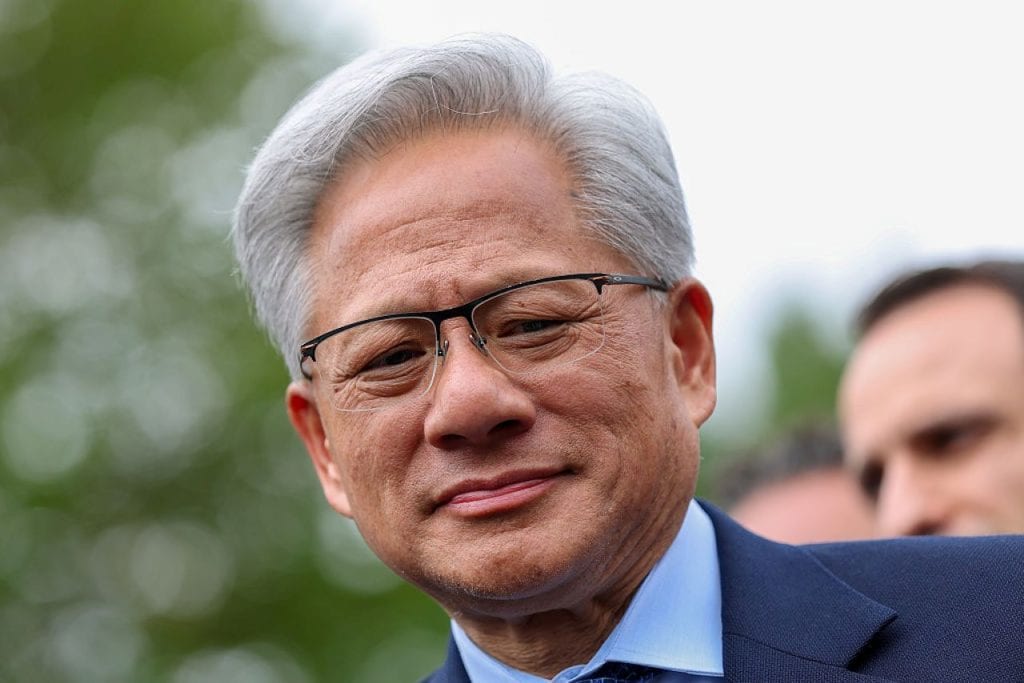
Jensen Huang. Image source: Getty Images.
Missed AI’s “Act 1”? Act 2 Could Be 15x Bigger. Most investors think they missed the AI boat because they didn’t buy Nvidia in 2005. But according to our analysts, we’re only at the end of “Act 1″—the R&D phase. “Act 2” is the global rollout. Continue »
What Nvidia has said so far
In its Nov. 23 release, Nvidia said the board was satisfied with Huang’s “candor and ability to lead” after a series of meetings. It also said it received input from senior levels of the U.S. government and is confident his return poses no national security risk.
The company said an independent committee will finish its investigation into reports that Huang was the target of a foreign intelligence effort. The board has also formed a national security and export control committee, and Nvidia is searching for a chief compliance officer.
Why the hearing matters to owners
The Senate Banking Committee has jurisdiction over export controls, the rules on which advanced chips can be sold abroad. Its questions go to where Nvidia is allowed to sell.
Another outside view arrived Nov. 25. S&P Global Ratings said it is considering cutting Nvidia’s credit rating one notch, to the fourth-highest level on its scale, citing “key man risk,” meaning heavy reliance on Huang, and weak succession planning. TechCrunch noted that Nvidia backs the debt of companies building data centers for artificial intelligence. A lower rating could raise their borrowing costs.
The risk to a calm reading is that the board’s confidence is not the last word. TechCrunch reported that the hearing follows bipartisan calls for Huang to testify.
When he does, listen for specifics rather than reassurance. Notice who is accountable for tracking where Nvidia’s chips end up. Then watch for the compliance hire and for S&P’s decision, which it expects within 90 days.
Should you buy stock in Nvidia right now?
Before you buy stock in Nvidia, consider this:
The Motley Fool Stock Advisor analyst team just identified what they believe are the 10 best stocks for investors to buy now… and Nvidia wasn’t one of them. The 10 stocks that made the cut could produce monster returns in the coming years.
Consider when Netflix made this list on December 17, 2004… if you invested $1,000 at the time of our recommendation, you’d have $328,591!* Or when Nvidia made this list on April 15, 2005… if you invested $1,000 at the time of our recommendation, you’d have $924,693!*
Now, it’s worth noting Stock Advisor’s total average return is 791% — a market-crushing outperformance compared to 201% for the S&P 500. Don’t miss the latest top 10 list, available with Stock Advisor, and join an investing community built by individual investors for individual investors.
See the 10 stocks »
*Stock Advisor returns as of November 28, 2026.
Patrick Sanders has positions in Nvidia. The Motley Fool has positions in and recommends Nvidia. The Motley Fool has a disclosure policy.