Key Points
-
A United Launch Alliance spaceship exploded during takeoff on Nov. 15.
-
The spacecraft that exploded was carrying 40 Amazon satellites.
-
SpaceX recently achieved a major success by launching and landing its Starship spacecraft.
-
Amazon.com (NASDAQ:AMZN) was hoping that the United Launch Alliance’s (ULA’s) Nov. 15 space trip would end with it having another 40 satellites in orbit. About 10 minutes into the launch, that dream went up in smoke, as the spacecraft exploded. That’s a problem for Amazon, which has another 38 launches booked with ULA.
Space Exploration Technologies (NASDAQ:SPCX) could lend a hand, but it probably won’t. Which is why more aggressive investors might find SpaceX of interest. Here’s what you need to know.
Missed Nvidia in 2009? This Rare Signal Is Flashing Again. In 2009, a “Double Down” signal flashed for a little-known chipmaker called Nvidia. For the first time in years, that same “Total Conviction” signal is flashing for a company 1/100th the size of Nvidia. Continue »
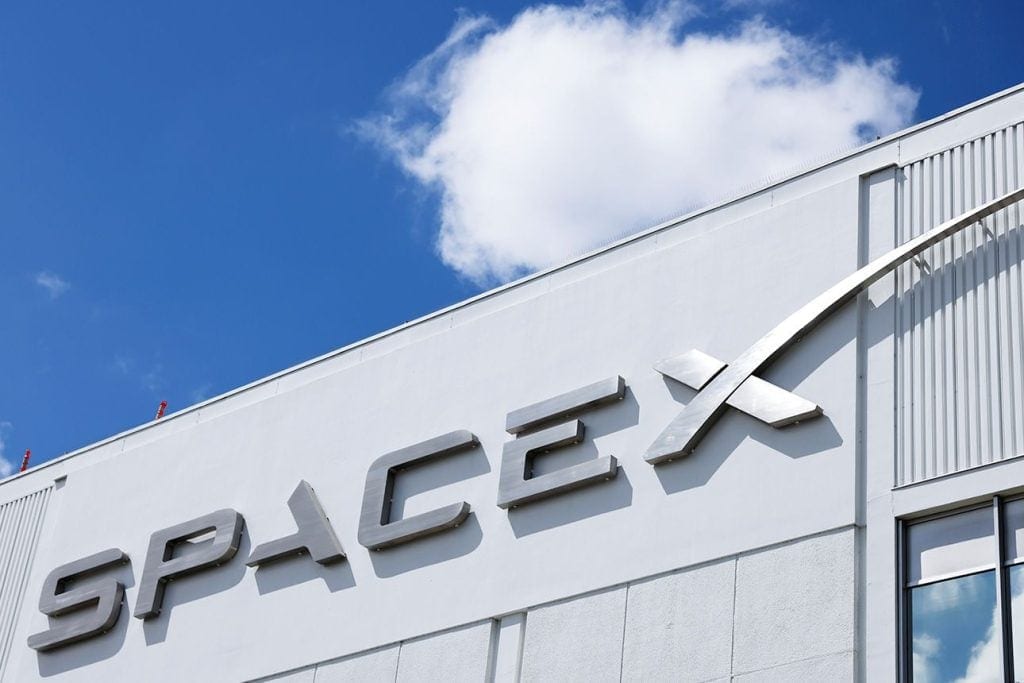
Image source: Getty Images.
Amazon’s problem is bigger than 40 satellites
SpaceX is at the front of the pack in the space race. And it really is a race, as companies attempt to stake out their position in the still-emerging space industry. Amazon has basically made a huge bet with SpaceX competitor ULA, which is currently looking less desirable. The cost of losing the 40 satellites is bad enough, but it isn’t the end of the issue. Amazon will need to build 40 more to replace them, and then get those satellites into space. But ULA’s setback is likely to lead to delays on that front, as it works out what happened. This could complicate ULA’s plans to increase its launch cadence.
This is good news for SpaceX because Amazon is attempting to create a satellite system to compete with SpaceX’s Starlink. But there’s more to the story here. SpaceX has been highly successful in its launches, sending many spacecraft into orbit. It could offer its services to other companies, including Amazon. To be fair, it does. But it looks like SpaceX is increasingly using its launches to orbit its own satellites.
SpaceX is extending its lead
Basically, SpaceX holds a leading position in both its Starlink service and its launch services. Other companies are playing catch-up, and that’s not working out particularly well. Thus, SpaceX’s lead is maintained, if not extended, in both niches of the industry with each successful launch. This is an industrial giant that is flexing its muscles.
But it is hard to value SpaceX as a business. For starters, it has only been public for a short while, so there’s not much history to go on. But even if you take the strong third-quarter 2026 revenue growth of 161% and the company’s positive earnings of $0.35 per share into account, you can’t ignore the massive capital spending that’s going on. Or the massive capital spending that is likely to be needed in the future.
To put a number on that spending, SpaceX spent $19.6 billion on capital investments in the third quarter alone. Roughly $1.6 billion of that went to its space operations, $1.5 billion to connectivity, and a shockingly large $16.6 billion to the company’s artificial intelligence division. None of that spending was optional, and there’s likely to be plenty more capital investment to follow in the years ahead.
And while SpaceX reported positive earnings in the third quarter, its year-to-date total through the first three quarters of 2026 remains negative. In other words, SpaceX is a money-losing business spending huge sums to grow. That’s a high-risk proposition that only the most aggressive investors should be considering.
SpaceX: Tread with caution
If you are going to buy SpaceX, you have to believe that the company will remain an industry leader. This is the kind of company you buy and hold for the long term. So far, at least in the space and satellite connectivity sectors, it remains top of class, with little indication of that changing anytime soon given the failed ULA launch.
Notably, Wall Street is generally positive about the future, assigning SpaceX an average target price of $256 per share, well above the $127 per share as of this writing. However, volatility is likely to be extreme, as it has already been even over the stock’s short trading history. If you can’t handle that, you shouldn’t own the stock.
Should you buy stock in Space Exploration Technologies right now?
Before you buy stock in Space Exploration Technologies, consider this:
The Motley Fool Stock Advisor analyst team just identified what they believe are the 10 best stocks for investors to buy now… and Space Exploration Technologies wasn’t one of them. The 10 stocks that made the cut could produce monster returns in the coming years.
Consider when Netflix made this list on December 17, 2004… if you invested $1,000 at the time of our recommendation, you’d have $320,394!* Or when Nvidia made this list on April 15, 2005… if you invested $1,000 at the time of our recommendation, you’d have $917,381!*
Now, it’s worth noting Stock Advisor’s total average return is 776% — a market-crushing outperformance compared to 199% for the S&P 500. Don’t miss the latest top 10 list, available with Stock Advisor, and join an investing community built by individual investors for individual investors.
See the 10 stocks »
*Stock Advisor returns as of November 26, 2026.
Reuben Gregg Brewer has no position in any of the stocks mentioned. The Motley Fool has positions in and recommends Amazon and Space Exploration Technologies. The Motley Fool has a disclosure policy.