Key Points
-
The market is extremely expensive right now, based on the Buffett indicator.
-
Buffett has sought to be fearful when others are greedy and vice versa.
-
He has credited his incredible investing success to just a few great trades.
-
Investors are finally becoming fearful. The market entered a correction last week, giving up all of its gains from this year, and it’s now down almost 12% from its recent high.
It’s anyone’s guess how much lower it will go and how long this will last. But if you pay attention to what famed investor Warren Buffett has always recommended, you can use these trends in your favor.
Missed Nvidia in 2009? This Rare Signal Is Flashing Again. In 2009, a “Double Down” signal flashed for a little-known chipmaker called Nvidia. For the first time in years, that same “Total Conviction” signal is flashing for a company 1/100th the size of Nvidia. Continue »
Is it still time to be fearful?
One of Buffett’s most well-known sayings describes his approach to investing. He cautions against trying to time the market, since it’s not possible. Instead, he said, “We simply attempt to be fearful when others are greedy and to be greedy only when others are fearful.”
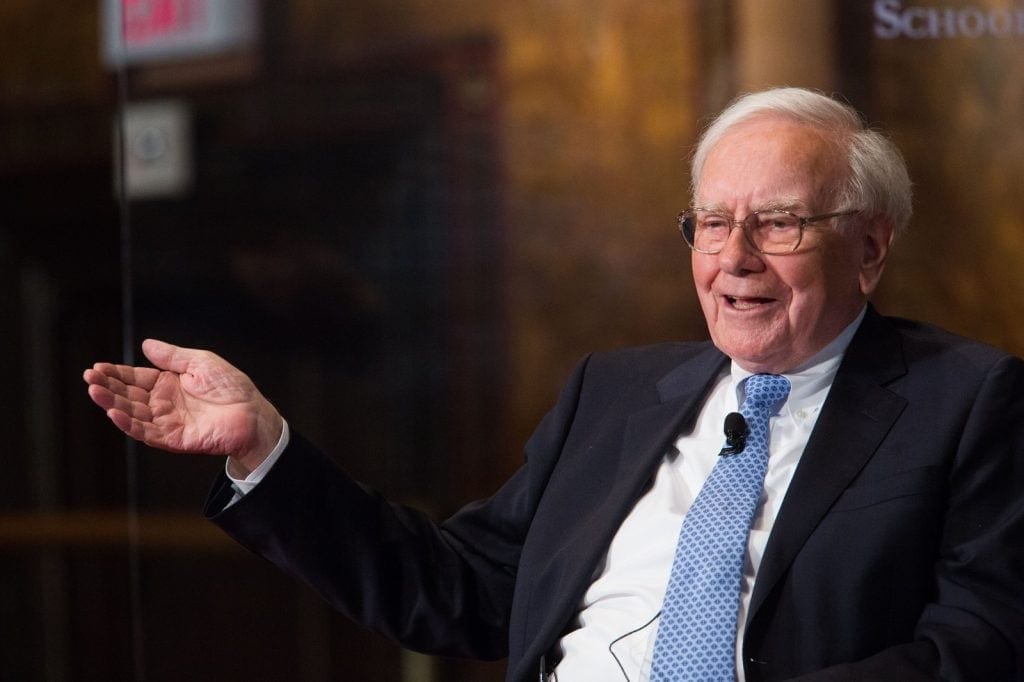
Image source: Getty Images.
Greed is evident when the market becomes bloated, and that’s measured in how expensive it is. Buffett developed his own metric for this, known today as the Buffett indicator.
In 2001, when the market had already begun to crash, he explained that the fall could be foreseen because the ratio of the total value of the stock market compared to the gross domestic product (GDP) was too high. He said that around 70% to 80% would be a value, and that 200% was “playing with fire.”
He also correctly predicted that the crash at that time was far from over, and indeed, it lasted into 2003. While the market started climbing back up at that point, it didn’t reach a new high until 2007, right before the 2008 crash.
Today, the Buffett indicator is at 275%. That’s down from nearly 300% as the market dips, and that’s a good indication that this time, too, the correction may turn into a full crash. If it doesn’t now, it will at some point.
When to be greedy
Buffett is a value investor, and he aims to buy stocks that are undervalued relative to their intrinsic worth. The market isn’t always rational, and it can misprice stocks for many reasons. Sometimes there’s a short-term headwind that leads to a loss of confidence in an otherwise great company that can bounce back, for example, and sometimes the entire market can go down, bringing top stocks with it.
These are times when it can be scary for the average investor to plunge in. Ironically, while Buffett avoids risky stocks, he dives right into situations others would call risky. That’s how he built up Berkshire Hathaway (NYSE:BRKA)(NYSE:BRKB) into the formidable, market-beating stock it is today.
Consider what happened way back when Buffett first said his famous words. He sensed a market crash coming when he wrote them in 1986, and the market lost more than 33% of its value in the 1987 crash. However, it gained 23% the next year.
That’s when Buffett began to build Berkshire Hathaway’s equity portfolio. In 1987, it owned only three stocks, in addition to its fully owned companies, and it picked up Coca-Cola in 1988, which remains its longest-held position.
Buffett credits a few great buys with his success, and when it’s time to be greedy, you can also get your hands on potentially life-changing stocks.
Should you buy stock in Berkshire Hathaway right now?
Before you buy stock in Berkshire Hathaway, consider this:
The Motley Fool Stock Advisor analyst team just identified what they believe are the 10 best stocks for investors to buy now… and Berkshire Hathaway wasn’t one of them. The 10 stocks that made the cut could produce monster returns in the coming years.
Consider when Netflix made this list on December 17, 2004… if you invested $1,000 at the time of our recommendation, you’d have $317,482!* Or when Nvidia made this list on April 15, 2005… if you invested $1,000 at the time of our recommendation, you’d have $954,740!*
Now, it’s worth noting Stock Advisor’s total average return is 784% — a market-crushing outperformance compared to 199% for the S&P 500. Don’t miss the latest top 10 list, available with Stock Advisor, and join an investing community built by individual investors for individual investors.
See the 10 stocks »
*Stock Advisor returns as of November 25, 2026.
Jennifer Saibil has no position in any of the stocks mentioned. The Motley Fool has positions in and recommends Berkshire Hathaway. The Motley Fool has a disclosure policy.