Key Points
-
Nvidia’s stock ripped higher after the board announced Huang’s return as CEO.
-
Huang’s return could suggest the board believes Nvidia and Huang complied with export restrictions.
-
However, many questions remain, including how much of Nvidia’s prior chip sales were being used illegally or remotely by Chinese companies.
-
Nvidia’s (NASDAQ:NVDA) board of directors shocked the world this morning by reinstating Jensen Huang as the company’s CEO, president, and a member of the board.
As many know, Huang resigned from Nvidia on Nov. 12 following media reports that alleged Huang had multiple extramarital affairs, including one with a woman named Alice Huang (no relation), who has been accused of being a Chinese spy.
Missed AI’s “Act 1”? Act 2 Could Be 15x Bigger. Most investors think they missed the AI boat because they didn’t buy Nvidia in 2005. But according to our analysts, we’re only at the end of “Act 1″—the R&D phase. “Act 2” is the global rollout. Continue »
In a statement, Nvidia’s board said they felt “confident” that Huang “poses no national security risk.”
“The Board believes Jensen is the right person to lead NVIDIA, and that his reinstatement is in the best interests of our stockholders, employees, partners and customers,” Nvidia’s board Chair Harvey Jones said in a statement. “We have every confidence in Jensen and look forward to working with him as he resumes his leadership of the Company.”
In the statement, Huang said he is “honored” to return and retakes his post “with the greatest humility and renewed commitment.”
As of 11:50 a.m. ET, Nvidia stock traded nearly 31% higher. Is the stock in the clear, or do risks remain?
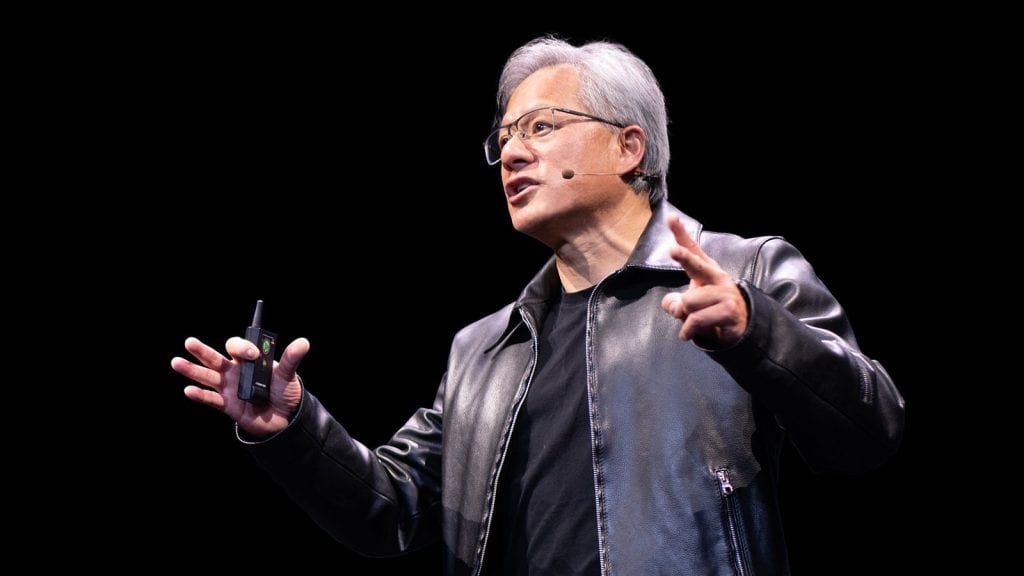
Jensen Huang. Image source: Nvidia.
What Huang’s reinstatement could signal
Huang is clearly a fantastic CEO from an operational perspective. He founded Nvidia 33 years ago and clearly had the foresight to see artificial intelligence coming decades before it went mainstream.
But Huang’s return may be lifting Nvidia stock for other reasons. The board stated that Huang’s return poses no national security risk. Investors could interpret this to mean that Nvidia did not bypass export restrictions and sell chips that may have illegally reached China.
Reports suggest that Alice Huang had set up a network to purchase chips through shell companies or companies established outside China, which then shipped them to China. If this is the case and the U.S. imposes further restrictions to prevent it, this would threaten Nvidia’s future revenue and earnings, which would certainly impact the stock and the company’s total value.
The big question is how many of Nvidia’s chips have been making their way to China illegally. From the outside, it’s hard to believe the board would reinstate Huang if they were concerned that the company, under his direction, had knowingly bypassed export restrictions.
The reinstatement follows an interview on Nov. 22 with U.S. Treasury Secretary Scott Bessent, who seemed to dial back some of his previous rhetoric directed at the company and even left the door open for Huang’s return.
Do risks remain?
The short answer is yes.
In its statement, Nvidia’s board said that the independent investigation it launched into whether Huang was the target of a foreign intelligence effort “will proceed to conclusion.” The board has also created a National Security and Export Control Committee of independent directors to oversee trade compliance and national security risks.
That feels a bit counterintuitive for the board to say it feels confident that Huang poses no national security concern, yet to continue the independent investigation. Another question is why this national security committee is only being set up now.
Furthermore, the board said on Nvidia’s recent earnings call it had no intention of reinstating Huang, so its hands may have been forced for another reason. For instance, there was strong support for Huang’s reinstatement. It’s possible a significant number of employees threatened to leave the company if Huang was not reinstated. If this is the case, Nvidia’s board could be acting hastily.
Huang is also set to testify before Congress. Additionally, the U.S. Commerce Department recently imposed a rule that will prevent Chinese companies from using advanced U.S. chips that are remotely stored in data centers outside China.
The Commerce Department will also require companies in Brazil, Indonesia, Malaysia, Singapore, or Thailand to obtain licenses to export or transfer chips.
If it turns out that a material number of Nvidia’s chips were purchased to be provided to Chinese companies for remote access or direct shipment, that could lead Wall Street analysts to cut their revenue and earnings projections for future years.
The reinstatement of Huang certainly caught me by surprise, as I didn’t think it could happen so soon. I still see risks for the stock, and after the big move, the easy money has been made.
Nvidia isn’t necessarily expensive at these levels, but I would still tread cautiously and would continue to keep future Nvidia stock purchases smaller and more speculative. I don’t think this story is over.
Should you buy stock in Nvidia right now?
Before you buy stock in Nvidia, consider this:
The Motley Fool Stock Advisor analyst team just identified what they believe are the 10 best stocks for investors to buy now… and Nvidia wasn’t one of them. The 10 stocks that made the cut could produce monster returns in the coming years.
Consider when Netflix made this list on December 17, 2004… if you invested $1,000 at the time of our recommendation, you’d have $305,941!* Or when Nvidia made this list on April 15, 2005… if you invested $1,000 at the time of our recommendation, you’d have $771,325!*
Now, it’s worth noting Stock Advisor’s total average return is 719% — a market-crushing outperformance compared to 192% for the S&P 500. Don’t miss the latest top 10 list, available with Stock Advisor, and join an investing community built by individual investors for individual investors.
See the 10 stocks »
*Stock Advisor returns as of November 23, 2026.
Bram Berkowitz has no position in any of the stocks mentioned. The Motley Fool has positions in and recommends Nvidia. The Motley Fool has a disclosure policy.