Key Points
-
Financial institutions can use Ripple’s XRP Ledger and XRP cryptocurrency to transfer money around the world instantly.
-
But stablecoins like Ripple USD might be better suited for transactions than XRP, because they experience no volatility.
-
XRP has lost 75% of its peak value, but this isn’t necessarily a buying opportunity.
-
Ripple created the XRP Ledger, a unique blockchain designed to help banks and financial institutions send money around the world instantly, and with minimal fees. The company also created the XRP (CRYPTO:XRP) cryptocurrency, which can standardize those transactions.
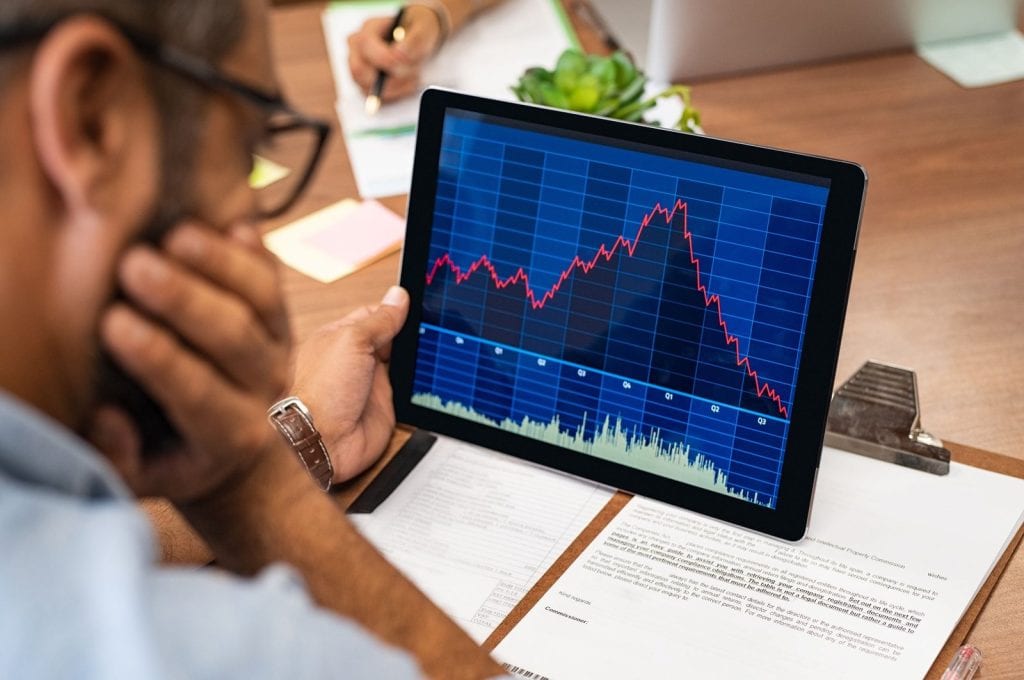
Ripple continues to upgrade the XRP Ledger with bug fixes and efficiency improvements, but it hasn’t done much to lift the value of XRP. Since peaking at $3.65 per token last year, it has lost a whopping 75% of its value and is trading at just $0.93 as I write this on Nov. 20.
Missed AI’s “Act 1”? Act 2 Could Be 15x Bigger. Most investors think they missed the AI boat because they didn’t buy Nvidia in 2005. But according to our analysts, we’re only at the end of “Act 1″—the R&D phase. “Act 2” is the global rollout. Continue »
Should investors buy XRP while it’s under $1, or steer clear? Read on for the surprising answer.
Image source: Getty Images.
XRP is losing ground to more practical alternatives
It’s almost impossible for every bank around the world to have direct relationships with one another, so they sometimes use intermediaries (correspondent banks that serve as middlemen) when sending and receiving money transfers. This slows the settlement process and adds costs, which is an undesirable combination for consumers and businesses.
Ripple’s payment network solves that issue by creating a direct line of communication between banks, paving the way for direct settlements. They might still have to use traditional payment rails and intermediaries to move the actual money if they transact in fiat currency, but the Ripple network will speed up the process. Using the XRP cryptocurrency, however, can result in direct and instant settlements via the XRP Ledger.
For example, let’s say an American bank wants to send money to a European bank. Its U.S. dollars are converted into XRP tokens, which are then sent to the receiving bank in Europe, where they are converted into euros. All of this happens in seconds, and it helps eliminate costly foreign exchange fees.
But in late 2024, Ripple launched a stablecoin called Ripple USD (CRYPTO:RLUSD). Unlike XRP, it experiences zero volatility, so it reduces the risk of losses during extended holding periods. Plus, countries across the Americas, Europe, and Asia already have regulatory frameworks in place for stablecoins, making Ripple USD a safer alternative to XRP in U.S. dollar-based transactions.
But Ripple USD runs on the XRP Ledger, so transaction fees still have to be paid in XRP tokens. That will serve as an ongoing source of demand, though it hasn’t been enough to arrest its declining value thus far. As stablecoins capture an increasing share of transaction volume, I think it will only get harder for XRP to recover.
History suggests more downside is ahead for XRP
Speculative investors have been the main source of XRP’s strongest rallies to date, but most of them are only focused on the short term, so they are quick to sell their holdings if they aren’t making gains. The first time XRP soared to over $3 per token in 2018, it went on to lose a whopping 95% of its value over the next two years, and eventually bottomed at $0.14.
XRP was never supposed to behave like an investment. In fact, a consistent increase in value over the long term was never really in the cards because a functioning bridge currency often has an equal number of buyers and sellers.
In my earlier example, the American bank would be a buyer of XRP tokens, but the European bank would sell an equal number of tokens when it converts them into euros upon receipt. As a result, this transaction would create no real value.
Therefore, I’m not surprised by XRP’s most recent trip below $1, because I don’t think its rally to an all-time high of $3.65 last year was truly based on its fundamentals. But the token could still have a long way to fall if it’s going to match its post-2018 decline.
A 95% collapse this time around would see XRP bottom at around $0.18 per token. I’m not suggesting a loss of that magnitude is guaranteed, because demand is likely to remain higher now than it was in 2018, even if XRP is used solely to cover transaction fees.
However, I think the token is likely to remain below $1 for the foreseeable future, and that the path of least resistance is to the downside.
Should you buy stock in XRP right now?
Before you buy stock in XRP, consider this:
The Motley Fool Stock Advisor analyst team just identified what they believe are the 10 best stocks for investors to buy now… and XRP wasn’t one of them. The 10 stocks that made the cut could produce monster returns in the coming years.
Consider when Netflix made this list on December 17, 2004… if you invested $1,000 at the time of our recommendation, you’d have $305,941!* Or when Nvidia made this list on April 15, 2005… if you invested $1,000 at the time of our recommendation, you’d have $771,325!*
Now, it’s worth noting Stock Advisor’s total average return is 719% — a market-crushing outperformance compared to 192% for the S&P 500. Don’t miss the latest top 10 list, available with Stock Advisor, and join an investing community built by individual investors for individual investors.
See the 10 stocks »
*Stock Advisor returns as of November 23, 2026.
Anthony Di Pizio has no position in any of the stocks mentioned. The Motley Fool has positions in and recommends XRP. The Motley Fool has a disclosure policy.