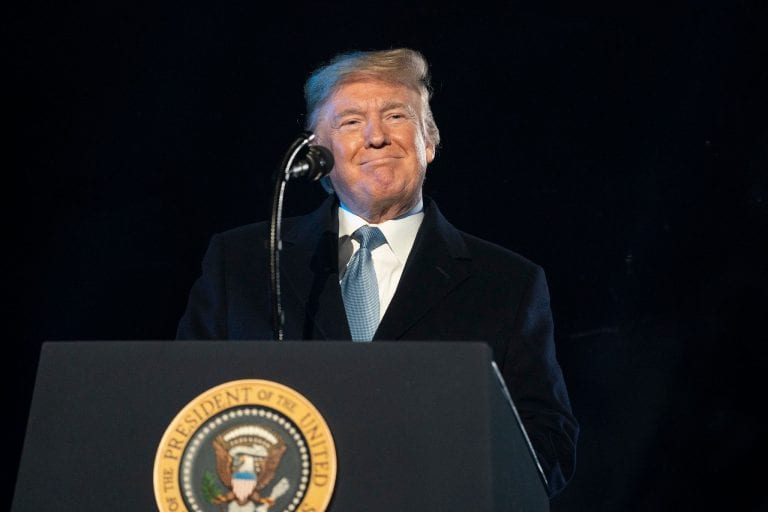
Nvidia (NASDAQ:NVDA) investors were left with many questions last week. Jensen Huang, founder and leader of the company for more than 30 years, resigned following allegations of affairs — one with an Nvidia executive and another with a woman U.S. intelligence says is a spy for China. Nvidia immediately appointed Colette Kress, the company’s chief financial officer, to the leadership role on an interim basis during the search for a permanent CEO.
Today, investors may be wondering about Nvidia’s strategy under Kress’ leadership and, eventually, the path it will take once a permanent CEO has been named. It’s unlikely that all questions will be resolved in the coming days, but something happening on Nov. 17 could offer investors some information regarding Nvidia’s current strengths and what might be next. Let’s check out three things to watch when the company reports fiscal 2027 third-quarter earnings on Nov. 17 after the market closes.
Missed AI’s “Act 1”? Act 2 Could Be 15x Bigger. Most investors think they missed the AI boat because they didn’t buy Nvidia in 2005. But according to our analysts, we’re only at the end of “Act 1″—the R&D phase. “Act 2” is the global rollout. Continue »
Image source: Getty Images.
1. Trends during the Vera Rubin launch
Nvidia started rolling out its Vera Rubin platform a few months ago, and at the time, forecast that this system would account for about 20% of data center revenue in the third quarter. The platform includes several chips all designed together from start to finish, embodying what Nvidia calls “extreme codesign.” This involves graphics processing units (GPUs), central processing units (CPUs), networking, cooling, and other elements built together as a system.
In the recent quarter, Nvidia said revenue potential per gigawatt has increased to $40 billion with this platform from $18 billion with the Hopper system. Nvidia also predicted that Rubin will be the fastest product ramp in the company’s history. The third-quarter report should offer us important clues about demand for the system and Nvidia’s ability to serve it.
2. Updates on CPU sales
Vera Rubin isn’t just another Nvidia product update. It also marks the company’s entry into a market that’s worth about $200 billion. This is the stand-alone CPU market, and Nvidia was absent from it in recent years. Intel and Advanced Micro Devices lead in this space.
Why is Nvidia suddenly interested? With the arrival of agentic AI, stand-alone CPUs are playing a big role. They fuel the actual steps an agent goes through to solve problems. So, being absent from this space means being absent from a big part of the new AI growth market. Nvidia has expressed its interest in leading in the CPU market and has said it already expects CPU revenue of $20 billion this year. The company also predicts CPU sales will more than double in fiscal 2028.
Investors should look to any updates on that figure in the upcoming earnings report.
Colette Kress, now interim CEO, isn’t a stranger to Nvidia’s earnings calls. Kress has presented full company updates, beyond just the financials, in recent quarters and addressed questions alongside Huang. I wouldn’t expect Kress to change the company’s strategy or anything fundamental while serving as interim CEO. But during this upcoming earnings call, she might offer investors some color on how Nvidia aims to proceed in the coming months.
Investors should look for comments on revenue growth next year and on how Nvidia plans to handle supply constraints in the coming quarters. It will also be important to listen for comments about financing arrangements with customers as part of the AI infrastructure build-out. Some investors have been concerned about Nvidia playing a financing role, so it should be a point to watch this quarter and into the future.
What does all of this mean for investors?
Nvidia’s earnings call so soon after Huang’s departure may not offer a huge indication of the post-Huang era. But Kress’ commentary could offer us important clues about what’s ahead. All of this means it’s an event investors should closely watch. It may be the company’s most important update yet.
Should you buy stock in Nvidia right now?
Before you buy stock in Nvidia, consider this:
The Motley Fool Stock Advisor analyst team just identified what they believe are the 10 best stocks for investors to buy now… and Nvidia wasn’t one of them. The 10 stocks that made the cut could produce monster returns in the coming years.
Consider when Netflix made this list on December 17, 2004… if you invested $1,000 at the time of our recommendation, you’d have $335,171!* Or when Nvidia made this list on April 15, 2005… if you invested $1,000 at the time of our recommendation, you’d have $1,000,640!*
Now, it’s worth noting Stock Advisor’s total average return is 823% — a market-crushing outperformance compared to 208% for the S&P 500. Don’t miss the latest top 10 list, available with Stock Advisor, and join an investing community built by individual investors for individual investors.
See the 10 stocks »
*Stock Advisor returns as of November 16, 2026.
Adria Cimino has no position in any of the stocks mentioned. The Motley Fool has positions in and recommends Advanced Micro Devices, Intel, and Nvidia. The Motley Fool has a disclosure policy.