Key Points
-
In a matter of days, Jensen Huang went from being one of the world’s most influential CEOs to being ousted from a company he helped found.
-
Warren Buffett has a reputation for being greedy when others are fearful.
-
But that doesn’t mean buying stocks just because they have sold off.
-
On Nov. 12, Jensen Huang stepped down as CEO of Nvidia (NASDAQ:NVDA), effective immediately. The news followed multiple reported affairs — including one confirmed affair with a suspected spy that could have far-reaching national security risks.
The story’s speed and severity have investors on edge. And if you feel like a deer in the headlights — you’ve come to the right place.
Missed AI’s “Act 1”? Act 2 Could Be 15x Bigger. Most investors think they missed the AI boat because they didn’t buy Nvidia in 2005. But according to our analysts, we’re only at the end of “Act 1″—the R&D phase. “Act 2” is the global rollout. Continue »
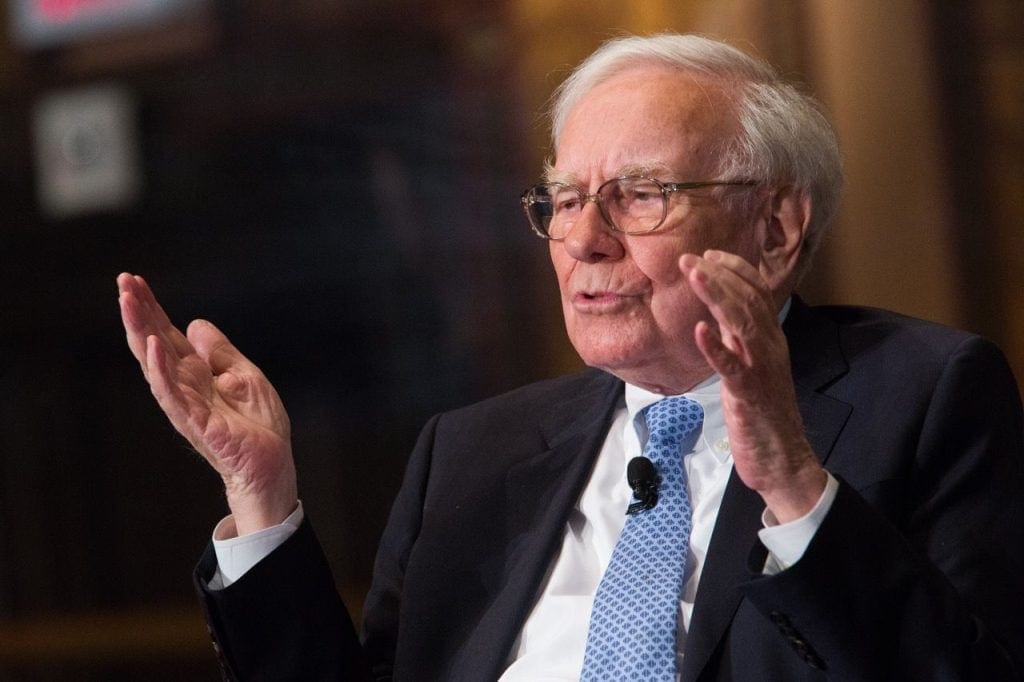
At times like this, it can be useful to try and slow down your thinking. But you don’t have to do it alone. There is a virtually infinite treasure trove of invaluable wisdom from Warren Buffett’s over 60-year stint as CEO of Berkshire Hathaway (NYSE:BRKA) (NYSE:BRKB) — from interviews to shareholder letters and more. Buffett talked about the importance of reputation and what to do during times of intense volatility. Here are five quotes to help Nvidia investors move forward with clarity.
Image source: Getty Images.
Reputation is everything
Warren Buffett is a big believer in reputation, often speaking about the duty he and Charlie Munger had to Berkshire Hathaway shareholders who entrusted them with their hard-earned savings. Buffett famously said, “It takes 20 years to build a reputation and five minutes to ruin it. If you think about that, you’ll do things differently.” He also said, “We can afford to lose money–even a lot of money. But we can’t afford to lose reputation–even a shred of reputation.”
Buffett’s hand-picked successor, Greg Abel, shares a similar sentiment. In his February 2026 letter, Abel wrote that “A large portion of our portfolio is concentrated in a small number of American companies such as Apple (NASDAQ:AAPL), American Express (NYSE:AXP), Coca-Cola (NYSE:KO), and Moody’s (NYSE:MCO) – businesses we understand well, have a high regard for their leaders, and expect will compound over decades.”
Notice the emphasis on company leadership.
Management is an integral part of any investment thesis. But it’s one of the most difficult aspects to quantify because you can’t measure it in the same way as metrics on financial statements.
How much of Nvidia’s valuation is due solely to Jensen Huang is impossible to know for sure. But he has been the only CEO the company has ever known. He played pivotal roles in avoiding catastrophic risks and seizing opportunities. He has been absolutely right about the boom in artificial intelligence (AI). And he structured Nvidia in an extremely unconventional way, with himself at the center of dozens of direct reports. So given how intertwined Huang and Nvidia were, there’s no denying the company’s reputation has been impacted. And Huang’s resignation isn’t the end of the story, as there could be ripple effects that further limit Nvidia’s ability to sell chips to China.
Fear and greed
Nvidia, along with most of the semiconductor industry, were already in a steep sell-off even before the Nov. 8 press release in which Huang admitted to having an affair. As of market close on Nov. 12, Nvidia is now down a staggering 30.5% from its all-time high, 27.5% in the last month, and has erased its year-to-date gains and is now down 10.8% in 2026.
Warren Buffett said that “It’s far better to buy a wonderful company at a fair price than a fair company at a wonderful price.” He also said that “The future is never clear; you pay a very high price in the stock market for a cheery consensus. Uncertainty actually is the friend of the buyer of long-term values.”
And perhaps most famously, in his 1986 letter to shareholders, Buffett wrote, “We simply attempt to be fearful when others are greedy and to be greedy only when others are fearful.”
Investors are fearful of Nvidia given its rapid sell-off. The tech stock used to have a cheery consensus, and now there’s a lot of uncertainty. And Nvidia is a wonderful company at a more-than-fair price, given it trades at a mere 21 times earnings and a 17.9 forward price-to-earnings ratio.
Buffett’s teachings don’t mean that just because a stock sells off during times of uncertainty, you should buy it. In fact, there are plenty of examples of instances when Buffett sold stocks even after they had undergone significant drawdowns, such as selling most of Berkshire’s stake in International Business Machines (NYSE:IBM)in 2018 and booking a loss, and selling airline stocks in the spring of 2020 in the wake of the COVID-19 pandemic — which was a mistake in hindsight. There are even more examples of Berkshire being more than happy to buy a high-quality business even after a major run-up — a recent example being Alphabet(NASDAQ:GOOGL).
Under Buffett, Berkshire began buying Alphabet in the third quarter of 2025, even after it had already rebounded massively from a sell-off earlier that summer. And under Abel, Berkshire’s Alphabet position increased further in 2026. Alphabet is now Berkshire’s fourth-largest public equity holding behind Apple, American Express, and Coca-Cola.
So while Buffett has no issue being a contrarian and buying stocks when they are out of favor, he doesn’t only make big buys when stocks are severely beaten down. He may also sell a stock that has fallen in price if he believes the investment thesis has deteriorated.
A pivotal moment for Nvidia investors
Nvidia sports a bargain-bin valuation. But it remains to be seen how much of its high-profile deals, strategic efforts, and ability to attract top talent resulted from Huang’s unique leadership style and influence.
Investors who believe Nvidia’s fundamentals are intact and that it will find a solid long-term CEO that can take Nvidia to new heights in a similar vein as Tim Cook did with Apple after Steve Jobs passed are getting an opportunity to buy Nvidia at an unbelievably attractive valuation.
That said, I think a better way to approach Nvidia is similar to what Berkshire did with Alphabet in 2025 when it waited for some of the uncertainty surrounding Google Search and Gemini to fade, then loaded up on the stock because it was still very cheap.
It wouldn’t take a cheery consensus to make Nvidia a high-conviction buy once again, just more clarity on the extent of the fallout from the affairs, security breaches, and who the new CEO will be. For now, I think investors are better off holding Nvidia and keeping it on a watch list.
Should you buy stock in Nvidia right now?
Before you buy stock in Nvidia, consider this:
The Motley Fool Stock Advisor analyst team just identified what they believe are the 10 best stocks for investors to buy now… and Nvidia wasn’t one of them. The 10 stocks that made the cut could produce monster returns in the coming years.
Consider when Netflix made this list on December 17, 2004… if you invested $1,000 at the time of our recommendation, you’d have $335,171!* Or when Nvidia made this list on April 15, 2005… if you invested $1,000 at the time of our recommendation, you’d have $1,000,640!*
Now, it’s worth noting Stock Advisor’s total average return is 823% — a market-crushing outperformance compared to 208% for the S&P 500. Don’t miss the latest top 10 list, available with Stock Advisor, and join an investing community built by individual investors for individual investors.
See the 10 stocks »
*Stock Advisor returns as of November 16, 2026.
American Express is an advertising partner of Motley Fool Money. Daniel Foelber has positions in American Express and Nvidia. The Motley Fool has positions in and recommends Alphabet, American Express, Apple, Berkshire Hathaway, International Business Machines, Moody's, and Nvidia. The Motley Fool has a disclosure policy.