Key Points
-
The Buffett indicator is hovering near 228%, potentially signaling the market is overvalued.
-
Buffett thinks activity in the stock market resembles a casino right now.
-
Berkshire Hathaway holds $377 billion of cash and equivalents on its balance sheet.
-
Over the last several years, the S&P 500 (SNPINDEX:^GSPC) generated total returns of 26%, 25%, and 18% in 2023, 2024, and 2025, respectively. Meanwhile, the Nasdaq Composite (NASDAQINDEX:^IXIC) and Dow Jones Industrial Average (DJINDICES:^DJI) also delivered impressive gains.
Much of this rally has been fueled by artificial intelligence (AI) stocks. However, enthusiasm has spread beyond semiconductor companies and cloud computing providers to adjacent industries, including utilities, energy infrastructure, and data center construction.
Missed Nvidia in 2009? This Rare Signal Is Flashing Again. In 2009, a “Double Down” signal flashed for a little-known chipmaker called Nvidia. For the first time in years, that same “Total Conviction” signal is flashing for a company 1/100th the size of Nvidia. Continue »
While these trends have created enormous wealth, they also raise questions about stock market valuations. Between 1965 and 2025, Warren Buffett helped Berkshire Hathaway deliver a staggering cumulative return of 6,099,294%, compared with 46,061% for the S&P 500, including dividends!
Given that track record, Buffett’s warnings about excessive speculation deserve attention. Right now, one of his favorite valuation metrics is flashing a concerning signal.
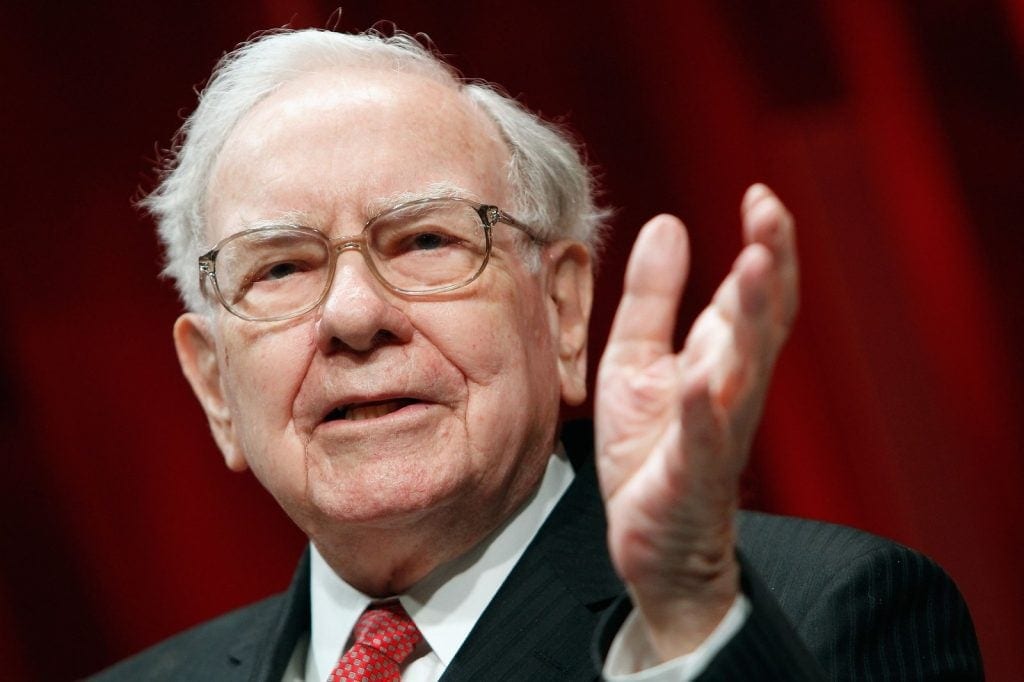
Warren Buffett. Image source: Getty Images.
The Buffett indicator is flashing a warning
In a 2001 interview with Fortune, Buffett introduced a valuation metric that subsequently became known as the Buffett indicator. The calculation divides the total market capitalization of publicly traded American companies by the country’s annual economic output. Buffett originally used gross national product (GNP), although modern versions commonly substitute gross domestic product (GDP).
The higher the reading, the more expensive the stock market is relative to the underlying economy. Buffett once described this relationship as the single best measure of stock market valuations, warning that when the ratio approaches 200%, investors are “playing with fire.”
As of this writing (Nov. 10), the Buffett indicator hovers around 228%, well above the threshold Buffett associated with speculative conditions. The broader message here is that stocks are expensive relative to economic output. This suggests investors are paying historically elevated prices for future earnings.
Buffett calls the stock market a casino
During Berkshire Hathaway’s annual meeting in May 2026, Buffett compared financial markets to a “church with a casino attached.” His point was that long-term investing and short-term speculation have become intertwined.
There’s nothing inherently speculative about investing in AI companies with accelerating revenue and expanding earnings power. However, investors can still overpay for quality businesses.
When stock prices rise faster than underlying earnings, valuations expand. Eventually, companies must deliver enough profit growth to justify those premiums. Otherwise, even a minor disappointment can trigger massive selling pressure.
We are already seeing how quickly sentiment can change. During the first week of November, the Nasdaq declined roughly 3.4% while the S&P 500 fell 2.7%, as investors reassess AI infrastructure spending and its potential regulatory challenges. Although stocks have rebounded sharply, the volatility illustrates how sensitive investors can be when expectations change.
Berkshire’s cash pile offers a clue
According to its latest quarterly filing, Berkshire held approximately $377.4 billion in cash and short-term Treasury bills as of Sept. 30. This gives the investment conglomerate extraordinary financial flexibility.

BRK.B Cash and Short Term Investments (Quarterly) data by YCharts
With that said, Berkshire isn’t sitting completely idle. Under new CEO Greg Abel, Berkshire repurchased approximately $9.6 billion of its own shares during the third quarter and continued making selective investments.
In other words, Berkshire is willing to deploy capital when opportunities look attractive, but it isn’t abandoning its liquidity cushion. I think retail investors can learn something from that approach. With valuations elevated and volatility reminding investors how quickly sentiment can reverse, maintaining some cash on hand could be wise.
Moreover, we’re also approaching a period when year-end portfolio rebalancing, profit-taking, and tax-loss harvesting may contribute to outsize selling pressure. Of course, these activities don’t necessarily cause broad market declines. A correction of 10% or more is certainly possible. A more severe bear market or crash can’t be ruled out, either.
Of course, neither the Buffett indicator nor Berkshire’s cash balance can reliably predict when those events will occur. For now, investors may want to consider reviewing concentrated positions, trimming holdings that have become disproportionately large, and maintaining enough cash to capitalize on attractive opportunities.
Remember, Buffett built his fortune by purchasing wonderful businesses at fair prices, not by attempting to predict every market downturn. The stock market may continue to climb, but elevated valuations suggest investors should be prepared for a meaningful pullback. If that happens, having cash on hand could turn a disorienting market decline into a compelling long-term buying opportunity.
Should you buy stock in S&P 500 Index right now?
Before you buy stock in S&P 500 Index, consider this:
The Motley Fool Stock Advisor analyst team just identified what they believe are the 10 best stocks for investors to buy now… and S&P 500 Index wasn’t one of them. The 10 stocks that made the cut could produce monster returns in the coming years.
Consider when Netflix made this list on December 17, 2004… if you invested $1,000 at the time of our recommendation, you’d have $344,878!* Or when Nvidia made this list on April 15, 2005… if you invested $1,000 at the time of our recommendation, you’d have $1,097,846!*
Now, it’s worth noting Stock Advisor’s total average return is 852% — a market-crushing outperformance compared to 208% for the S&P 500. Don’t miss the latest top 10 list, available with Stock Advisor, and join an investing community built by individual investors for individual investors.
See the 10 stocks »
*Stock Advisor returns as of November 11, 2026.
Adam Spatacco has no position in any of the stocks mentioned. The Motley Fool has positions in and recommends Berkshire Hathaway. The Motley Fool recommends Nasdaq. The Motley Fool has a disclosure policy.