Key Points
-
Certain members of Congress requested a closed-door briefing with Nvidia CEO Jensen Huang on Nov. 18.
-
Huang’s participation could help restore investor confidence, while further uncertainty could pressure Nvidia stock.
-
Nvidia reports earnings Nov. 17, setting up two potentially consequential days for the world’s largest artificial intelligence (AI) chip maker.
-
Over the weekend, three Republican leaders of Congress announced that they are requesting a closed-door briefing with Nvidia (NASDAQ:NVDA) CEO Jensen Huang on Nov. 18. The request follows reports concerning Huang’s relationship with a business executive suspected of providing information to Chinese intelligence.
For investors, the central issue isn’t Huang’s personal life. It’s whether the allegations raise questions about Nvidia’s corporate governance, technology safeguards, and leadership stability. Depending on what happens next, Nov. 18 could be an important date for the broader stock market.
Missed AI’s “Act 1”? Act 2 Could Be 15x Bigger. Most investors think they missed the AI boat because they didn’t buy Nvidia in 2005. But according to our analysts, we’re only at the end of “Act 1″—the R&D phase. “Act 2” is the global rollout. Continue »
Why Congress wants to meet with Jensen Huang
Three Republican lawmakers signed a letter requesting Huang’s participation in a congressional briefing. The members include Brian Mast, chairman of the House Foreign Affairs Committee; John Moolenaar, chairman of the House Select Committee on the Strategic Competition Between the United States and the Chinese Communist Party; and Rick Crawford, chairman of the House Permanent Select Committee on Intelligence.
The proposed meeting would examine Huang’s interactions with Alice Huang, a former executive at Singapore-based Megaspeed, an Nvidia customer. U.S. officials reportedly suspect Alice Huang of gathering information for Beijing. Authorities have scrutinized Megaspeed over concerns involving access to restricted American AI chips.
The allegations are under investigation and no public finding has established that Jensen Huang disclosed trade secrets or compromised U.S. national security. Nvidia’s board of directors also launched an independent investigation and stated that it currently has no reason to believe company secrets or national security information were compromised.
There’s an important distinction regarding the congressional meeting. Nov. 18 is the requested date, not a confirmed appearance. The lawmakers asked Huang to accept the proposed date or provide alternative availability by Nov. 11, while Congress remains in session. Furthermore, this is a request for a closed-door briefing, not a subpoena compelling testimony at a public hearing.
Image source: Getty Images.
Why is Jensen Huang in the spotlight?
One reason this development is attracting considerable attention is Huang’s long-standing public position on American technological leadership. Throughout the AI revolution, he has repeatedly supported American technological leadership and national security. His broader position is that the United States should maintain leadership in AI development by designing the world’s most advanced technology and encouraging international adoption of American computing platforms.
Nvidia’s graphics processing units (GPUs) are among the most important chips powering accelerated computing systems, making access to its ecosystem a significant consideration around national security.
With that said, Huang has also been critical of certain restrictions on semiconductor exports to China, arguing that excluding American companies from overseas markets could strengthen foreign competitors. In other words, Huang’s position is nuanced — consistently supporting a balance between U.S. technological leadership and the benefits of participating in global markets.
If Huang attends the congressional briefing, he will have an opportunity to explain Nvidia’s security protocols and reinforce the company’s commitment to protecting sensitive technology. Such an appearance could help investors better understand the company’s response to the allegations.
However, since the proposed meeting is closed-door, investors should not expect a televised exchange or immediate public disclosure of everything discussed.
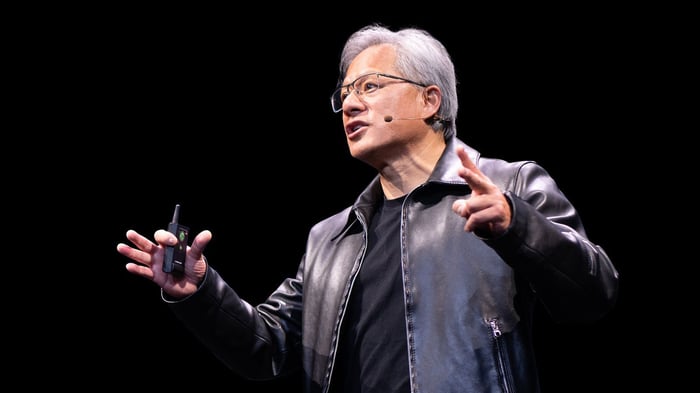
Image source: Nvidia.
What Nov. 18 could mean for the stock market
I see two possibilities following Nov. 18. First, Huang could accept the requested date and participate in the briefing. If Nvidia subsequently communicates that the meeting was constructive, and lawmakers don’t identify additional concerns, investors could interpret the development as a step toward greater clarity.
Alternatively, Huang could decline the proposed date or request a different one. Investors could easily react negatively because a decision like that creates additional uncertainty. However, requesting an alternative date does not establish wrongdoing, especially because lawmakers explicitly gave Huang that option.
The more consequential development would be an escalation involving compulsory testimony, new evidence of security shortcomings, or findings from Nvidia’s ongoing independent investigation. Those outcomes could affect investor confidence, regulatory scrutiny, and potentially Nvidia’s relationships with government agencies and customers.
The timing is doubly important because Nvidia reports third-quarter earnings on Nov. 17, just one day before the proposed briefing. Strong revenue growth and encouraging guidance could reinforce confidence in the company’s underlying business. Conversely, disappointing results could compound uncertainty already surrounding the stock.
Ultimately, investors need to distinguish between two separate questions: whether Nvidia’s AI business continues delivering a strong financial performance, and whether its governance and security procedures adequately protect shareholders.
Nov. 18 could provide some much-needed clarity on the second question, but it won’t necessarily deliver a definitive answer. Given Nvidia’s $4.3 trillion market capitalization and central role in the AI infrastructure supercycle, major changes in its valuation can influence the broader stock market.
For now, I’d watch Nvidia’s earnings on Nov. 17, the company’s response to Congress by Nov. 11, and any subsequent disclosures from lawmakers or Nvidia’s board. Those developments — not speculation about Huang’s private life — are what will meaningfully change the investment thesis.
Should you buy stock in Nvidia right now?
Before you buy stock in Nvidia, consider this:
The Motley Fool Stock Advisor analyst team just identified what they believe are the 10 best stocks for investors to buy now… and Nvidia wasn’t one of them. The 10 stocks that made the cut could produce monster returns in the coming years.
Consider when Netflix made this list on December 17, 2004… if you invested $1,000 at the time of our recommendation, you’d have $344,878!* Or when Nvidia made this list on April 15, 2005… if you invested $1,000 at the time of our recommendation, you’d have $1,097,846!*
Now, it’s worth noting Stock Advisor’s total average return is 852% — a market-crushing outperformance compared to 208% for the S&P 500. Don’t miss the latest top 10 list, available with Stock Advisor, and join an investing community built by individual investors for individual investors.
See the 10 stocks »
*Stock Advisor returns as of November 10, 2026.
Adam Spatacco has positions in Nvidia. The Motley Fool has positions in and recommends Nvidia. The Motley Fool has a disclosure policy.