Key Points
-
Amazon Web Services grew 39.3% last quarter, its fastest pace in nearly five years.
-
A $578 billion backlog gives the roughly $220 billion spending plan something concrete behind it.
-
Free cash flow is now negative, so the payoff depends on Amazon turning that backlog into profit.
-
Amazon (NASDAQ: AMZN) has been spending an extraordinary amount of money building artificial intelligence infrastructure, and investors have been waiting to see whether those investments will pay off.
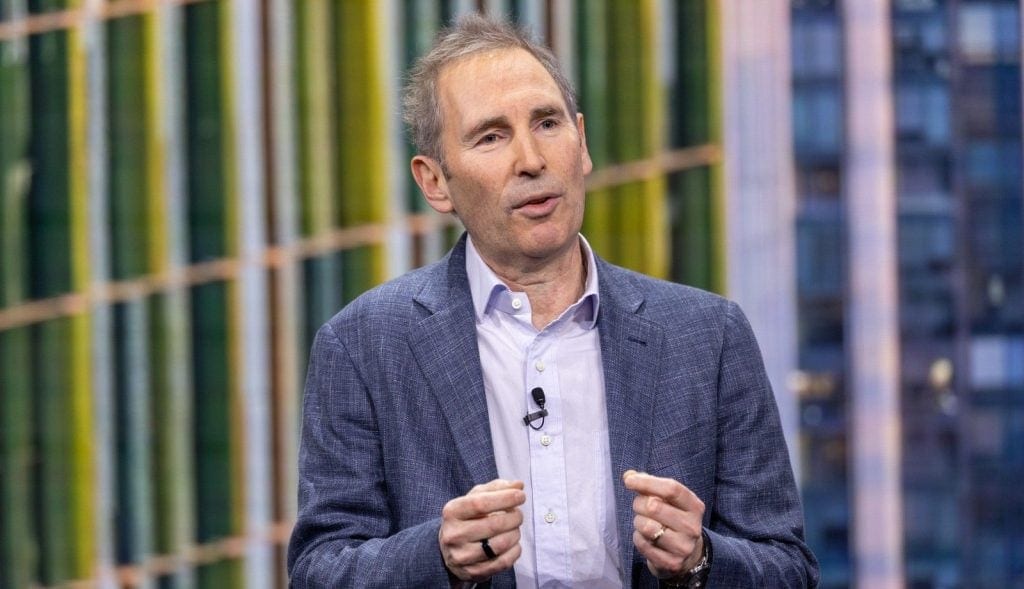
CEO Andy Jassy just gave them a pretty compelling answer.
Missed AI’s “Act 1”? Act 2 Could Be 15x Bigger. Most investors think they missed the AI boat because they didn’t buy Nvidia in 2005. But according to our analysts, we’re only at the end of “Act 1″—the R&D phase. “Act 2” is the global rollout. Continue »
During Amazon’s third-quarter earnings call, Jassy revealed that Amazon Web Services (AWS) is growing faster than it has in nearly five years, with customers consuming new computing capacity almost as quickly as Amazon can install it. “[O]ur plan is working,” he said.
That’s encouraging news for a company planning to spend approximately $220 billion on capital expenditures this year. There’s also plenty more to like about what Jassy had to say.
AWS is growing faster than ever
Amazon’s Q3 revenue was $201.9 billion, up 12% from a year earlier. Operating income increased 61% to $28.1 billion, giving the company a record operating margin of 13.9%.
AWS was the real standout. The cloud computing business generated $46 billion in revenue, an increase of 39.3% year over year. That’s the sixth consecutive quarter of accelerating growth, putting AWS on an annualized revenue run rate of approximately $184 billion.
The business is becoming increasingly profitable. AWS operating income reached $17.8 billion, up 55% from $11.4 billion a year earlier.
Jassy told analysts that AWS has been installing an AI accelerator approximately every 14 seconds. “[C]ustomers are gobbling it up,” he said. “Our core compute and storage revenue grew at their fastest rates in several years.”
That’s an important distinction. Amazon isn’t simply building enormous data centers and hoping customers eventually show up. It’s adding capacity to meet existing demand, and the company has the contracts to demonstrate it.
A $578 billion backlog tells an important story
Jassy said AWS ended the quarter with a whopping $578 billion in backlog, representing triple-digit growth from a year earlier. Backlog represents future revenue associated with customer commitments, although the timing of revenue recognition depends on when Amazon delivers the contracted services.
For investors worried that AI infrastructure spending has gotten ahead of demand, that’s a meaningful number.
Jassy also said AWS’s traditional computing and storage businesses are growing at their fastest rates in several years. So while AI is attracting much of the attention, Amazon’s existing cloud services are contributing to the acceleration.
There’s another encouraging development. According to Jassy, profitability in AWS’s AI business is improving rapidly, even with higher memory costs and depreciation expenses associated with its infrastructure investments.
That matters because Amazon needs more than growing revenue to justify its enormous spending. It needs those investments to generate attractive returns.
Amazon’s spending is worth considering
Amazon expects approximately $220 billion in capital expenditures during 2026, much of it directed toward AI infrastructure. That’s an extraordinary commitment, even for a company of Amazon’s size.
The effect is already showing up in its financial statements. Amazon reported negative free cash flow of $42.4 billion over the trailing 12 months, compared with positive free cash flow of $14.8 billion a year earlier. The company is generating substantial operating cash flow, but its investments in property and equipment are consuming even more money.
Investors also need to remember that backlog isn’t guaranteed profit. Amazon must deliver the computing services, absorb the associated operating expenses, and earn enough to justify its investment.
Jassy believes the demand will support continued expansion. In fact, Amazon projects AWS revenue growth exceeding 40% in both 2027 and 2028. But that’s management’s expectation, not a guaranteed outcome.
Why Amazon stock still looks compelling
Amazon’s Q3 results offer something investors have been demanding from the companies spending heavily on AI: evidence that customers are actually paying for the additional computing power.
AWS revenue is accelerating, operating income is climbing, and its backlog suggests there’s substantial demand still waiting to be served.
The company’s capital spending remains a legitimate concern, particularly with free cash flow under pressure. A backlog of future business doesn’t eliminate the possibility that customers will eventually slow their spending.
But Jassy’s comments make a persuasive case that Amazon’s AI investments are addressing real demand rather than speculative expectations. For investors willing to accept the near-term spending pressure, that’s a compelling reason to remain interested in Amazon stock.
Should you buy stock in Amazon right now?
Before you buy stock in Amazon, consider this:
The Motley Fool Stock Advisor analyst team just identified what they believe are the 10 best stocks for investors to buy now… and Amazon wasn’t one of them. The 10 stocks that made the cut could produce monster returns in the coming years.
Consider when Netflix made this list on December 17, 2004… if you invested $1,000 at the time of our recommendation, you’d have $341,966!* Or when Nvidia made this list on April 15, 2005… if you invested $1,000 at the time of our recommendation, you’d have $1,146,819!*
Now, it’s worth noting Stock Advisor’s total average return is 852% — a market-crushing outperformance compared to 203% for the S&P 500. Don’t miss the latest top 10 list, available with Stock Advisor, and join an investing community built by individual investors for individual investors.
See the 10 stocks »
*Stock Advisor returns as of November 10, 2026.
Patrick Sanders has no position in any of the stocks mentioned. The Motley Fool has positions in and recommends Amazon. The Motley Fool has a disclosure policy.