Key Points
-
Berkshire Hathaway is known for value investing.
-
Nowhere is this more evident than in a consumer stock that Berkshire has owned for some time and whose shares have been obliterated over the past five years.
-
However, this satellite radio operator has begun executing its turnaround plan. Berkshire’s team clearly approves.
-
Recent filings with the Securities and Exchange Commission show that Berkshire Hathaway purchased an additional $27 million in one of its top 20 holdings, SiriusXM (NASDAQ:SIRI).
The purchases were made between Oct. 30 and Nov. 3 for an average price of roughly $29 per share.
Missed AI’s “Act 1”? Act 2 Could Be 15x Bigger. Most investors think they missed the AI boat because they didn’t buy Nvidia in 2005. But according to our analysts, we’re only at the end of “Act 1″—the R&D phase. “Act 2” is the global rollout. Continue »
The satellite radio company Sirius now accounts for 1.1% of Berkshire’s massive, roughly $368 billion equity portfolio, and Berkshire controls over 37% of Sirius’s outstanding shares.
Berkshire has owned a significant stake in Sirius for quite a while, but when Liberty Media split off Sirius XM and two of its tracking stocks in 2024, Berkshire went in again, purchasing another $1.2 billion of Sirius stock in early 2024.
While the stock has struggled significantly in recent years, it has found its footing this year and is now up nearly 62%.
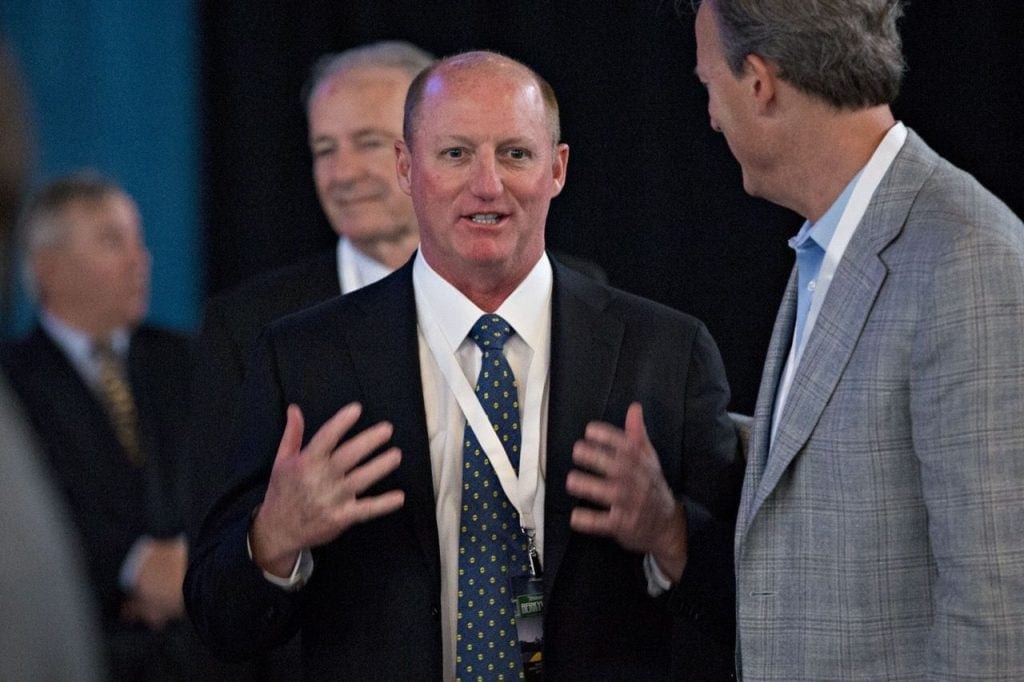
Greg Abel. Image source: Getty Images.
The turnaround plan is starting to work
Sirius is the only company in the U.S. that has obtained satellite radio broadcast licenses from the U.S. Federal Communications Commission (FCC), and therefore the only commercial satellite radio operator in the U.S.
This is the kind of thing that former Berkshire CEO Warren Buffett and his team would love, because these licenses effectively make Sirius a legal monopoly. However, the FCC granted Sirius these licenses because it believed they wouldn’t prohibit competition.
Sirius has struggled as companies like Spotify have grabbed significant attention from listeners, leading to very little subscriber growth in recent years and, at times, attrition, making investors very bearish on the stock.
In 2024, the company launched a major turnaround strategy focused on a new pricing structure, a new in-car tech platform, new ad-supported offerings, and a foray into podcasting, along with expanded social media and video efforts around those brands.
Sirius went on to acquire exclusive distribution and advertising rights to major podcast brands for high prices. The company in 2024 also laid out longer-term goals, including growing total subscribers by 25% to roughly 50 million, and growing free cash flow by 50% to $1.8 billion.
The company has made progress as well, implementing structural cost reductions and guiding for a decrease in annual satellite capital expenditures between this year and through 2028. There have also been improvements in subscriber growth over the past year.
On Sirius’ most recent earnings call, management once again raised its full-year guidance by $25 million each for revenue, EBITDA, and free cash flow. Free cash flow is expected to come in at $1.4 billion this year, with management guiding for roughly $1.5 billion in 2027.
“Subscriber trends remain stable, engagement is growing, and our advertising reach and inventory are expanding while disciplined execution continues to drive stronger profitability and cash flow,” Sirius’ CEO Jennifer Witz said on the company’s third-quarter earnings call.
Reasonable valuation and healthy dividend
This recent buy by Berkshire confirms that CEO Greg Abel and the rest of Berkshire’s investing team are encouraged by Sirius’ progress.
Investors should also be encouraged by Sirius’ results this year, although it would be great to get more confirmation that the company can continue to grow its subscriber base.
Even after the big run, Sirius stock trades at roughly 11 times forward earnings, which is not unreasonable. Furthermore, the company has a trailing dividend yield of 3.25%, which is very well covered with a trailing free cash flow yield of 13.66%.
Should you buy stock in Sirius XM right now?
Before you buy stock in Sirius XM, consider this:
The Motley Fool Stock Advisor analyst team just identified what they believe are the 10 best stocks for investors to buy now… and Sirius XM wasn’t one of them. The 10 stocks that made the cut could produce monster returns in the coming years.
Consider when Netflix made this list on December 17, 2004… if you invested $1,000 at the time of our recommendation, you’d have $342,020!* Or when Nvidia made this list on April 15, 2005… if you invested $1,000 at the time of our recommendation, you’d have $1,270,017!*
Now, it’s worth noting Stock Advisor’s total average return is 885% — a market-crushing outperformance compared to 208% for the S&P 500. Don’t miss the latest top 10 list, available with Stock Advisor, and join an investing community built by individual investors for individual investors.
See the 10 stocks »
*Stock Advisor returns as of November 4, 2026.
Bram Berkowitz has no position in any of the stocks mentioned. The Motley Fool has positions in and recommends Berkshire Hathaway and Spotify Technology. The Motley Fool has a disclosure policy.