Key Points
-
Starlink’s average revenue per user grew sequentially during the third quarter.
-
This business has attractive opportunities as SpaceX continues to scale it.
-
However, there are several potential risks to consider.
-
Space Exploration Technologies (NASDAQ:SPCX) announced its third-quarter results on Oct. 20, and Wall Street was impressed. The company’s revenue of $14.6 billion was up 161% year over year, coming in well ahead of analyst estimates. The company also reported a net profit of $4.4 billion, significantly higher than the year-ago net loss of $1.1 billion. SpaceX’s strong performance was partly due to its connectivity segment, and this unit is showing promising signs investors shouldn’t ignore.
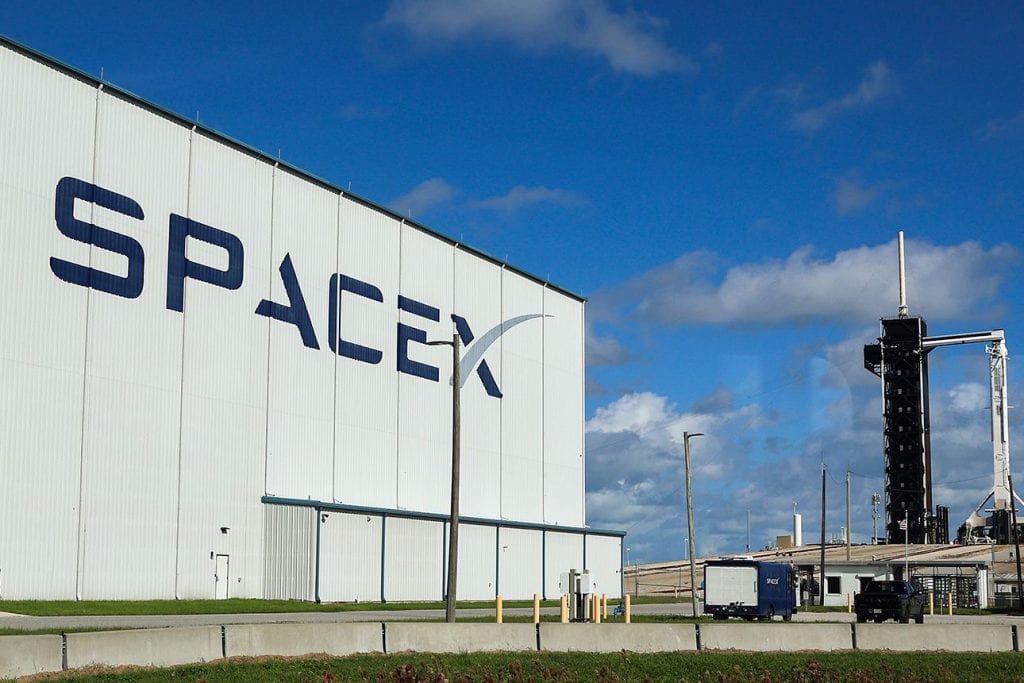
Image source: Getty Images.
Missed AI’s “Act 1”? Act 2 Could Be 15x Bigger. Most investors think they missed the AI boat because they didn’t buy Nvidia in 2005. But according to our analysts, we’re only at the end of “Act 1″—the R&D phase. “Act 2” is the global rollout. Continue »
Starlink did something it rarely does
SpaceX’s Starlink business provides satellite-based internet connectivity services through a network of Low Earth Orbit satellites. The company has especially targeted customers in underserved areas, at least so far.
In the third quarter, connectivity revenue increased 69.5% year over year to $5.2 billion. The segment’s operating income came in at $2.4 billion, up almost 99% compared to the year-ago period.
Starlink added 1.6 million customers during the period — compared to the previous quarter — and ended the third quarter with a total of 13.6 million, up almost 89% compared to the year-ago period.
These are excellent results, but there is more. Starlink’s average revenue per user (ARPU) for the quarter was $69. While that decreased from the $83 posted in the prior-year quarter, it increased 4.5% sequentially.
That’s significant, since SpaceX itself has warned investors that ARPU would decrease as the space company expands and offers lower-priced plans. This metric does not grow sequentially very often for SpaceX.
Management attributed the recent sequential increase to a favorable customer mix, but this may not carry over to the fourth quarter. Still, it’s worth noting that connectivity’s operating income grew much faster than revenue. This is perhaps even more important than the sequential increase in ARPU. Starlink requires significant upfront investments to be up and running.
Launching thousands of satellites into space that are capable of serving millions of customers is expensive, but costs decline once the constellation is up and running. To illustrate the point, suppose 10,000 satellites can service 5,000 customers while maintaining decent internet speeds.
If SpaceX has 1,000 customers, the cost of adding 4,000 more customers is relatively small compared to the initial cost of setting up the satellite constellation. There are still expenses to consider, and SpaceX would also need to launch additional satellites to expand its capacity (and replace those that are no longer working).
But this dynamic partly explains why connectivity operating income grew faster than revenue in the third quarter.
The future of Starlink
SpaceX submitted a regulatory application to launch 100,000 of its Starlink V3 satellites into orbit. The company currently has a little over 11,100 mostly older satellites up there. SpaceX’s Starlink ambitions could transform the business.
Here are two reasons why. First, Starlink V3 satellites are much more powerful than previous versions and could offer faster speeds to a larger pool of customers. Second, Starlink V3 satellites don’t fit into the company’s Falcon 9, its current workhorse rocket.
So, the plan to send 100,000 of them into orbit will depend on SpaceX’s Starship, its next-gen rocket, the largest ever built, and designed to be fully reusable (Falcon 9 is only partially reusable).
Starship could significantly reduce launch costs for SpaceX. So, the costs of launching 100,000 Starlink V3 satellites may not be as high as it sounds at first. If SpaceX is successful, the company could substantially expand its number of Starlink subscribers and grow Starlink revenue at a good clip.
There is a vast opportunity here for SpaceX. However, the company will have to navigate several potential headwinds, including execution risks for Starship, the rocket central to its ambitions.
SpaceX will also have to overcome regulatory risks. The company could certainly achieve its goal, but there is significant uncertainty, and if several projects fail, the stock could fall significantly. Investors should keep that in mind before initiating a position.
Should you buy stock in Space Exploration Technologies right now?
Before you buy stock in Space Exploration Technologies, consider this:
The Motley Fool Stock Advisor analyst team just identified what they believe are the 10 best stocks for investors to buy now… and Space Exploration Technologies wasn’t one of them. The 10 stocks that made the cut could produce monster returns in the coming years.
Consider when Netflix made this list on December 17, 2004… if you invested $1,000 at the time of our recommendation, you’d have $337,166!* Or when Nvidia made this list on April 15, 2005… if you invested $1,000 at the time of our recommendation, you’d have $1,339,143!*
Now, it’s worth noting Stock Advisor’s total average return is 904% — a market-crushing outperformance compared to 213% for the S&P 500. Don’t miss the latest top 10 list, available with Stock Advisor, and join an investing community built by individual investors for individual investors.
See the 10 stocks »
*Stock Advisor returns as of October 28, 2026.
Prosper Junior Bakiny has no position in any of the stocks mentioned. The Motley Fool has no position in any of the stocks mentioned. The Motley Fool has a disclosure policy.