Key Points
-
Buffett recommends owning good companies and holding them over the long term.
-
His advice has been proven right in several ways through the years.
-
Many investors, though, do the opposite of what Buffett recommends.
-
Investors are afraid. That’s the conclusion of CNN’s Fear and Greed Index. The index incorporates seven indicators, including market momentum, stock price strength, and market volatility. CNN’s index has spent most of the last two months hovering between a level of “fear” and “extreme fear.”
Warren Buffett has one piece of advice for investors worried about the stock market and a potential crash. And history proves it works.
Missed Nvidia in 2009? This Rare Signal Is Flashing Again. In 2009, a “Double Down” signal flashed for a little-known chipmaker called Nvidia. For the first time in years, that same “Total Conviction” signal is flashing for a company 1/100th the size of Nvidia. Continue »
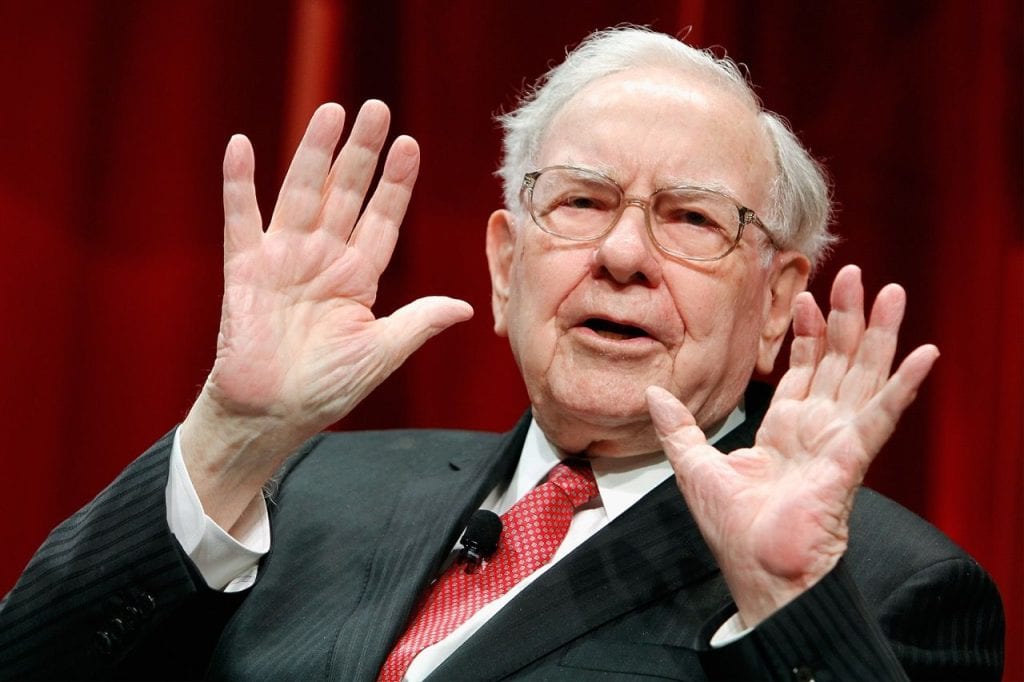
Warren Buffett. Image source: Getty Images. Image source: Getty Images.
Buffett’s advice
Buffett said in a 2016 interview with CNBC, “The money is made in investments by investing, and by owning good companies for long periods of time.” Those 18 words pack a powerful punch.
The first part of Buffett’s statement might seem unnecessary. It only makes sense that the way to make money in investments is to actually invest. However, one of the biggest mistakes investors make is staying on the sidelines. Wayne Gretzky echoed Buffett’s sentiment with his observation about playing hockey, “You miss 100% of the shots you don’t take.”
Note that Buffett didn’t say to buy the hottest growth stock on the market. He emphasized “owning good companies.” What does it take for a company to measure up? Consistent financial performance, a durable economic moat, a strong (and honest) management team, and a reasonable valuation rank at the top of the list.
Importantly, though, Buffett doesn’t think most people should try to pick individual stocks. He told CNBC in a 2017 interview, “The trick is not to pick the right company. The trick is to essentially buy all the big companies through the S&P 500 (SNPINDEX:^GSPC) and to do it consistently.”
The legendary investor also stressed holding investments for a long time. How long did he mean? Buffett wrote to Berkshire Hathaway (NYSE:BRKA) (NYSE:BRKB) shareholders in 1989 that his “favorite holding period is forever.” He qualified that statement, though, by saying that it applied only to “outstanding businesses with outstanding managements.”
Again, though, buying an S&P 500 index fund, such as the Vanguard S&P 500 ETF (NYSEMKT:VOO) or the State Street SPDR Portfolio S&P 500 ETF (NYSEMKT:SPYM), doesn’t require an investor to determine whether a business is outstanding or has an outstanding management team. Companies that succeed (based on retaining a high market cap) remain in the S&P 500 index with a greater weight, while those that don’t see their weight decline, and they may even eventually get replaced.
The evidence that it works
Does Buffett’s investing advice work? Absolutely. Just look at the historical record.
The S&P 500 and its predecessors have consistently delivered positive total returns over 20-year periods. Even if you bought at the worst times possible — right before the stock market crashes of 1929, 2000, or 2008 — you would have still made money if you held long enough.
Another proof of Buffett’s wisdom is the lesson that can happen when you try to time the market. A JPMorgan Chase (NYSE:JPM) study found that investors who missed the 10 best trading days captured returns that were only 60% of those who stayed fully invested. This study also stated that seven of those 10 best days occurred within 15 days of the 10 worst days.
Investors who stayed on the sidelines missed out even more. A person who missed the 20 best trading days made only 35% of the return generated by investors who stayed fully invested.
Want more evidence? Check out Buffett’s historical performance. From 1964 to 2024, Berkshire Hathaway’s overall gain was 5,502,284%. Buffett practiced what he preached by owning good companies over the long term.
What most investors do instead
The average investor fails to beat the market. Why? They buy after stocks have risen sharply. They sell after stocks have fallen. In short, many investors do the exact opposite of what Buffett recommends.
To be sure, Buffett didn’t advise anyone to always be 100% invested in stocks. He was a net seller of stocks for several of his final quarters at the helm of Berkshire Hathaway. He also led the conglomerate to amass a huge cash stockpile because he couldn’t find enough attractively valued stocks to buy.
But the “Oracle of Omaha” nonetheless likes the idea of holding onto S&P 500 index funds. He recommended in his 2017 CNBC interview, “Keep buying it [the S&P 500] through thick and thin — and especially through thin.”
Missed AI’s “Act 1”? Act 2 Could Be 14x Bigger
Most investors think they missed the AI boat because they didn’t buy Nvidia in 2005.
But according to our analysts, we’re only at the end of “Act 1″—the R&D phase. “Act 2” is the global rollout, a massive technology build-out that Google’s CEO says could be more profound than fire or electricity.
While everyone watches the chip designers, one “backbone” company provides the critical technology that Nvidia and AMD literally cannot function without. We’ve detailed this under-the-radar player in our new AI Playbook.
Continue »
JPMorgan Chase is an advertising partner of Motley Fool Money. Keith Speights has positions in Berkshire Hathaway. The Motley Fool has positions in and recommends Berkshire Hathaway, JPMorgan Chase, and Vanguard S&P 500 ETF. The Motley Fool has a disclosure policy.