Key Points
-
Yet today’s higher yields may reflect economic strength, not weakness.
-
And investors who bail on stocks during dips often suffer worse returns.
-
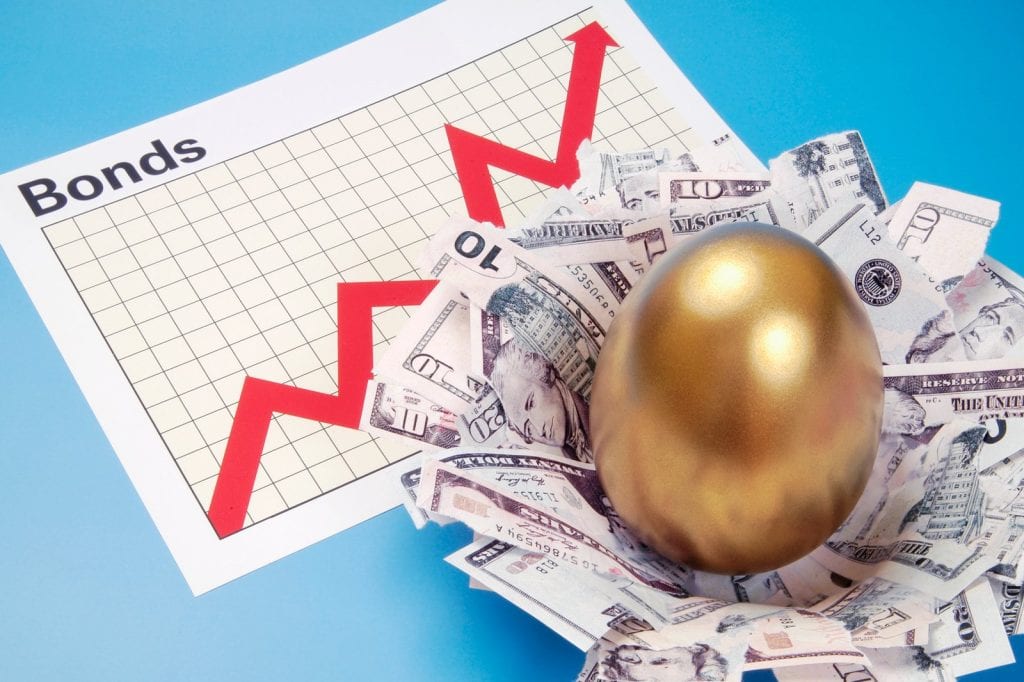
Perhaps the biggest story in financial markets in 2026, so far at least, has been the surge in bond yields. Yields have been soaring in recent months, with the yield of the 10-year U.S. Treasury note rising more than 1 percentage point this year, from 4.17% in early January to 5.31% in early October, before settling back a bit in recent weeks. That yield level hasn’t been seen since 2002.
Such a surge in yields has often preceded a stock market correction, so many investors are understandably considering getting out of stocks now, before it’s too late. I think that’s a bad move, however, as investors who stay in the market through such episodes are more likely to thrive over time.
Missed AI’s “Act 1”? Act 2 Could Be 15x Bigger. Most investors think they missed the AI boat because they didn’t buy Nvidia in 2005. But according to our analysts, we’re only at the end of “Act 1″—the R&D phase. “Act 2” is the global rollout. Continue »
And if we look more closely at the reasons for the recent surge in yields, there’s a case to be made that now is definitely not the time to abandon stocks.
First, however, what’s going on with bonds, and why is it dangerous to stocks?
Well, there are many different explanations for the surge in bond yields. Bond market analysts point to so-called bond vigilantes, i.e., bond investors who are selling their bonds in protest of soaring national deficits and weak central bank responses to persistently high inflation, which erodes bond values. Such a large selling volume sends bond prices down and yields, which move in the opposite direction, higher.
Other analysts say concerns about the war in the Persian Gulf and resulting high oil prices and inflation are scaring bond investors into selling.
Yields are surging due to an imbalance of the supply and demand for capital
My primary explanation for rising yields is a bit simpler: supply and demand. There has been a surge in global demand for capital this year, with national governments borrowing heavily in bond markets to fund rising deficit spending, while AI hyperscalers are issuing hundreds of billions of dollars in bonds to fund the build-out of AI data centers.
Yet the supply of global capital to purchase all those bonds is limited. Demand for capital is surging faster than its supply, driving the cost of capital — which for bonds is expressed in yields — higher.
And historically, soaring yields have been bad for stocks, for several reasons. Many other borrowing costs, from auto and home loans to corporate loans, are based on bond yields, so borrowing costs for consumers and businesses alike rise when yields do. That can depress consumer spending and push companies’ interest costs higher, squeezing corporate profits and earnings, which ultimately impacts share prices.
Also, higher yields make bonds more attractive relative to stocks. Think about it: today you can buy a 10-year Treasury note, which has nearly zero risk associated with it, and receive better than 5% annual interest, guaranteed. In 10 years, you get all of your principal back. (That is, unless you think the U.S. government is going to default on its debt. Should that happen, the stock market will almost certainly collapse too, along with the global economy.) Stocks, on the other hand, often return more than 5% annually, but they carry significant risk, especially over a period of 10 years or more.
But in the current scenario, as I pointed out above, bond yields are probably rising primarily due to economic growth. That includes the expansion of AI infrastructure, robust consumer spending, and, for better or worse, strong government borrowing and spending. Such growth should ultimately translate into higher stock valuations.
Getting out of the market can lose you money
But there’s another reason that investors nervous about bond yields should consider staying in the stock market. Every time there has been a stock market correction or pullback, the market has bounced back. So, investors who sell on dips lock in their losses, which, had they held onto their stocks, would have only been temporary paper losses. And those who sell in a decline and wait for the market to recover before getting back in pay a significant cost in terms of long-term returns.
Of course, if you’re close to retirement and you’ll soon need to start liquidating your portfolio for cash to live on, you want to be more defensive in volatile times like these, as you may not have the time to wait for your portfolio to recover after a market correction or pullback. For everyone else, however, I believe selling right now, because bond yields are surging, is a terrible move.
Missed AI’s “Act 1”? Act 2 Could Be 14x Bigger
Most investors think they missed the AI boat because they didn’t buy Nvidia in 2005.
But according to our analysts, we’re only at the end of “Act 1″—the R&D phase. “Act 2” is the global rollout, a massive technology build-out that Google’s CEO says could be more profound than fire or electricity.
While everyone watches the chip designers, one “backbone” company provides the critical technology that Nvidia and AMD literally cannot function without. We’ve detailed this under-the-radar player in our new AI Playbook.
Continue »
The Motley Fool has a disclosure policy.