Key Points
-
Nvidia’s stock is back near where it traded two years ago, despite earnings that more than doubled last quarter.
-
The stock trades at just 9.3 times forward earnings, with Vera Rubin ramping faster than any product in company history.
-
Risks include the Jensen Huang saga, slowing AI spending, and competition, but the stock could reach $234 to $325 by the end of 2028.
-
Two years ago, near the end of 2024, Nvidia‘s (NASDAQ:NVDA) share price hovered around $140. Today, the GPU stock hovers around $140. And no, there hasn’t been a stock split to explain the dismal performance.
To be sure, Nvidia’s share price moved significantly over the past couple of years. At its peak, the stock was up more than 70%. However, recent headwinds have brought Nvidia’s momentum to a screeching halt.
Missed AI’s “Act 1”? Act 2 Could Be 15x Bigger. Most investors think they missed the AI boat because they didn’t buy Nvidia in 2005. But according to our analysts, we’re only at the end of “Act 1″—the R&D phase. “Act 2” is the global rollout. Continue »
Will the next two years bring more volatility with minimal gains? I don’t think so. Here’s my prediction of where Nvidia’s stock price will be by the end of 2028.
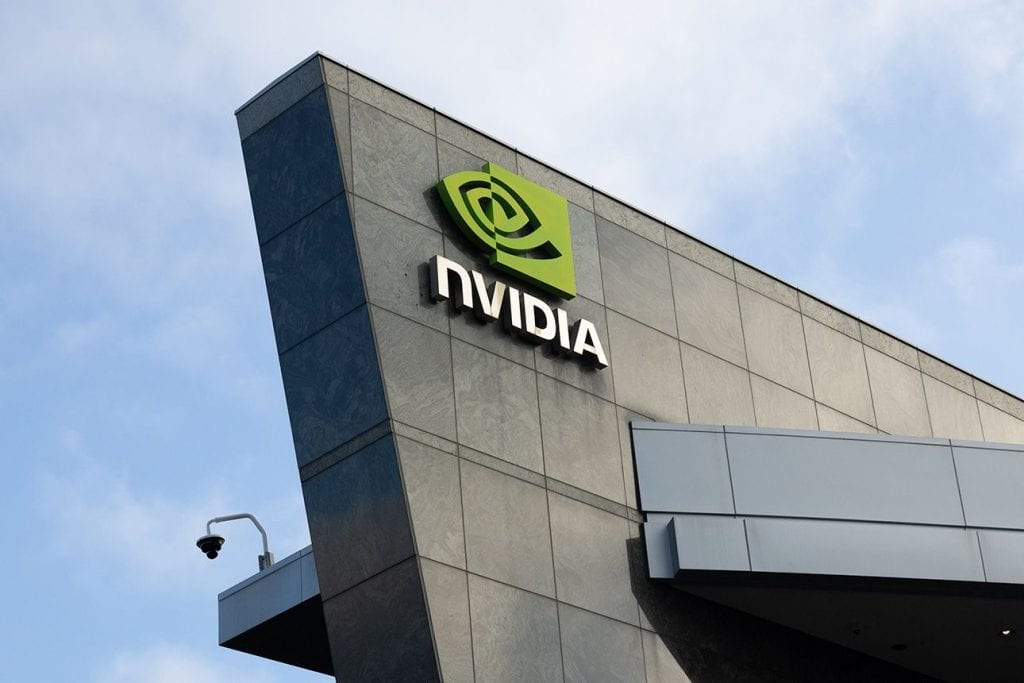
Image source: Getty Images.
Nvidia’s positive dynamics
Earnings growth and valuation are two of the most important factors (I’d say the most important factors) determining how much a stock will move over the next two years. Nvidia looks good on both fronts.
In its latest quarter, the company’s earnings more than doubled year over year both on a GAAP and a non-GAAP basis. Those numbers were driven by similar revenue growth. Will Nvidia be able to keep up that torrid pace of growth? Probably not. But the company’s prospects still look great.
Going into its fiscal 2027 third quarter, Nvidia projected 70% earnings growth in fiscal 2028. It now expects earnings to jump 75%. One contributor to the rosy forecast: Nvidia looks for its Vera CPU revenue to more than double, with customers such as Meta Platforms (NASDAQ:META) and OpenAI using the technology for agentic AI.
The Vera Rubin high-performance computing platform has had the fastest product ramp in Nvidia’s history, generating nearly $20 billion of shipments after only one quarter of production. The growth trajectory likely won’t be short-lived, either. Colette Kress, Nvidia’s longtime CFO who temporarily served as interim CEO in recent weeks, noted in the fiscal 2027 Q3 earnings call, “Cloud industry backlog now sits at $2.5 trillion, up from $2 trillion just 3 months ago, underscoring the significant multiyear opportunity ahead of our partners and of Nvidia.”
In the past, Nvidia’s valuation has caused some (including me) to be skeptical about the stock’s prospects. However, the tech giant’s shares now trade at only 9.3 times forward earnings. That’s by far the lowest forward earnings multiple among the so-called “Magnificent Seven” stocks.
Risks that can’t be ignored
In addition to those positive dynamics for Nvidia, though, some risks can’t be ignored. I’d put potential developments in the controversy surrounding CEO Jensen Huang at the top of the list. Huang resigned on Nov. 12, 2026, in the wake of a scandal over his relationship with an alleged Chinese spy. However, Nvidia’s board reinstated him only 11 days later, with President Trump’s public backing.
I’m not convinced this saga is over. Huang is scheduled to appear before one Senate committee and three House committees in the coming days. Should any new and unsavory facts come to light during those hearings or over the next few weeks and months, Nvidia’s stock could be hammered once again.
Nvidia’s growth would also be negatively impacted if AI infrastructure spending slows. Several hyperscalers have seen their free cash flow deteriorate due to heavy AI investments. That trend can’t go on indefinitely.
Don’t overlook the likelihood of increased competition, either. Advanced Micro Devices (NASDAQ:AMD) is going head-to-head with Nvidia. Huawei is taking advantage of restrictions against the sale of Nvidia’s most advanced GPUs in China. Nvidia’s largest customers, including Alphabet’s (NASDAQ:GOOG) (NASDAQ:GOOGL) Google Cloud, Amazon (NASDAQ:AMZN), and Microsoft (NASDAQ:MSFT) have developed their own AI chips.
My prediction
Wall Street hasn’t thrown in the towel on Nvidia. The consensus 12-month price target for the stock is $234. That seems to be a reasonable low end of the range of where Nvidia will be by the end of 2028. What’s the high end? I’d estimate around $325, which would be more than 120% above Nvidia’s current share price.
Take this prediction with a grain of salt. The risks mentioned could be a greater headwind for Nvidia than I anticipate. Still, I fully expect that Nvidia will remain a winner for investors over the next decade, no matter where its stock price is two years from now.
Should you buy stock in Nvidia right now?
Before you buy stock in Nvidia, consider this:
The Motley Fool Stock Advisor analyst team just identified what they believe are the 10 best stocks for investors to buy now… and Nvidia wasn’t one of them. The 10 stocks that made the cut could produce monster returns in the coming years.
Consider when Netflix made this list on December 17, 2004… if you invested $1,000 at the time of our recommendation, you’d have $328,591!* Or when Nvidia made this list on April 15, 2005… if you invested $1,000 at the time of our recommendation, you’d have $924,693!*
Now, it’s worth noting Stock Advisor’s total average return is 791% — a market-crushing outperformance compared to 201% for the S&P 500. Don’t miss the latest top 10 list, available with Stock Advisor, and join an investing community built by individual investors for individual investors.
See the 10 stocks »
*Stock Advisor returns as of November 29, 2026.
Keith Speights has positions in Alphabet, Amazon, Meta Platforms, and Microsoft. The Motley Fool has positions in and recommends Advanced Micro Devices, Alphabet, Amazon, Meta Platforms, Microsoft, and Nvidia. The Motley Fool has a disclosure policy.