Key Points
-
Manufacturing solid-state batteries economically remains a significant challenge.
-
QuantumScape is pursuing commercial opportunities beyond electric vehicles.
-
Licensing could generate royalties without massive capital expenditures.
-
QuantumScape (NASDAQ:QS) has been developing solid-state battery technology since 2010. Yet as of third-quarter 2026, the company still hasn’t recognized any revenue, and it has accumulated a deficit of approximately $4.1 billion since its inception. Given the time and money that’s gone into developing this technology, you might reasonably wonder why it’s taking so long to commercialize these solid-state batteries.
Manufacturing remains the biggest hurdle
Conventional lithium-ion batteries use a liquid electrolyte to move lithium ions between two electrodes. QuantumScape uses a proprietary ceramic separator that enables the use of a lithium-metal anode, which forms when the battery is charged. This design eliminates the need for a conventional graphite anode and could allow battery manufacturers to produce lighter, more energy-dense batteries that charge considerably faster.
Missed Nvidia in 2009? This Rare Signal Is Flashing Again. In 2009, a “Double Down” signal flashed for a little-known chipmaker called Nvidia. For the first time in years, that same “Total Conviction” signal is flashing for a company 1/100th the size of Nvidia. Continue »
Image source: Getty Images.
QuantumScape’s QSE-5 prototype cells have demonstrated an energy density exceeding 844 watt-hours per liter and the ability to charge from 10% to 80% in 12.2 minutes. However, producing a functioning battery in a laboratory and manufacturing millions of those batteries economically are two very different things.
QuantumScape must manufacture extremely thin ceramic separators with minimal defects. Increasing production volumes without sacrificing quality, reliability, or manufacturing yields has required new manufacturing processes and specialized equipment. Meanwhile, conventional lithium-ion batteries continue to get cheaper and better, creating a moving target for QuantumScape on cost and performance.
QuantumScape is finally moving toward commercial production
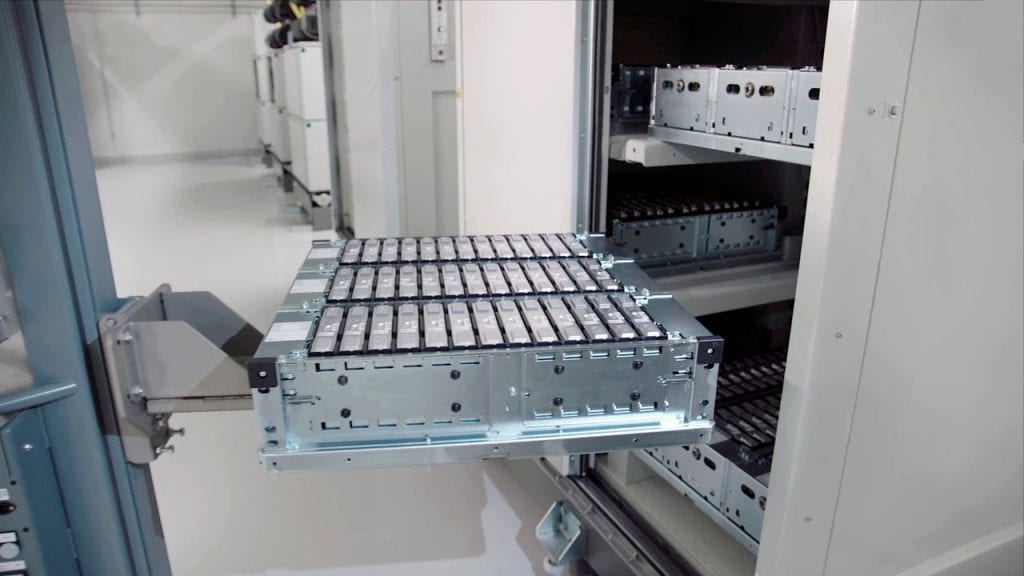
In February, QuantumScape inaugurated its highly automated Eagle Line pilot manufacturing facility in San Jose, California. The facility is now producing increasing volumes of battery cells for customer testing. In October, the company announced plans for a 100-megawatt-hour production line targeting AI data centers, aerospace, and defense applications, with production scheduled to begin in 2028.
These markets could provide QuantumScape with a path to commercialization outside the automotive industry, particularly in applications where customers may be willing to pay a premium for better battery performance. The company has also established an automotive partnership with Honda (NYSE:HMC), although its existing collaboration with Volkswagen‘s (OTC:VWAGY) battery subsidiary, PowerCo, is undergoing another round of negotiations. PowerCo milestone payments have been suspended during those negotiations.
Patience is not optional
QuantumScape ended Q3 with $819.8 million in liquidity. However, management expects an adjusted EBITDA loss of between $250 million and $275 million this year. The company also reported $9.8 million in Q3 customer billings, although those billings do not constitute recognized revenue.
To be sure, QuantumScape is pursuing a capital-light licensing strategy under which its manufacturing partners would pay for the construction and operation of battery factories using QuantumScape’s proprietary technology. This could eventually allow the company to collect royalties on batteries manufactured by its partners without having to finance the construction of numerous multi-billion-dollar production facilities. However, that business model depends on its partners successfully manufacturing the technology at commercial scale.
After more than 16 years of development, QuantumScape has demonstrated some impressive battery performance characteristics. What it hasn’t demonstrated is the ability to manufacture those batteries profitably at scale. Until it does, QuantumScape remains a highly speculative stock. The upside could be substantial, but be prepared for additional manufacturing delays, continued financial losses, and potentially more shareholder dilution.
Should you buy stock in QuantumScape right now?
Before you buy stock in QuantumScape, consider this:
The Motley Fool Stock Advisor analyst team just identified what they believe are the 10 best stocks for investors to buy now… and QuantumScape wasn’t one of them. The 10 stocks that made the cut could produce monster returns in the coming years.
Consider when Netflix made this list on December 17, 2004… if you invested $1,000 at the time of our recommendation, you’d have $328,591!* Or when Nvidia made this list on April 15, 2005… if you invested $1,000 at the time of our recommendation, you’d have $924,693!*
Now, it’s worth noting Stock Advisor’s total average return is 791% — a market-crushing outperformance compared to 201% for the S&P 500. Don’t miss the latest top 10 list, available with Stock Advisor, and join an investing community built by individual investors for individual investors.
See the 10 stocks »
*Stock Advisor returns as of November 28, 2026.
Jeff Siegel has no position in any of the stocks mentioned. The Motley Fool has no position in any of the stocks mentioned. The Motley Fool has a disclosure policy.