Key Points
-
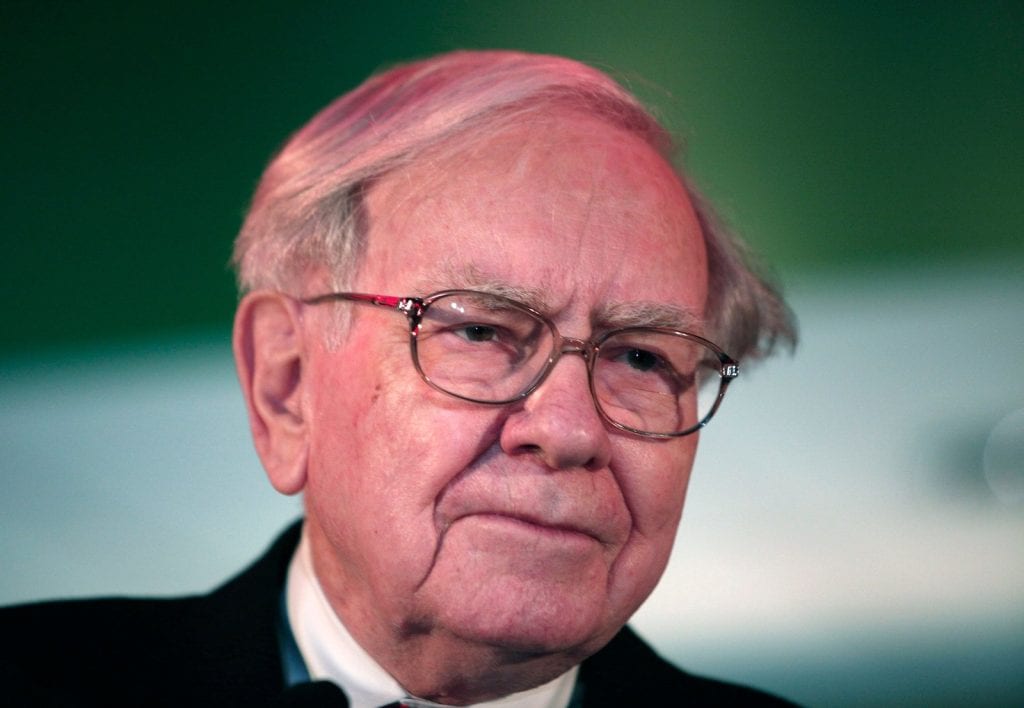
Warren Buffett retired as Berkshire’s CEO at the end of 2025, handing the proverbial keys to the company’s investment portfolio over to Greg Abel.
-
The three largest positions were all initially built up by the Oracle of Omaha.
-
Well-defined competitive advantages continue to make these proven winners attractive long-term holdings.
-
It’s been a record-breaking year for Berkshire Hathaway (NYSE:BRKA)(NYSE:BRKB) in more ways than one. Despite Warren Buffett retiring as CEO at the end of last year, his successor, Greg Abel, has led the company’s shares to an all-time high.
Even though Abel completely overhauled Berkshire’s $346 billion investment portfolio in the first quarter, one common thread between Berkshire’s current and former bosses remains the same: portfolio concentration. Both Buffett and Abel strongly believe in wagering big on their best ideas. As of the closing bell on Nov. 20, 47% of Berkshire’s invested assets ($162.6 billion) were put to work in three proven winners: Apple (NASDAQ:AAPL), American Express (NYSE:AXP), and Coca-Cola (NYSE:KO).
Missed AI’s “Act 1”? Act 2 Could Be 15x Bigger. Most investors think they missed the AI boat because they didn’t buy Nvidia in 2005. But according to our analysts, we’re only at the end of “Act 1″—the R&D phase. “Act 2” is the global rollout. Continue »
Greg Abel now oversees Berkshire’s investment portfolio following Warren Buffett’s retirement. Image source: Getty Images.
Apple: $78.08 billion (22.5% of invested assets)
If there’s a theme among all three of these stocks, it’s that they were all built up by the Oracle of Omaha. Warren Buffett began buying shares of Apple in the first quarter of 2016, eventually building a nearly 944.3-million-share position at its peak in 2020.
Buffett’s lure with Apple was its extremely loyal customer base and its exceptional pricing power.
Furthermore, Apple has executed the largest nominal share repurchase program on Wall Street. Through the end of Apple’s fiscal 2026 (ending Sept. 26), the company has repurchased $902.8 billion of its common stock, retiring nearly 45% of its outstanding shares in the process.
But it’s Apple’s innovative prowess that entices Greg Abel. Under Tim Cook, who stepped down as CEO on Sept. 1, the company shifted to higher-margin subscription services and launched its generative artificial intelligence (AI) platform, Apple Intelligence.
American Express: $45.74 billion (13.2% of invested assets)
Credit-services provider American Express (Amex) is Berkshire Hathaway’s second-longest holding (since 1991) and was labeled an “indefinite” position by Warren Buffett in his 2023 letter to shareholders.
Amex benefits from being cyclical and tackling both sides of the transaction counter. It’s the third-largest payment processor in the U.S. by credit-card-network purchase volume, meaning it collects sizable merchant fees to facilitate transactions. It’s also a lender, generating annual fees and interest income from its cardholders (businesses and individuals). Given that economic expansions last considerably longer than recessions, being able to double-dip works in Amex’s favor more often than not.
Additionally, Amex has historically attracted well-to-do clientele. High earners are less likely to alter their spending habits or fail to pay their bills than the average-earning worker, allowing Amex to bounce back from economic downturns faster than most other lenders.

Image source: Coca-Cola.
Coca-Cola: $38.8 billion (11.2% of invested assets)
No stock in Berkshire Hathaway’s portfolio has been held longer than Coca-Cola (since 1988). Thanks to Berkshire’s minuscule cost basis in Coca-Cola and the latter’s 64-year streak of raising its dividend, Abel’s company is netting a 65% annual yield on cost from this position.
Coca-Cola’s long-term outperformance stems from its well-known brand name and global reach. With the exception of North Korea, Cuba, and Russia, it has operations in every country. This allows it to generate organic growth in emerging markets while reaping the steady reward of predictable operating cash flow in developed countries.
The argument can also be made that Coca-Cola’s marketing is unrivaled. The company’s holiday tie-ins, coupled with its use of AI in social media marketing campaigns, help it cross generational gaps and connect with consumers of all ages.
Should you buy stock in Apple right now?
Before you buy stock in Apple, consider this:
The Motley Fool Stock Advisor analyst team just identified what they believe are the 10 best stocks for investors to buy now… and Apple wasn’t one of them. The 10 stocks that made the cut could produce monster returns in the coming years.
Consider when Netflix made this list on December 17, 2004… if you invested $1,000 at the time of our recommendation, you’d have $320,394!* Or when Nvidia made this list on April 15, 2005… if you invested $1,000 at the time of our recommendation, you’d have $917,381!*
Now, it’s worth noting Stock Advisor’s total average return is 776% — a market-crushing outperformance compared to 199% for the S&P 500. Don’t miss the latest top 10 list, available with Stock Advisor, and join an investing community built by individual investors for individual investors.
See the 10 stocks »
*Stock Advisor returns as of November 27, 2026.
American Express is an advertising partner of Motley Fool Money. Sean Williams has no position in any of the stocks mentioned. The Motley Fool has positions in and recommends American Express, Apple, and Berkshire Hathaway. The Motley Fool has a disclosure policy.