Key Points
-
UnitedHealth Group has seen earnings per share jump the past two quarters.
-
The stock pays a dividend yielding around 2.65%.
-
The company’s size gives it an advantage against smaller competitors.
-
UnitedHealth Group (NYSE:UNH) recently upgraded its yearly earnings guidance for the third time this year. In each of its quarterly earnings reports, its expectations for yearly adjusted earnings per share (EPS) have climbed.
In its 2025 annual report, the healthcare insurer had 2026 adjusted EPS of at least $17.75. After the first quarter, it said it would be at least $18.25. The second quarter brought another increase to between $19.50 and $20. Now, after the third quarter, UnitedHealth Group is predicting full-year EPS of at least $20.50.
Missed AI’s “Act 1”? Act 2 Could Be 15x Bigger. Most investors think they missed the AI boat because they didn’t buy Nvidia in 2005. But according to our analysts, we’re only at the end of “Act 1″—the R&D phase. “Act 2” is the global rollout. Continue »
In the meantime, though, the stock has climbed only 3%. So far this month, its shares are down more than 18%. That’s because of a rising chorus from both sides of the political aisle that something must be done to rein in Medicare Advantage costs, and because of the possibility that Medicare-for-all proposals, if they became law, would upend the company’s business model.
On Nov. 16, a proposed rule, called CRUSH, from the Centers for Medicare & Medicaid Services (CMS), was floated to curb healthcare fraud. This heightened concerns about increased expenses and potential repayment liabilities for Medicare Advantage providers such as UnitedHealth Group. The rule would increase audits of insurance providers and allow CMS to recover improper payments.
The current dip for UnitedHealth Group presents an opportunity and a question: What would a $10,000 investment return if the company’s turnaround continues?
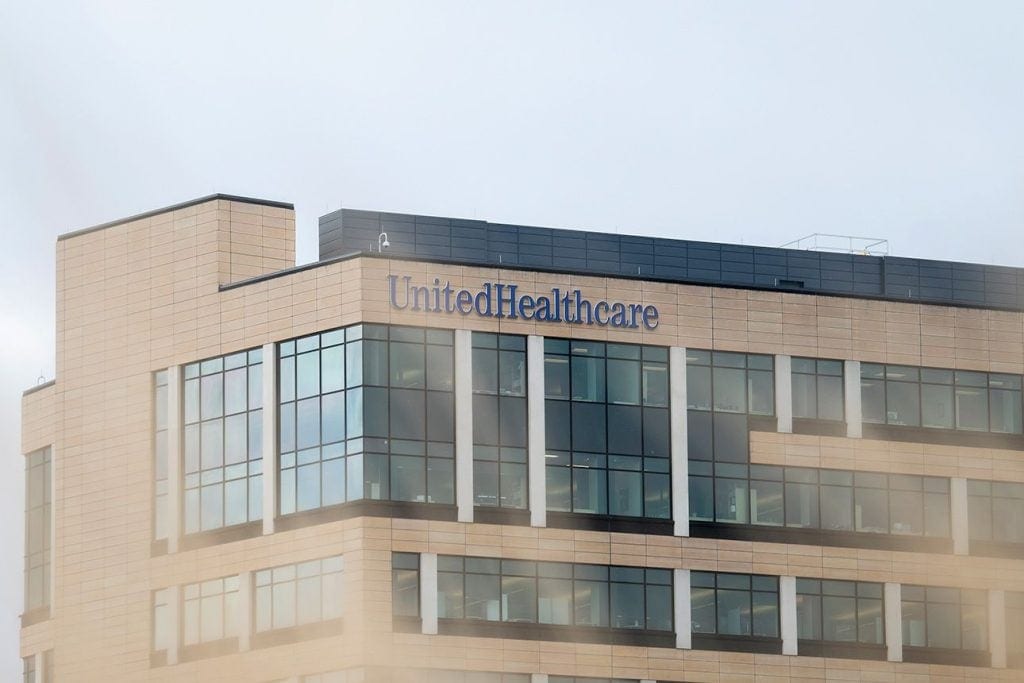
Image source: Getty Images.
You can call it a comeback
If you had invested $10,000 in UnitedHealth Group stock 10 years ago and reinvested its dividends, you would have around $26,600 today, representing an annual return of 10.3%. Over the next 10 years, it’s possible the stock could deliver an annual return of more than 10%. Let’s make the case for why that could happen.
The stock is trading at around 19 times trailing earnings, well below its historical valuation of about 22 times earnings.
After a couple of down years, the company appears to be in the midst of a turnaround. It saw quarterly EPS rise by 76.21% year over year in Q3 and by 61.72% in Q2. It has been able to do that because management’s margin-over-volume strategy of exiting unprofitable geographies, tightening benefits, and shifting Medicare Advantage mix toward higher-margin Special Needs Plans (SNPs) is successfully restoring core insurance margins.
In Q3, UnitedHealth Group reported that revenue declined year over year by 0.09% to $86.3 billion. However, net income rose to $2.8 billion, up from $1.8 billion in the same period a year ago, and nine-month operating margin rose from 5.6% to 7%.
The company’s issues have been greatly exaggerated
Most headline-grabbing CMS rules are proposed regulations subject to public comment periods, revisions, and multi-year phase-ins rather than instant earnings hits. For example, key provider enrollment provisions under the CRUSH proposal would not take effect until the plan year beginning two years after a final rule is published.
Plus, UnitedHealthcare plans reprice annually, allowing the company to adapt to changes. If CMS reduces benchmark reimbursements or tightens quality bonus thresholds, UnitedHealthcare adjusts by trimming supplemental benefits (such as dental, vision, or over-the-counter allowances), raising deductibles, or narrowing provider networks, as it did for its 2027 bids to protect its 2% to 4% Medicare Advantage operating margin target.
UnitedHealth Group may benefit from more complex rules
Heavy compliance burdens, stricter risk-adjustment documentation rules, and narrower margins disproportionately squeeze smaller regional insurers and start-up plans that lack massive actuarial, legal, and data infrastructure.
When tighter rules force smaller competitors to exit unprofitable counties or slash benefits, UnitedHealth’s unmatched scale allows it to absorb compliance costs and capture displaced market share over time.
Even if Medicare Advantage faces strict federal scrutiny, UnitedHealth Group is not a pure-play Medicare Advantage insurer. Its earnings are heavily cushioned by Optum (Optum Rx, Optum Health, and Optum Insight) and by its massive commercial employer-sponsored insurance book, insulating overall enterprise earnings from single-program rule changes.
The company raised its quarterly dividend by just under 5% this year to $2.32 per share, the 17th consecutive year it has increased its dividend. The dividend yield is an above-average 2.65%.
Looking down the road
If UnitedHealth Group can sustain double-digit EPS growth, the stock would likely grow by 12% to 15% each year. Counting the company’s dividend, it wouldn’t be unreasonable for a $10,000 investment now to be worth at least $31,058 a decade from now.
The company has faced challenges to its business models before, but its size and scope give it the ability to overcome legal challenges that could affect its bottom line, potentially widening its moat against competitors.
Should you buy stock in UnitedHealth Group right now?
Before you buy stock in UnitedHealth Group, consider this:
The Motley Fool Stock Advisor analyst team just identified what they believe are the 10 best stocks for investors to buy now… and UnitedHealth Group wasn’t one of them. The 10 stocks that made the cut could produce monster returns in the coming years.
Consider when Netflix made this list on December 17, 2004… if you invested $1,000 at the time of our recommendation, you’d have $320,394!* Or when Nvidia made this list on April 15, 2005… if you invested $1,000 at the time of our recommendation, you’d have $917,381!*
Now, it’s worth noting Stock Advisor’s total average return is 776% — a market-crushing outperformance compared to 199% for the S&P 500. Don’t miss the latest top 10 list, available with Stock Advisor, and join an investing community built by individual investors for individual investors.
See the 10 stocks »
*Stock Advisor returns as of November 27, 2026.
James Halley has no position in any of the stocks mentioned. The Motley Fool recommends UnitedHealth Group. The Motley Fool has a disclosure policy.