Key Points
-
Jensen Huang’s reinstatement triggered a massive rally for Nvidia stock, adding over $1 trillion in market value.
-
Nvidia is forecasting 75% revenue growth in fiscal 2028, up from a prior estimate of 70%.
-
Compounding earnings growth, aggressive stock buybacks, and an attractive valuation support further upside in Nvidia stock.
-
Nvidia (NASDAQ:NVDA) has experienced one of the most tumultuous leadership crises in recent corporate history. Over the past two weeks, allegations involving founder Jensen Huang’s extramarital relationships and potential connections to Chinese intelligence triggered his resignation, a search for his replacement, and a brutal collapse in Nvidia’s market capitalization. Now, in a stunning reversal, Huang is back.
On Nov. 23, Nvidia announced that its board had unanimously reinstated Huang as CEO, president, and director, effective immediately. Investors responded enthusiastically, sending Nvidia stock surging 35% during Monday morning’s trading session.
Missed AI’s “Act 1”? Act 2 Could Be 15x Bigger. Most investors think they missed the AI boat because they didn’t buy Nvidia in 2005. But according to our analysts, we’re only at the end of “Act 1″—the R&D phase. “Act 2” is the global rollout. Continue »
The sharp rebound raises an important question: Is Nvidia stock still worth buying after the return of its legendary founder? Despite the rally, Nvidia’s earnings growth and modest valuation suggest the answer could be yes.
Nvidia’s leadership crisis reaches a turning point
Nvidia’s troubles escalated in early November following reports about Huang’s extramarital relationships, including one with a woman suspected of having connections to Chinese intelligence.
Additional allegations involving relationships with Nvidia employees intensified scrutiny of his leadership and prompted the board to investigate. Huang resigned from the company on Nov. 11.
Nvidia stock was already plummeting before Huang’s resignation. Shares closed around $187 on Nov. 6, before falling to $174 on Nov. 11, representing a decline of approximately 7%. However, the selling accelerated afterward, with shares eventually reaching $125 on Nov. 20, down nearly 33% from their pre-resignation closing price.
Nvidia’s leadership vacuum created unusual levels of uncertainty. The company appointed longtime chief financial officer (CFO) Colette Kress as interim CEO while it evaluated internal and external candidates. Reports indicated that Nvidia’s board had approached Arm CEO Rene Haas; Nvidia executive Ian Buck, who created the company’s CUDA software platform, emerged as another potential successor.
Meanwhile, pressure mounted for Huang’s reinstatement. Elon Musk and other prominent technology executives supported a petition calling for his return, and thousands of Nvidia employees and shareholders reportedly joined the campaign. Even President Donald Trump publicly urged Nvidia’s board to reconsider its decision.
Ultimately, the board reversed course. Chairman Harvey Jones said directors were satisfied with Huang’s ability to lead following discussions with him. The board also received input from senior government officials and concluded that reinstating Huang did not pose any risk to national security.
The market’s response illustrates the power of the Jensen Huang premium. At Friday’s closing price, Nvidia’s market capitalization had fallen to roughly $3 trillion. The current rally has added roughly $1.1 trillion in shareholder value in a single session. This demonstrates how strongly investors associate Nvidia’s future with its founder.
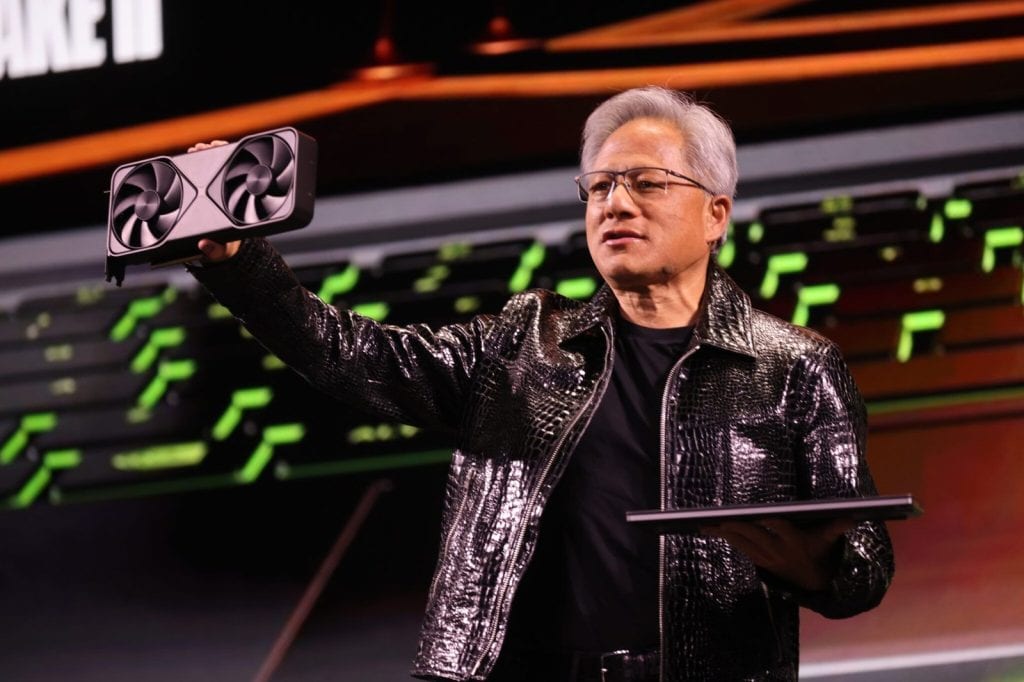
Jensen Huang. Image source: Nvidia.
Nvidia’s earnings show why the company is so attractive
Nvidia’s leadership turmoil overshadowed one of the most impressive earnings reports in the company’s history. On Nov. 17, Nvidia reported fiscal third-quarter revenue of $115.8 billion, up 103% year over year. Meanwhile, adjusted earnings per share (EPS) increased 111% to $2.68. Data center revenue surged 110% to $107.6 billion, while the company maintained a robust 74.8% gross margin.
Management also projected $130 billion in revenue for the fourth quarter, representing 91% annual growth. Nevertheless, investors were too focused on Huang’s departure, and the stock continued to crater after the earnings announcement.
Perhaps the most important development was Nvidia’s improved outlook for fiscal 2028. Management increased its projected revenue growth to 75%, up from its previous forecast of 70%.
Nvidia’s profitability also provides significant financial flexibility. In September, the board increased the company’s existing share repurchase authorization by $150 billion. As of the end of the third quarter, approximately $227.3 billion remained available, with management planning to execute the authorization by the end of fiscal 2028.
These repurchases should increase EPS by reducing Nvidia’s outstanding share count. Combined with accelerating revenue growth and robust profit margins, the buyback program provides another catalyst for shareholder returns.
Nvidia stock looks like a no-brainer now that Huang is back
Before Huang’s reinstatement, Wall Street analyst Dan Ives estimated that Nvidia was worth $225 per share without Huang and $300 with him. That $75 difference represents $1.8 trillion in implied market capitalization, highlighting the premium Ives attached to Nvidia’s founder.
Even with Monday’s rally, Nvidia stock remains meaningfully below Ives’ $300 valuation. At approximately $169 per share, Nvidia would still have roughly 78% potential upside to that target.
Nvidia’s earnings multiple offers another reason for optimism. At its current price, Nvidia stock trades at a forward price-to-earnings (P/E) multiple of 13. That’s modest for a business projecting 75% revenue growth in the hundreds of billions of dollars while also maintaining exceptional profit margins and executing an enormous share repurchase program.
Huang’s reinstatement removes perhaps the largest uncertainty surrounding Nvidia’s long-term road map. Now that he’s back, Huang can resume overseeing the company’s engineering culture, product development, and strategic relationships, allowing investors to refocus on its financial performance.
To me, Nvidia stock still looks like an attractive long-term buy, even after its rebound. The company was already forecasting exceptional growth without Huang, and his return should restore confidence in its ability to sustain that momentum.
Should you buy stock in Nvidia right now?
Before you buy stock in Nvidia, consider this:
The Motley Fool Stock Advisor analyst team just identified what they believe are the 10 best stocks for investors to buy now… and Nvidia wasn’t one of them. The 10 stocks that made the cut could produce monster returns in the coming years.
Consider when Netflix made this list on December 17, 2004… if you invested $1,000 at the time of our recommendation, you’d have $305,941!* Or when Nvidia made this list on April 15, 2005… if you invested $1,000 at the time of our recommendation, you’d have $771,325!*
Now, it’s worth noting Stock Advisor’s total average return is 719% — a market-crushing outperformance compared to 192% for the S&P 500. Don’t miss the latest top 10 list, available with Stock Advisor, and join an investing community built by individual investors for individual investors.
See the 10 stocks »
*Stock Advisor returns as of November 23, 2026.
Adam Spatacco has positions in Nvidia. The Motley Fool has positions in and recommends Arm Holdings and Nvidia. The Motley Fool has a disclosure policy.