Key Points
-
Tesla’s car and energy revenue both shrank last quarter, while spending on robots, robotaxis, and chips keeps climbing.
-
Elon Musk says robotaxis won’t be “a big deal” until late 2027.
-
The stock already prices in a lot of success.
-
I’ve learned the hard way that a company can do amazing things and still be a frustrating stock to own for a year or two. That’s exactly how I feel about Tesla (NASDAQ:TSLA) heading into 2027.
Tesla is already the laggard of the “Magnificent Seven” this year. Through Nov. 4, its stock was down about 14% in 2026, while the S&P 500 was up about 12%. This week didn’t help. Shares were down roughly 6% intraday on Nov. 20, trading around $351.
Missed AI’s “Act 1”? Act 2 Could Be 15x Bigger. Most investors think they missed the AI boat because they didn’t buy Nvidia in 2005. But according to our analysts, we’re only at the end of “Act 1″—the R&D phase. “Act 2” is the global rollout. Continue »
To be clear, I’m not predicting a collapse. I’m predicting that Tesla will trail the S&P 500 next year. I don’t think 2027 will fix what’s holding it back, and here’s why.
The car business is paying for the moonshots
Tesla’s core business is stalling. Last quarter, automotive revenue fell 3%, energy revenue fell 16%, and net income dropped 29% as spending on Optimus robots and AI surged. Tesla blamed lower average selling prices and tight battery supply, and it’s facing tougher competition from Chinese EV makers like BYD and Xiaomi in Asia and Europe. Third-quarter deliveries slipped about 2% from a year ago, and the loss of the federal EV tax credit still stings.
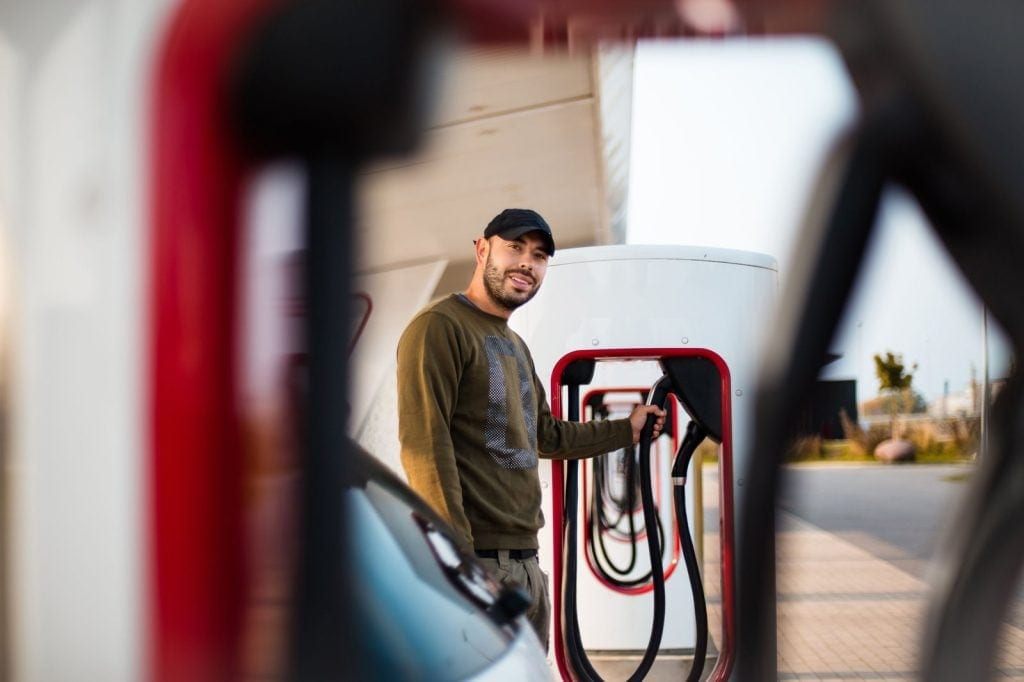
Image source: Getty Images.
To be fair, demand for the cars is real. CFO Vaibhav Taneja said Tesla “exited the quarter with our highest backlog in four years, with deliveries constrained primarily by production.” Musk said Megapacks, Tesla’s big batteries for the grid and data centers, are nearly sold out for 2027, and active Full Self-Driving subscriptions jumped 67% from a year earlier to 1.74 million.
The catch is the bill. Taneja warned that rising operating costs “would continue till we commercialize these new products,” and that “commodity price increases and interest rate changes continue to add to our cost and create further headwinds.” Musk said capital spending “will start to become more meaningful next year and then noticeable like in the tens of billions in ’28.”
The payoff keeps landing just out of reach
Tesla’s bull case is robotaxis and Optimus, and I’ll admit the progress is impressive. Unsupervised robotaxi miles grew eightfold last quarter, and Cybercab rides started in Austin in September. Regulators are watching closely, though. The National Highway Traffic Safety Administration opened an audit into how Tesla certified the Cybercab’s compliance with federal safety standards.
But the timing matters for 2027. On robotaxis, Musk said, “I think it starts to become noticeable probably in Q2 and then probably a big deal by Q3 or Q4 of next year.” On Optimus, he said there’s “still quite a lot of work to do with regard to the AI and the robot for it to be truly useful for open-ended tasks.”
Waiting is expensive at this price. Tesla trades at more than 400 times trailing earnings, so its price-to-earnings (P/E) ratio leaves almost no margin of safety if a launch slips.
This week showed how fragile AI-heavy stocks are right now. Jensen Huang’s ouster at Nvidia, doubts about AI spending, and the threat of more Federal Reserve rate hikes all hit tech hard. Tesla sells itself as an AI and robotics company, so it wears those same worries.
There’s one big thing that could prove me wrong. On Wednesday, Musk said Tesla and SpaceX would “probably” be better together, citing “so many areas of convergence.” A merger could excite Musk’s fans and send the stock soaring.
But it’s far from certain. Musk has said a deal would need “a 50% vote of all shares, not just those who vote, but of all shareholders, and that’s quite a high hurdle to try to achieve.”
Tesla could still be a fine company to own for a decade, with its huge market cap backed by real technology. But for 2027, the gap between what Tesla is earning and what the stock is pricing in looks too wide to close in 12 months. That’s why I think it lags.
We just issued ‘double down’ alerts on 3 stocks — find out if Tesla made our list
Ever feel like you missed the boat in buying the most successful stocks? Then you’ll want to hear this.
On rare occasions, our expert team of analysts issues a “Double Down” stock recommendation for companies that they think are about to pop. If you’re worried you’ve already missed your chance to invest, now is the best time to buy before it’s too late. And the numbers speak for themselves:
- Nvidia: if you invested $1,000 when we doubled down in 2009, you’d have $326,352!*
- Apple: if you invested $1,000 when we doubled down in 2008, you’d have $65,395!*
- Netflix: if you invested $1,000 when we doubled down in 2004, you’d have $305,941!*
Right now, we’re issuing “Double Down” alerts for three incredible companies, available when you join Stock Advisor, and there may not be another chance like this anytime soon.
See the 3 stocks »
*Stock Advisor returns as of November 24, 2026.
Micah Zimmerman has no position in any of the stocks mentioned. The Motley Fool has positions in and recommends Nvidia, Tesla, and Xiaomi. The Motley Fool recommends BYD Company. The Motley Fool has a disclosure policy.