Key Points
-
The investigations continue, but the board may be in more trouble than CEO Jensen Huang is right now.
-
Nvidia’s financing of some of its customers remains a concern.
-
Investors had to imagine an Nvidia without Jensen Huang, and that probably solidified his leadership.
-
The return of Jensen Huang as CEO of Nvidia (NASDAQ:NVDA) is welcome news to shareholders. The stock was up more than 30% in early Monday trading as Huang’s reinstatement removed a major source of uncertainty.
However, Huang’s return creates new uncertainties or brings existing ones to light. Here are three concerns investors need to watch and whether Nvidia can prosper now that Huang is back.
Missed AI’s “Act 1”? Act 2 Could Be 15x Bigger. Most investors think they missed the AI boat because they didn’t buy Nvidia in 2005. But according to our analysts, we’re only at the end of “Act 1″—the R&D phase. “Act 2” is the global rollout. Continue »
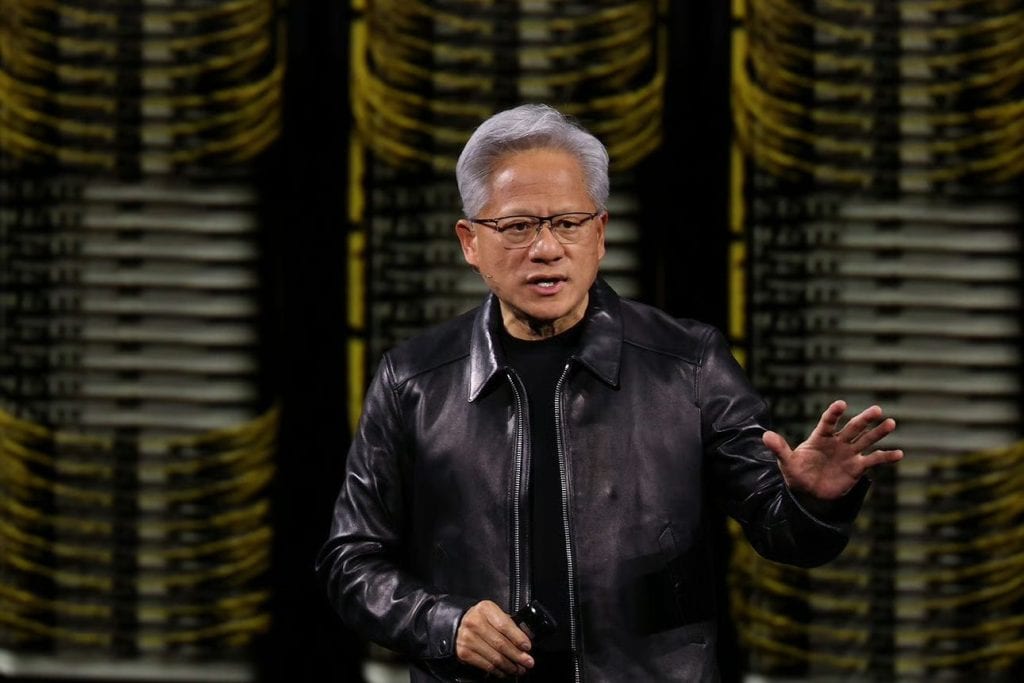
Jensen Huang. Image source: Getty Images.
1. The ongoing investigations
Despite Huang’s return, the board’s probe goes on. The board appointed a committee comprised of independent directors to investigate the CEO’s behavior and retained independent counsel to assist. This inquiry proceeds with Huang’s approval.
Moreover, the federal government continues to review the matter. Although President Trump remained supportive of Huang, the FBI continues to investigate Jensen Huang’s relationship with Alice Huang (no relation), whom a U.S. official linked to Chinese state security.
Additionally, the U.S. Congress is also conducting its own investigation. To that end, Jensen Huang will testify before congressional committees on Dec. 1.
Hence, while Nvidia’s shareholders reacted well to the reinstatement, investors should remember he could still face repercussions for his behavior.
2. The state of Nvidia’s board
Furthermore, the current members of the board of directors likely face an uncertain future. As mentioned, the board continues to investigate Huang.
Unfortunately, the rush to judgment on Jensen Huang’s fate could easily bring repercussions for the board itself.
Admittedly, boards tend to fire employees for having an inappropriate relationship with subordinates. Also, since its job is to focus on a company’s affairs, the alleged affair with Nvidia’s VP of healthcare, Kimberly Powell, is probably more concerning to them than the indiscretion with the alleged Chinese spy.
Nonetheless, the board is not legally required to terminate executives for such relationships. Moreover, it pressured Huang to resign even though the investigations had not been completed. Since the board lacked a succession plan, it made a move that created tremendous uncertainty for shareholders.
For now, no word has come down on the fate of various board members, but investors should probably be as watchful of their fate as they are of Jensen Huang’s.
3. Circular financing
Jensen Huang’s return also puts a spotlight on one of the concerns about his leadership: circular financing.
Huang and CFO Colette Kress have avoided using this term. However, as securing funding has become more difficult, the company has financially backstopped many of its customers. This included a $250 billion backstop for OpenAI that Kress negotiated down to $105 billion.
Concerns about OpenAI’s financing have weighed on the stocks of partners such as Oracle (NYSE:ORCL). Also, longtime investors may also recall that circular financing devastated companies during the dot-com boom. At that time, Cisco (NASDAQ:CSCO) took a $2.25 billion write-down in 2001. Customer bankruptcies hit the company so hard that it traded below its all-time high for more than 25 years.
Nvidia’s financial strength may help it avert a decades-long downturn. Nonetheless, similar customer bankruptcies could end the bull market in Nvidia stock.
Nvidia moving forward
Despite these concerns, Jensen Huang’s return as CEO is, and will likely remain, bullish for Nvidia’s shareholders.
Amid these worries, there is no obvious replacement for Huang, and the company (and probably the AI industry as a whole) would likely face years of uncertainty without his vision.
Moreover, Huang’s position in the company is likely to be solidified by recent events. Amid the ongoing investigations, investors had to face the possibility of an Nvidia without Huang, and despite the circular financing concerns, they did not like what that looked like.
Ultimately, Huang is unlikely to be forced out again unless the findings of those inquiries leave the company with no choice but to remove him. Consequently, shareholders who held the semiconductor stock throughout the turmoil have been and probably will continue to be rewarded.
Should you buy stock in Nvidia right now?
Before you buy stock in Nvidia, consider this:
The Motley Fool Stock Advisor analyst team just identified what they believe are the 10 best stocks for investors to buy now… and Nvidia wasn’t one of them. The 10 stocks that made the cut could produce monster returns in the coming years.
Consider when Netflix made this list on December 17, 2004… if you invested $1,000 at the time of our recommendation, you’d have $305,941!* Or when Nvidia made this list on April 15, 2005… if you invested $1,000 at the time of our recommendation, you’d have $771,325!*
Now, it’s worth noting Stock Advisor’s total average return is 719% — a market-crushing outperformance compared to 192% for the S&P 500. Don’t miss the latest top 10 list, available with Stock Advisor, and join an investing community built by individual investors for individual investors.
See the 10 stocks »
*Stock Advisor returns as of November 23, 2026.
Will Healy has no position in any of the stocks mentioned. The Motley Fool has positions in and recommends Cisco Systems, Nvidia, and Oracle. The Motley Fool has a disclosure policy.