Key Points
-
Archer Aviation’s shares are down more than 52% this year.
-
The company’s losses more than doubled in the third quarter.
-
United, its leading customer, may be more wary of eVTOLs due to technical glitches affecting air traffic control.
-
It has been a rough couple of weeks for air travel and for airlines, especially for United Airlines (NASDAQ:UAL). The Federal Aviation Administration (FAA) imposed a nationwide ground stop on Friday, leading to delays and cancellations after a newly installed router malfunctioned. Then, United had its own issues on Monday, with a 90-minute system outage that caused delays.
While this wasn’t good news for United and other airline stocks, the technical difficulties in air traffic are a real problem for Archer Aviation (NYSE:ACHR) and other companies focusing on air taxis, commonly known as electric vertical take-off and landing (eVTOL) aircraft.
Missed Nvidia in 2009? This Rare Signal Is Flashing Again. In 2009, a “Double Down” signal flashed for a little-known chipmaker called Nvidia. For the first time in years, that same “Total Conviction” signal is flashing for a company 1/100th the size of Nvidia. Continue »
Last spring, United CEO Scott Kirby expressed concerns about whether the nation’s air traffic control system was ready for eVTOLs, and the recent ground stop led him to say the FAA needs to invest more in updating its technology.
Neither the FAA’s nor United’s technical problems reflect a flaw in Archer’s Midnight aircraft itself, nor do they threaten Archer’s cash runway or manufacturing ramp-up.
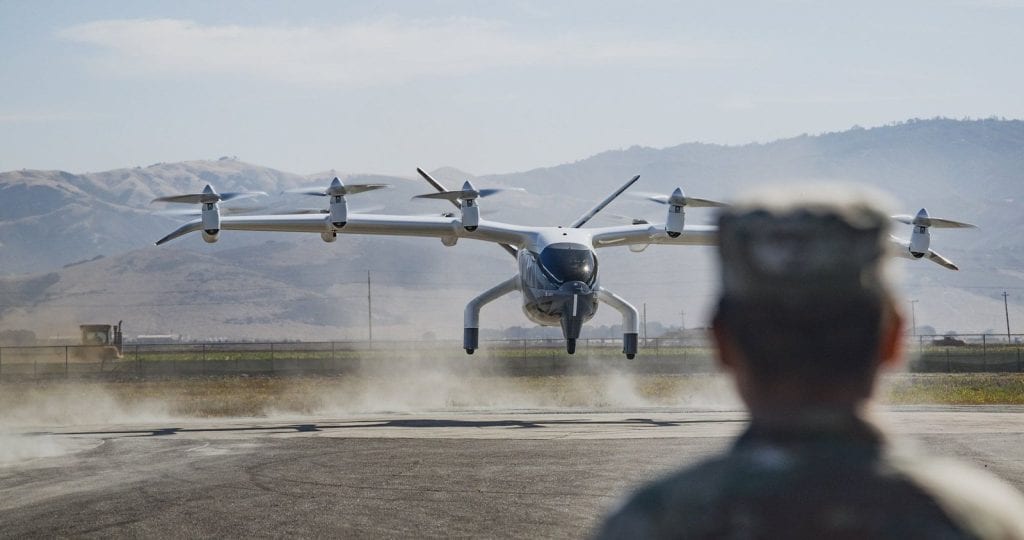
Image source: Archer Aviation.
Why the technical issues still matter to Archer
EVTOL commercialization is heavily dependent on ecosystem readiness, certified airspace rules from the FAA, and seamless hub-and-app execution from United and other airlines. The recent tech issues raise the risk of delays in Archer’s transition from flight testing to full-scale commercial passenger service in the U.S.
Archer’s shares are down more than 52% so far this year. Investors have been concerned about the company’s massive losses and high cash burn. In the third quarter, the company had $5.1 million in revenue, which was progress, because it had no revenue in the same period a year ago. However, it also lost $274.6 million, more than double the $129.9 million it lost in the third quarter of 2025.
The company’s spending is ramping up as it begins production at its manufacturing facility in Covington, Georgia. To start generating more revenue, the company depends on FAA authorization, and the agency’s issues hurt Archer.
Archer’s Midnight eVTOL aircraft relies on the FAA for Type certification and National Airspace System (NAS) integration; any internal technical bottlenecks at the regulator trickle down to Archer.
The FAA’s issues with aging IT infrastructure, staffing shortages, and system outages may lead it to divert engineering and IT resources toward stabilizing legacy commercial aviation systems and bandwidth for emerging technologies, and put eVTOL operational rules and reviews of Archer’s final Phase 4 Type Certification flight test data on the back burner.
Archer’s business model depends on high-frequency, short-haul urban air-taxi routes, such as those from Manhattan to Newark. Integrating autonomous or semiautomated eVTOLs into congested Class B airspace requires modernized FAA data-sharing and traffic management software. Delays in the FAA’s NextGen and digital traffic-management upgrades limit how quickly Archer can scale beyond initial, low-volume visual flight rules (VFR) corridors.
If nothing else, the high-profile technical failures could make regulators more risk-averse, leading to stricter software validation and redundancy requirements for new aircraft entrants.
The company’s largest customer may tap the brakes further
United Airlines is Archer’s most important commercial partner, strategic investor, and launch customer, with a conditional order book of up to $1.5 billion for 200 Midnight aircraft, plus an option for 100 more. United’s recent tech and operational hiccups affect Archer in three ways:
- Launch route and hub synchronization: Archer’s initial U.S. commercial network is built around feeding passengers into United’s major hubs, including specifically Newark, Chicago O’Hare, and San Francisco. United’s technical issues could lead it to prioritize stabilizing its core mainline and regional operations over joint operational planning, gate/vertiport integration, and ground-handling coordination with Archer.
- IT and booking system integration: A core pillar of the United–Archer partnership is seamless “door-to-gate” ticketing, allowing travelers to book a Midnight air taxi directly through the United app alongside their commercial flight. When United’s internal IT teams are tied up fixing core reservation, crew-scheduling, or weight-and-balance software bugs, secondary API integrations for partner air-taxi booking are frequently deprioritized.
- Capital and operational bandwidth: United’s equity stake and conditional purchase agreements with Archer remain intact, but recurring operational disruptions weigh on the airline’s margins and management’s focus. United is unlikely to accelerate predelivery payments or expand infrastructure co-investments until its own internal tech stack and hub reliability are on firmer footing.
Long-term strength, but short-term uncertainty
Archer continues to ramp up flight testing of its Midnight eVTOLs. The technology makes sense, particularly in crowded urban markets. However, the company is entering uncharted airspace, so to speak, and the FAA certification process for eVTOL aircraft is complex and unprecedented. Although progress continues, timeline delays stretch out the horizon before commercial passenger routes can officially launch.
Each delayed phase lengthens the window during which Archer must burn through hundreds of millions of dollars without commercial passenger inflows. That makes Archer a risky stock for most investors.
Should you buy stock in Archer Aviation right now?
Before you buy stock in Archer Aviation, consider this:
The Motley Fool Stock Advisor analyst team just identified what they believe are the 10 best stocks for investors to buy now… and Archer Aviation wasn’t one of them. The 10 stocks that made the cut could produce monster returns in the coming years.
Consider when Netflix made this list on December 17, 2004… if you invested $1,000 at the time of our recommendation, you’d have $305,941!* Or when Nvidia made this list on April 15, 2005… if you invested $1,000 at the time of our recommendation, you’d have $771,325!*
Now, it’s worth noting Stock Advisor’s total average return is 719% — a market-crushing outperformance compared to 192% for the S&P 500. Don’t miss the latest top 10 list, available with Stock Advisor, and join an investing community built by individual investors for individual investors.
See the 10 stocks »
*Stock Advisor returns as of November 22, 2026.
James Halley has no position in any of the stocks mentioned. The Motley Fool has no position in any of the stocks mentioned. The Motley Fool has a disclosure policy.