Key Points
-
Elon Musk predicts orbital computing could surpass new Earth-based capacity.
-
SpaceX’s ambitions could require approximately 833,000 AI satellites annually.
-
Orbital computing offers potential energy advantages but significant engineering challenges.
-
Elon Musk believes space-based data centers could eventually dwarf those operating on Earth. In an Oct. 30 social media post, Musk predicted that newly deployed computing capacity in orbit could surpass new terrestrial capacity around the end of 2028. It’s an extraordinary prediction. But Space Exploration Technologies (NASDAQ:SPCX) has already outlined numbers that allow us to evaluate just how ambitious it is. Let’s take a closer look.
SpaceX wants to deploy 100 gigawatts annually
In its IPO filing, SpaceX described a long-term ambition to deploy up to 100 gigawatts of computing power into orbit annually. At that scale, SpaceX would be adding the equivalent of 100 large, 1-gigawatt data centers every year, measured by power capacity.
Missed Nvidia in 2009? This Rare Signal Is Flashing Again. In 2009, a “Double Down” signal flashed for a little-known chipmaker called Nvidia. For the first time in years, that same “Total Conviction” signal is flashing for a company 1/100th the size of Nvidia. Continue »
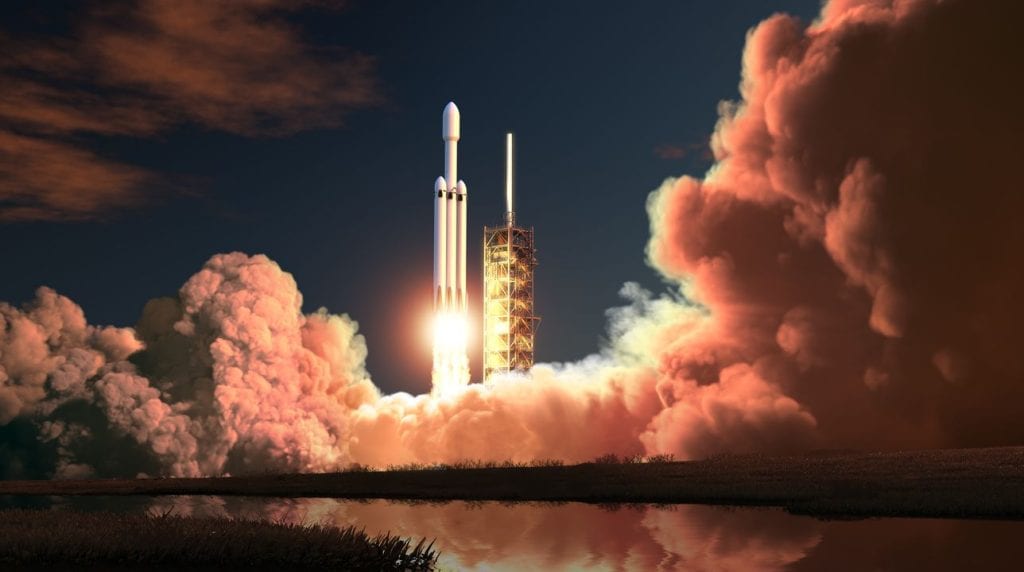
Image source: Getty Images.
The company’s proposed approach relies on solar-powered satellites equipped with artificial intelligence processors, communications equipment, and cooling systems. SpaceX’s first-generation AI1 satellite is designed to deliver approximately 120 kilowatts of sustained computing power. So here’s where the math gets interesting.
At 120 kilowatts per satellite, achieving SpaceX’s 100-gigawatt annual deployment target would require approximately 833,000 AI1 satellites every year, assuming the company continues to use its first-generation design.
The launch requirements are staggering
SpaceX’s IPO filing estimates that achieving its 100-gigawatt annual ambition would require transporting approximately 1 million metric tons into orbit annually. Assuming Starship eventually carries 100 metric tons per launch, that’s roughly 10,000 launches annually, or approximately 27 launches every day. And that’s before accounting for operational interruptions, maintenance, or failed missions. SpaceX has demonstrated considerable progress with reusable rockets, but operating at that frequency would represent an entirely different level of activity.
Worth noting: SpaceX’s IPO prospectus suggested that future Starship generations could carry up to 200 metric tons. If this happens, that would cut the number of launches by half. And of course, that would change the math, though we’re still talking about a substantial number of launches per year.
The economics could eventually become compelling
Space-based computing offers several potential advantages. Solar panels in certain orbits could generate electricity longer than comparable installations on Earth, potentially providing a more consistent power source. Orbital data centers could also avoid the grid connection delays and land requirements associated with terrestrial facilities. However, whether those advantages translate into lower overall operating costs will depend heavily on satellite manufacturing, launch expenses, and maintenance.
However, cooling remains an engineering challenge. Although space is extremely cold, cooling AI processors in orbit isn’t necessarily easy. Without air to carry heat away, satellites must rely on specialized radiators to release excess heat into space. These systems add weight and complexity, particularly as computing power increases.
Still, the ability to reject heat into space without conventional cooling infrastructure could eventually become a significant advantage if engineers can develop lightweight, efficient radiator systems. That said, launch expenses, radiation protection, satellite replacement, and communications infrastructure also complicate the economics. So until SpaceX demonstrates reliable operating costs, it’s impossible to conclude that orbital computing will be cheaper.
The opportunity extends beyond SpaceX
I’m skeptical that orbital computing will overtake terrestrial deployment as quickly as Musk predicts. But I wouldn’t dismiss the underlying technology.
SpaceX has already built a successful satellite communications business, developed reusable launch systems, and introduced a preliminary orbital computing design. Even achieving 10% of its 100-gigawatt ambition would require deploying an additional 10 gigawatts of computing capacity annually. This would represent a substantial new infrastructure market.
Musk’s timeline may prove overly optimistic, but the potential to expand AI computing beyond Earth’s electrical grids is worth taking seriously. Indeed, the opportunity is enormous, even if getting there will take longer than 2029.
Should you buy stock in Space Exploration Technologies right now?
Before you buy stock in Space Exploration Technologies, consider this:
The Motley Fool Stock Advisor analyst team just identified what they believe are the 10 best stocks for investors to buy now… and Space Exploration Technologies wasn’t one of them. The 10 stocks that made the cut could produce monster returns in the coming years.
Consider when Netflix made this list on December 17, 2004… if you invested $1,000 at the time of our recommendation, you’d have $321,850!* Or when Nvidia made this list on April 15, 2005… if you invested $1,000 at the time of our recommendation, you’d have $955,232!*
Now, it’s worth noting Stock Advisor’s total average return is 793% — a market-crushing outperformance compared to 203% for the S&P 500. Don’t miss the latest top 10 list, available with Stock Advisor, and join an investing community built by individual investors for individual investors.
See the 10 stocks »
*Stock Advisor returns as of November 18, 2026.
Jeff Siegel has no position in any of the stocks mentioned. The Motley Fool has positions in and recommends Space Exploration Technologies. The Motley Fool has a disclosure policy.