Key Points
-
The chip fund’s stocks traded around 28 times earnings as of Oct. 31, down from about 49 times as of June 30.
-
Global chip sales rose 24.1% in the third quarter from the second, according to the Semiconductor Industry Association.
-
Nvidia and Taiwan Semiconductor Manufacturing make up more than a quarter of the fund.
-
The VanEck Semiconductor ETF (NASDAQ:SMH) trades near $502 as of this writing. The chip fund’s record close was $668.91, set on June 22, leaving it about 25% off that peak. And a big part of the drop came on Nov. 5, when the fund fell 11% in one session — its worst day since March 2020.
Investors dumped chip shares that day after the midterm elections stirred worries that spending on artificial intelligence (AI) data centers might slow. Qualcomm, one of the fund’s holdings, added to the pressure with a disappointing outlook for its current quarter.
Missed AI’s “Act 1”? Act 2 Could Be 15x Bigger. Most investors think they missed the AI boat because they didn’t buy Nvidia in 2005. But according to our analysts, we’re only at the end of “Act 1″—the R&D phase. “Act 2” is the global rollout. Continue »
But the fund is up around 39% in 2026, after ending last year at $360.13. I think the slide has made it a good buy for investors willing to hold it through 2030.
Here’s a closer look at why I’d buy the fund at today’s price.
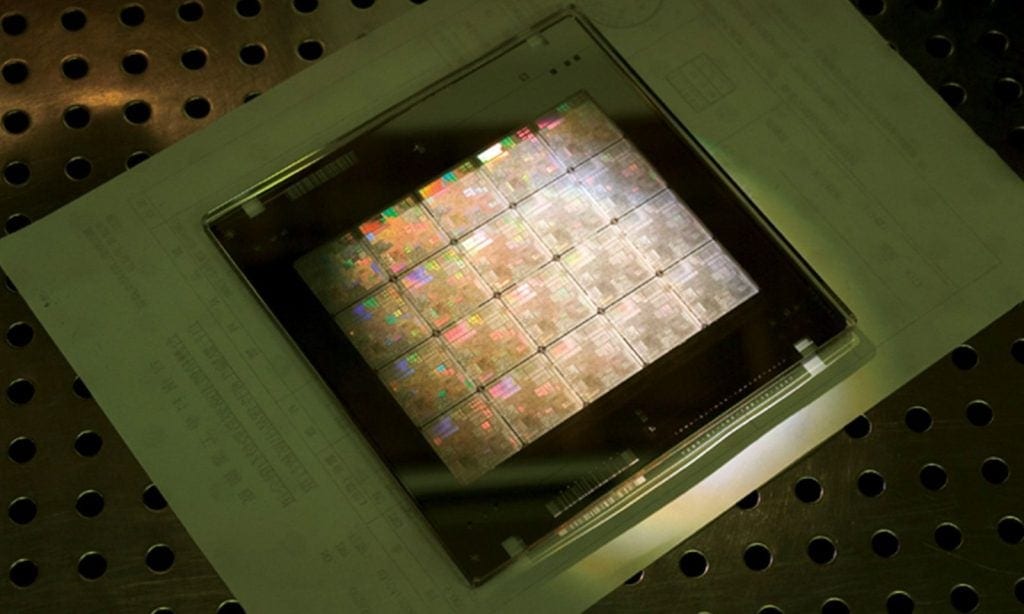
Image source: Taiwan Semiconductor Manufacturing Company.
The fund costs about what the S&P 500 costs
Showing how much has shifted since summer, the fund’s stocks traded at around 28 times earnings as of Oct. 31, according to VanEck. As of June 30, around a week after the peak, they traded at about 49 times earnings. At the end of January, the number was about 43 times earnings.
The fund’s price fell around 20% between the June and October readings. Most of the drop in its price-to-earnings ratio, then, probably came from its companies earning more, not just from their stock prices sliding.
This leaves the chip fund about on par with the broader market. The iShares Core S&P 500 ETF, which tracks the S&P 500 (SNPINDEX:^GSPC), put its holdings at around 28 times earnings as of Nov. 11.
Put another way, investors can get the 25 chip stocks in the VanEck fund at around the same price-to-earnings ratio as 500 of the largest U.S. companies. I’d say the chip fund is modestly priced for a group of businesses whose sales are rising this quickly.
Is the chip boom slowing?
Growth has slowed a little, but from an extraordinary pace. The Semiconductor Industry Association (SIA) said global chip sales hit $517.7 billion in the July-through-September quarter, up 24.1% over the second quarter. Second-quarter sales, in turn, had surged 35.1% over the first quarter. And first-quarter sales had risen about 25% from the fourth quarter of 2025.
Growth did cool in the third quarter. But sales still climbed more than 20% quarter-to-quarter for a third straight quarter, the trade group said, and September’s sales were up around 147% year over year. (The SIA’s monthly numbers are a three-month moving average.)
Sure, a boom this fast likely won’t last forever. The fund’s lower price-to-earnings multiple is partly based on earnings that may be near a peak.
If chip prices drop once supply catches up, these earnings might shrink, and the fund could look pricey again even at a lower price.
But I don’t think a buy-and-hold investor needs current growth rates to continue. Over four years, the fund mainly needs its holdings to keep most of their recent earnings gains as demand for chips keeps climbing.
Two stocks make up more than a quarter of the fund
The bigger risk is the fund’s concentration. It owns 25 stocks, though it doesn’t weight them equally.
As of Nov. 11, Nvidia (NASDAQ:NVDA) accounted for around 18% of the fund’s assets, and Taiwan Semiconductor Manufacturing (NYSE:TSM) for about 10%. Together, the two come to more than a quarter of the fund. The 10 largest holdings accounted for around 69%.
On Thursday, Nov. 12, Nvidia said that co-founder Jensen Huang had stepped down as CEO and left the board, effective immediately. Chief financial officer Colette Kress is interim CEO. This leaves the fund’s largest holding without a permanent CEO ahead of the Nov. 17 release of its fiscal third-quarter results.
That said, the fund still spreads this risk around. Besides Nvidia and Taiwan Semiconductor, it holds stocks such as Broadcom and Texas Instruments, each accounting for about 6% of the fund. And the fund has a 0.35% expense ratio, or $35 a year for a $10,000 investment.
Is the fund a buy at roughly $500? I think so. Its holdings now trade at about the S&P 500‘s price-to-earnings ratio, and chip sales are still rising fast.
I’d buy the fund now and plan to hold it through 2030, knowing a day like Nov. 5 might happen again before then. And with so much of it tied to Nvidia and Taiwan Semiconductor, I’d limit it to a small slice of a diversified portfolio.
Should you buy stock in VanEck ETF Trust – VanEck Semiconductor ETF right now?
Before you buy stock in VanEck ETF Trust – VanEck Semiconductor ETF, consider this:
The Motley Fool Stock Advisor analyst team just identified what they believe are the 10 best stocks for investors to buy now… and VanEck ETF Trust – VanEck Semiconductor ETF wasn’t one of them. The 10 stocks that made the cut could produce monster returns in the coming years.
Consider when Netflix made this list on December 17, 2004… if you invested $1,000 at the time of our recommendation, you’d have $335,171!* Or when Nvidia made this list on April 15, 2005… if you invested $1,000 at the time of our recommendation, you’d have $1,000,640!*
Now, it’s worth noting Stock Advisor’s total average return is 823% — a market-crushing outperformance compared to 208% for the S&P 500. Don’t miss the latest top 10 list, available with Stock Advisor, and join an investing community built by individual investors for individual investors.
See the 10 stocks »
*Stock Advisor returns as of November 14, 2026.
Daniel Sparks and his clients do not have positions in any of the stocks mentioned. The Motley Fool has positions in and recommends Broadcom, Nvidia, Qualcomm, Taiwan Semiconductor Manufacturing, and Texas Instruments. The Motley Fool has a disclosure policy.