Key Points
-
This has been a year of significant changes and milestones, headlined by Kevin Warsh’s swearing-in as the new Fed chair on May 22.
-
Warsh has enacted several reforms over the last five months, including ending forward-looking guidance and altering the future meeting schedule for the Federal Open Market Committee (FOMC).
-
The Fed chair’s just-the-facts approach means significantly more volatility for the bond market.
-
This has been a year of significant change and milestones on Wall Street. We’ve watched two legends, Warren Buffett and Tim Cook, step down as CEOs of their respective companies, and seen the Dow Jones Industrial Average (DJINDICES:^DJI), S&P 500 (SNPINDEX:^GSPC), and Nasdaq Composite (NASDAQINDEX:^IXIC) launch to record highs.
But the biggest change has arguably been Kevin Warsh’s ascent to head of the central bank. Since being sworn in on May 22, the historically hawkish Warsh has taken a hardline stance on inflation, ushering in only the fourth interest rate-hiking cycle of the 21st century.
Missed AI’s “Act 1”? Act 2 Could Be 15x Bigger. Most investors think they missed the AI boat because they didn’t buy Nvidia in 2005. But according to our analysts, we’re only at the end of “Act 1″—the R&D phase. “Act 2” is the global rollout. Continue »
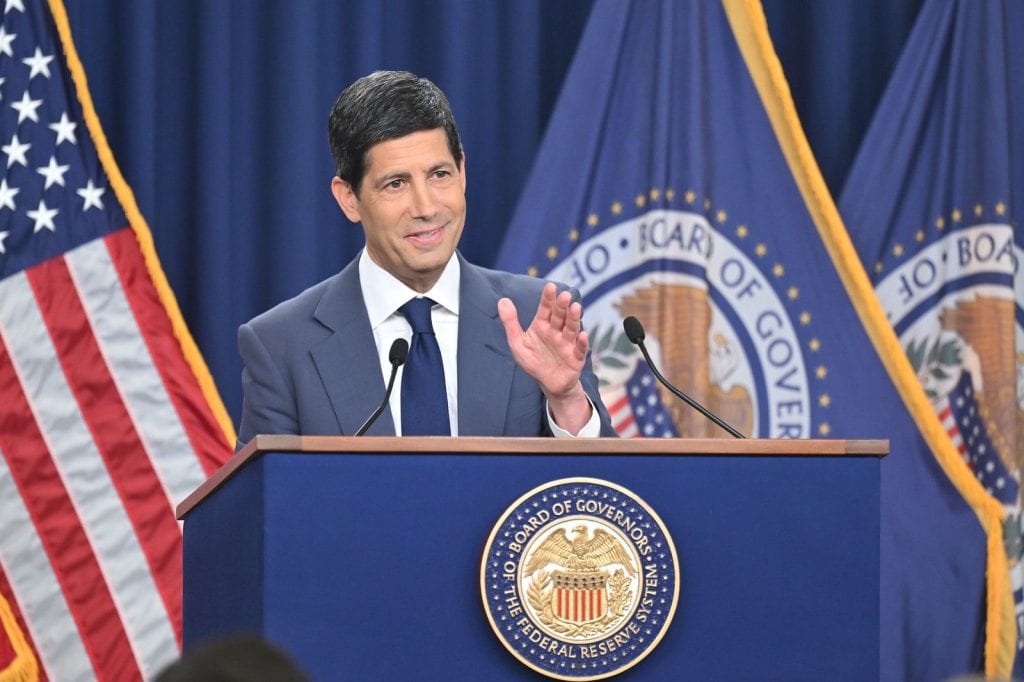
Fed Chair Kevin Warsh may have fundamentally changed the bond market. Image source: Official Federal Reserve Photo.
More importantly, Warsh is completely revamping the Federal Reserve. While some investors view these changes as long overdue, they come with a significant unintended consequence.
Kevin Warsh is completely reshaping the Federal Reserve
At Fed Chair Warsh’s White House swearing-in ceremony, he vowed to lead a reform-oriented Fed — and he’s wasted little time living up to that promise.
At his first Federal Open Market Committee (FOMC) meeting as Fed Chair, Warsh did away with more than two decades of precedent by halting forward-looking guidance. Since 2003, FOMC meeting statements had included easing or tightening biases that gave investors an idea of whether the central bank was likely to raise or lower interest rates with its next move.
But that’s not all.
At the October FOMC meeting, Fed Chair Warsh announced plans to dial back the number of live rate-setting meetings in 2027 to seven from eight, and further reduce it to six in 2028. The central bank has conducted eight rate-setting meetings annually since 1981.
By 2028, the other two FOMC meetings will focus on long-term issues and goals, with no changes being made to the federal funds target rate.

Image source: Getty Images.
Warsh’s just-the-facts approach is altering the bond market
The reason Fed Chair Warsh made these changes was to encourage markets to react to tangible economic data rather than the whims of policymakers. It’s the same reason he won’t submit forecasts for the quarterly dot plot (officially, the Summary of Economic Projections).
However, these changes have had notable consequences in the bond market.
While the Fed chair and his colleagues have, on occasion, dropped meaningful clues as to what the FOMC will do next with interest rates, the lack of forward-looking guidance in FOMC meeting statements has left bond traders to do some guesswork, leading to more volatility.
For example, long-duration Treasury bond yields (10- and 30-year yields) have soared to their highest levels since 2002. Though rapidly rising U.S. debt and persistently elevated inflation are pushing up bond yields, Warsh’s removal of forward-looking guidance also has traders weighing down bond prices and lifting yields (i.e., expecting the Fed to eventually hike interest rates).
This bond market reaction has proven somewhat beneficial to the Fed, with higher long-duration Treasury yields raising corporate borrowing costs and depressing the brake pedal on elevated inflation.
Narrowing the FOMC’s rate-setting schedule to just six meetings by 2028 is only going to amplify this effect. We’re going to see more guesswork from bond traders concerning what the Fed will do next with interest rates, leading to even higher long-duration bond yields if inflation remains elevated.
Higher corporate borrowing costs could be the catalyst that takes the wind out of Wall Street’s sails.
Should you buy stock in S&P 500 Index right now?
Before you buy stock in S&P 500 Index, consider this:
The Motley Fool Stock Advisor analyst team just identified what they believe are the 10 best stocks for investors to buy now… and S&P 500 Index wasn’t one of them. The 10 stocks that made the cut could produce monster returns in the coming years.
Consider when Netflix made this list on December 17, 2004… if you invested $1,000 at the time of our recommendation, you’d have $348,060!* Or when Nvidia made this list on April 15, 2005… if you invested $1,000 at the time of our recommendation, you’d have $1,067,492!*
Now, it’s worth noting Stock Advisor’s total average return is 849% — a market-crushing outperformance compared to 210% for the S&P 500. Don’t miss the latest top 10 list, available with Stock Advisor, and join an investing community built by individual investors for individual investors.
See the 10 stocks »
*Stock Advisor returns as of November 13, 2026.
Sean Williams has no position in any of the stocks mentioned. The Motley Fool has no position in any of the stocks mentioned. The Motley Fool has a disclosure policy.