Key Points
-
A whopping 98% of local ballot initiatives have favored limiting the development of AI data centers.
-
Due to this data center backlash, AI bull Dan Ives believes AI capex might peak in 2027.
-
If you’re worried about an AI data center slowdown, the best AI stocks now might be hyperscalers — or consider buying a Nasdaq-100 ETF.
-
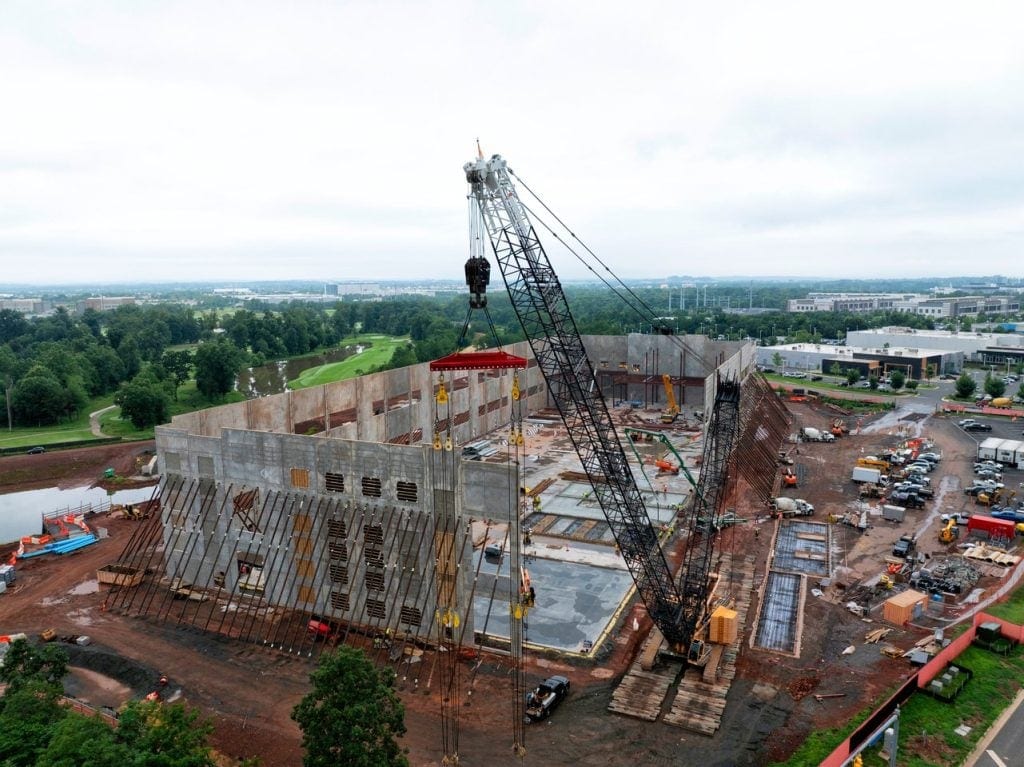
One of the most resounding results of the midterm elections was that artificial intelligence (AI) is facing a big backlash from voters. Americans of both parties seem to agree on one big issue: They don’t want AI data centers built in their backyards.
According to data tracked by Ballotpedia, as of Nov. 4, voters decided on 47 local ballot initiatives to either support or limit the development of AI data centers. And 46 of 47 of these initiatives (98%) resulted in outcomes against the development of AI data centers.
Missed Nvidia in 2009? This Rare Signal Is Flashing Again. In 2009, a “Double Down” signal flashed for a little-known chipmaker called Nvidia. For the first time in years, that same “Total Conviction” signal is flashing for a company 1/100th the size of Nvidia. Continue »
This is a big sign that the AI industry has a public relations problem. It’s rare to get 98% of American voters to agree on anything, but in 98% of these local ballot measures, American voters expressed distrust of the AI build-out. A CNBC poll found that 56% of voters ranked data centers as a “crucial or major” factor in how they voted on Election Day.
Many American voters are worried that AI data centers will raise utility costs. They don’t want to offer up their local land and resources for data center construction without seeing economic benefits to their communities. And they support political candidates who are skeptical about AI data centers. In Ohio and Texas, newly elected Democratic governors have proposed moratoriums on new AI data center construction.
Let’s look at what the AI data center backlash means for investors — and how you might want to position your portfolio as a result.
A post-election sell-off in AI data center stocks
The first few days after the Nov. 3 midterm election brought a big sell-off in AI-related stocks. The tech-heavy Nasdaq-100 dropped by 5.5% between Nov. 3 and Nov. 5, while the iShares Semiconductor ETF plummeted by about 15%. It’s not just tech companies and chipmakers that are affected by the AI backlash. Construction manufacturer Caterpillar, a major pick-and-shovel AI stock that has benefited from the data center boom, lost about 11.3% during those two days after the election.
Although all these names have recouped some of their post-election losses since Nov. 5, this is still a big sign that AI stocks are vulnerable to the will of the voters. If Americans are becoming hostile toward data centers, that could slow the AI boom — and lead to downturns for other AI stocks.
Warning signs of an AI data center slowdown
Does the midterm election result mean that the AI boom is over? Not necessarily. But it could be heading for a slowdown. If states and local governments require more expensive regulations or slower approval processes for AI data centers, that could drive up costs and add delays for AI companies. If AI data centers are built more slowly and more expensively, there could be some new AI winners and losers in the short term.
Dan Ives, partner at Yorkville Ives & Co., has been an enthusiastically bullish voice on the AI boom, which he calls the “AI Revolution.” But on Nov. 4, as reported by CNBC, Ives wrote a research note that said:
“For tech investors the big focus is will these mid-term elections slow the pace of the planned 800 to 1,000 datacenters across the US fueling the AI Revolution…the answer in our view is a clear YES.” Ives also wrote that his firm now believes that “Big Tech capex growth rate now peaks in 2027 vs. our previous view that would not happen until 2028/2029.”
If the boom in AI capex ends in 2027, that could be bad news for semiconductor stocks and various pick-and-shovel stocks whose earnings have been boosted by hundreds of billions of dollars in corporate investment in data centers.
CNBC also reported that Dominique Toublan, Barclays Investment Bank head of U.S. credit strategy, wrote in a note from Nov. 4 that “AI pushback is bipartisan but local, making the buildout pricier rather than stalling it,” and that “scarce power favors the biggest balance sheets.”
How to invest in AI stocks after the midterms
If you believe AI data centers are about to become more expensive to build and you agree with Toublan’s view that companies with the “biggest balance sheets” are likely to benefit from this new dynamic, the best AI stocks to buy now might be the large-cap AI hyperscalers.
If AI data centers become more expensive to build, the companies best equipped to build them are likely to be the well-established, cash-rich companies like Alphabet (NASDAQ: GOOG) (NASDAQ: GOOGL) rather than neoclouds like CoreWeave (NASDAQ: CRWV). CoreWeave has recently drawn investor concern about its high level of debt and rising interest expenses. A slowdown in the AI data center build-out could add to those pressures.
The landscape of the AI trade just got more complicated with the midterm elections. If you still believe in tech stocks but don’t want to invest too much in any one stock or sector, you could buy a tech ETF like the Invesco Nasdaq 100 ETF (NASDAQ: QQQM). This fund holds 103 stocks of the largest non-financial companies listed on the Nasdaq. In the past five years, QQQM has delivered annualized returns of about 13.1%.
That 13.1% average annual return includes the bad bear market of 2022, when the Nasdaq-100 declined by about 33.1%. For long-term investors, QQQM is likely a good way to invest in the tech economy and perhaps own future big AI winners — without concentrating too much on any one company or industry vertical.
Should you buy stock in Invesco NASDAQ 100 ETF right now?
Before you buy stock in Invesco NASDAQ 100 ETF, consider this:
The Motley Fool Stock Advisor analyst team just identified what they believe are the 10 best stocks for investors to buy now… and Invesco NASDAQ 100 ETF wasn’t one of them. The 10 stocks that made the cut could produce monster returns in the coming years.
Consider when Netflix made this list on December 17, 2004… if you invested $1,000 at the time of our recommendation, you’d have $341,157!* Or when Nvidia made this list on April 15, 2005… if you invested $1,000 at the time of our recommendation, you’d have $1,037,753!*
Now, it’s worth noting Stock Advisor’s total average return is 834% — a market-crushing outperformance compared to 207% for the S&P 500. Don’t miss the latest top 10 list, available with Stock Advisor, and join an investing community built by individual investors for individual investors.
See the 10 stocks »
*Stock Advisor returns as of November 12, 2026.
Ben Gran has no position in any of the stocks mentioned. The Motley Fool has positions in and recommends Alphabet, Caterpillar, and iShares Trust – iShares Semiconductor ETF. The Motley Fool has a disclosure policy.