Key Points
-
Nvidia stock has underperformed the market in 2026, but that’s likely to change in the New Year.
-
The company is trading at an incredibly cheap 11 times forward earnings, making it a no-brainer buy.
-
I won’t be surprised to see Nvidia stock jump by more than 100% over the next year or so.
-
Nvidia (NASDAQ:NVDA) stock has been quite volatile this year. The stock dropped in the first quarter of the year before rallying over the next couple of months. However, Nvidia stock has been on a roller coaster ride over the past six months, and its year-to-date performance is in the red.
This isn’t befitting of a company that’s growing at an incredible pace and believes that it can sustain its impressive momentum in 2027. Additionally, the negative publicity that Nvidia has received following CEO Jensen Huang’s email to employees earlier this week has further crushed the stock.
Missed AI’s “Act 1”? Act 2 Could Be 15x Bigger. Most investors think they missed the AI boat because they didn’t buy Nvidia in 2005. But according to our analysts, we’re only at the end of “Act 1″—the R&D phase. “Act 2” is the global rollout. Continue »
However, I will look past the noise and examine Nvidia’s prospects for 2027 in this article to check how much upside the semiconductor giant could deliver by the end of next year.
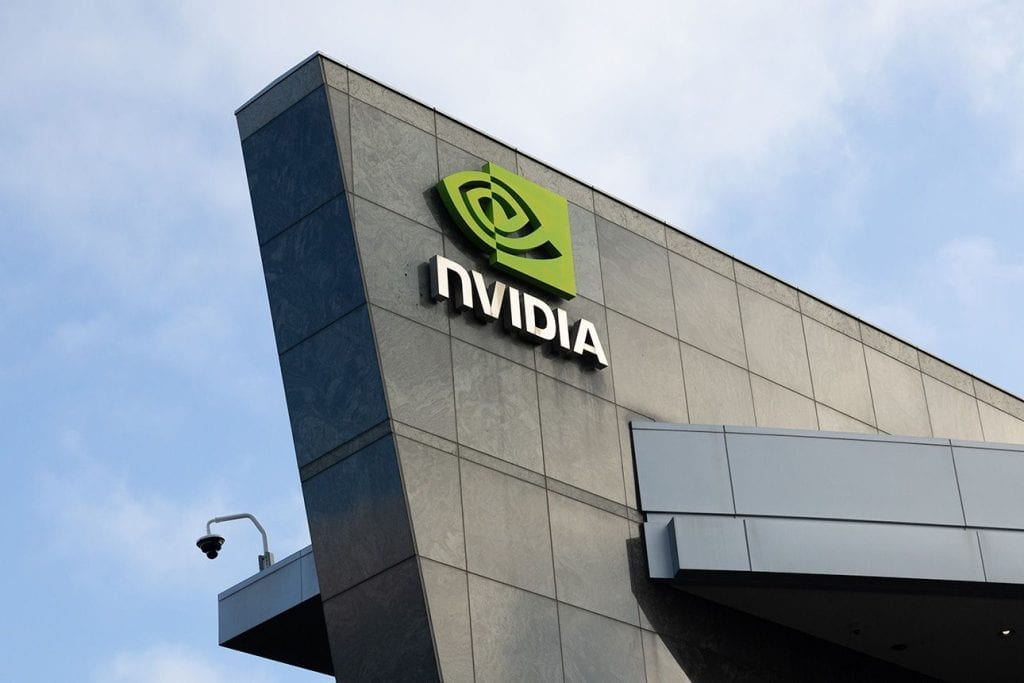
Image source: Getty Images.
Nvidia’s terrific growth trajectory can help it come out of its rut
The primary reason behind Nvidia’s underperformance this year is the overall negativity surrounding the state of the artificial intelligence (AI) build-out. Though the company’s financial performance has been solid, investors are worried about whether the same could continue owing to higher interest rates that will increase the cost of borrowing for hyperscalers and AI companies.
However, the situation on the ground seems quite different. Investment bank UBS recently increased its AI capital expenditure estimates for 2026 and 2027. The firm expects $1 trillion in spending this year, followed by a 40% increase to $1.4 trillion next year. It is easy to see why that’s the case. Bloomberg Intelligence notes that the combined backlog of Microsoft, Oracle, Alphabet, and Amazon stands at a whopping $2.35 trillion.
Meanwhile, neocloud infrastructure providers also have sizable backlogs. So, these companies will spend more on building data center infrastructure to meet their contractual obligations. This is great news for Nvidia, as major hyperscalers and neocloud providers will deploy the company’s latest Vera Rubin chip systems to handle AI workloads.
Importantly, Nvidia anticipates $40 billion in revenue from the deployment of each gigawatt (GW) of Vera Rubin processors, well above the previous generation Blackwell’s $25 billion per GW opportunity. As a result, Nvidia’s earnings per share (EPS) growth is likely to accelerate next year. In fact, Nvidia management noted on the August earnings call that its fiscal 2028 revenue will increase by 70% in a supply-constrained scenario.
That’s quite healthy, given that analysts are projecting a 90% increase in Nvidia’s revenue in fiscal 2027 (which ends in January next year) to $411.6 billion. So, Nvidia’s revenue in fiscal 2028 could hit $700 billion. At the same time, the company’s EPS growth could be hotter-than-expected, driven by the stronger revenue generation from the Vera Rubin chip systems.
Analysts expect Nvidia stock to jump impressively, but it can do better
Nvidia’s 12-month median price target, according to 73 analysts covering the stock, stands at $318. That implies a potential 78% jump over the next year. What’s more, nearly all analysts covering Nvidia rate the stock as a buy.
That’s not surprising, as Nvidia is a value stock right now. It trades at just 11.5 times forward earnings. The forward price-to-earnings (P/E) ratio clearly indicates that Nvidia is undervalued given the pace of its earnings growth.
Nvidia’s EPS is on track to jump by 95% in fiscal 2027, according to consensus estimates. The fiscal 2028 projection of 70% EPS growth is also quite solid, though it is worth noting that the estimates have moved higher in recent months.

NVDA EPS Estimates for Current Fiscal Year data by YCharts
I won’t be surprised if Nvidia’s fiscal 2028 EPS eventually exceeds analysts’ expectations. But even if its EPS reaches $15.92 at the end of fiscal 2028 and the stock trades at 25 times earnings, a small premium to the S&P 500 index’s average P/E ratio of 23.5, its price could reach $398 in just over a year. That implies potential gains of 121%.
So, Nvidia’s poor performance in 2026 is an opportunity for smart investors to buy a top AI stock at an attractive valuation, and doing so looks like the right thing to do, as it could go on a solid bull run next year.
Should you buy stock in Nvidia right now?
Before you buy stock in Nvidia, consider this:
The Motley Fool Stock Advisor analyst team just identified what they believe are the 10 best stocks for investors to buy now… and Nvidia wasn’t one of them. The 10 stocks that made the cut could produce monster returns in the coming years.
Consider when Netflix made this list on December 17, 2004… if you invested $1,000 at the time of our recommendation, you’d have $341,157!* Or when Nvidia made this list on April 15, 2005… if you invested $1,000 at the time of our recommendation, you’d have $1,037,753!*
Now, it’s worth noting Stock Advisor’s total average return is 834% — a market-crushing outperformance compared to 207% for the S&P 500. Don’t miss the latest top 10 list, available with Stock Advisor, and join an investing community built by individual investors for individual investors.
See the 10 stocks »
*Stock Advisor returns as of November 11, 2026.
Harsh Chauhan has no position in any of the stocks mentioned. The Motley Fool has positions in and recommends Alphabet, Amazon, Microsoft, and Nvidia. The Motley Fool has a disclosure policy.