Key Points
-
Consumer prices rose 0.4% in October, down from 0.6% the month before but above the 0.3% economists expected, and stocks fell anyway.
-
With employers adding 165,000 jobs in October and unemployment falling to 4.1%, the Fed has less reason to avoid raising rates, and a half-point hike is now a stronger possibility.
-
Sticky inflation and elevated bond yields are pushing up borrowing costs for AI data center companies, and if yields get too high, spending cuts could follow.
-
The latest inflation numbers were released this morning. The Consumer Price Index (CPI) showed prices rose less in October than the month before. Stocks fell anyway, with the S&P 500 (SNPINDEX:^GSPC) finishing down 0.4% and the tech-heavy Nasdaq Composite (NASDAQINDEX:^IXIC) down 0.7%.
The problem isn’t that inflation didn’t slow; it’s that it didn’t slow as much as Wall Street expected, and now the market is bracing for a potentially larger-than-expected rate hike in December.
Missed Nvidia in 2009? This Rare Signal Is Flashing Again. In 2009, a “Double Down” signal flashed for a little-known chipmaker called Nvidia. For the first time in years, that same “Total Conviction” signal is flashing for a company 1/100th the size of Nvidia. Continue »
A quarter-point hike was already widely expected. Now investors have to take the possibility of a half-point hike a little more seriously. That could be a problem for an artificial intelligence (AI) trade that already looks quite wobbly.
October CPI report: gas prices slowed inflation
The Consumer Price Index (CPI) rose 0.4% from September to October. That’s actually down quite a bit from the 0.6% seen the month before. However, economists were expecting 0.3%. Interestingly, for this round there’s no year-over-year figure because last year’s government shutdown kept the Bureau of Labor Statistics from collecting data in October of 2025.
After jumping 9.1% in September, gasoline prices rose just 1% in October, a welcome change and a major factor in the overall month-over-month decline. Brent crude — an international benchmark for global oil prices — dipped below $90 a barrel on Tuesday, which hopefully will help that trend in the months to come.
However, housing costs accounted for more than 30% of October’s increase, and medical care and car insurance got more expensive, too. Lower oil prices may be too little too late.
December Fed rate hike: why a half-point move is possible
When the Fed held rates steady in October, the most recent jobs report showed the economy had added just 29,000 jobs in September, which helped drive their decision. But that figure has since been revised up to 60,000, and the latest numbers showed employers added another 165,000 jobs in October while the unemployment rate fell to 4.1%. The strong jobs data gives less reason to avoid raising rates.
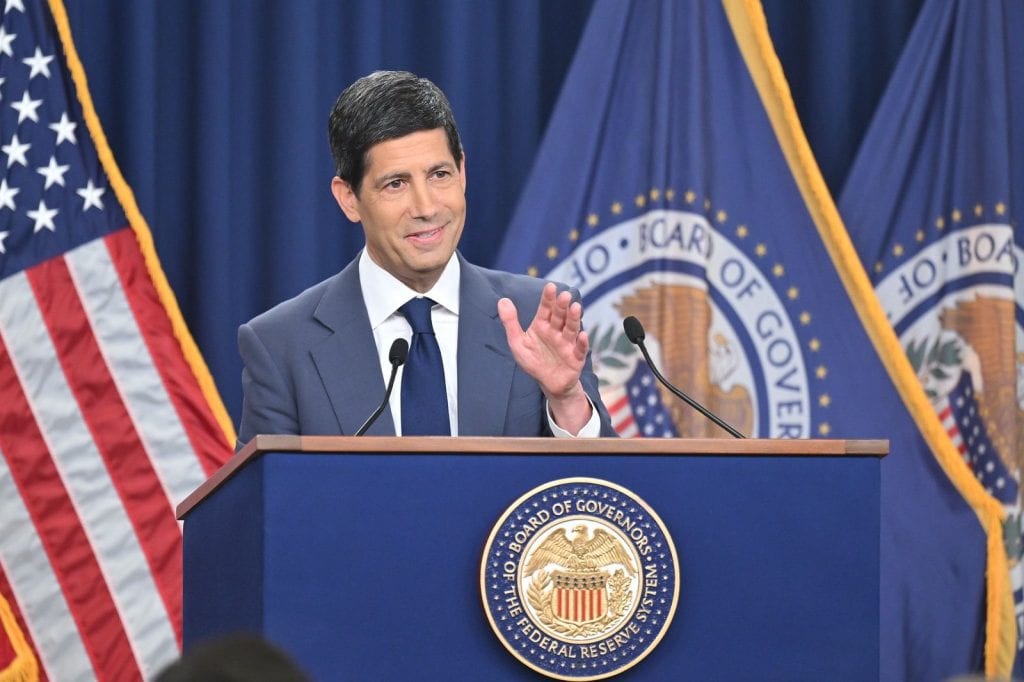
Image source: Official Federal Reserve Photo.
Before today’s inflation reading was released, Fed Governor Christopher Waller said he was leaning toward a quarter-point hike. But if core CPI came in around 0.3% again, he said the Fed should consider going a half point. It did just that.
While the market is still betting a quarter-point hike is what the Fed will go with in December, the odds of a half-point raise spiked 11.1% today according to FedWatch.
Higher rates put pressure on AI data center borrowing
With further rate hikes likely and sticky inflation keeping longer-term bond yields elevated — the 10-year U.S. Treasury was up more than 13 basis points today — borrowing costs for companies are rising.
Lenders have already been asking for a bigger premium on debt from companies involved in the AI data center build-out. That’s not likely to change after today’s numbers. Expensive borrowing puts a strain on the capital flowing through the system, and if yields get too high, companies may rein in spending. That wouldn’t be good for a stock market historically concentrated in a single theme — AI — that needs historic levels of investment to thrive.
Should you buy stock in S&P 500 Index right now?
Before you buy stock in S&P 500 Index, consider this:
The Motley Fool Stock Advisor analyst team just identified what they believe are the 10 best stocks for investors to buy now… and S&P 500 Index wasn’t one of them. The 10 stocks that made the cut could produce monster returns in the coming years.
Consider when Netflix made this list on December 17, 2004… if you invested $1,000 at the time of our recommendation, you’d have $344,878!* Or when Nvidia made this list on April 15, 2005… if you invested $1,000 at the time of our recommendation, you’d have $1,097,846!*
Now, it’s worth noting Stock Advisor’s total average return is 852% — a market-crushing outperformance compared to 208% for the S&P 500. Don’t miss the latest top 10 list, available with Stock Advisor, and join an investing community built by individual investors for individual investors.
See the 10 stocks »
*Stock Advisor returns as of November 10, 2026.
Johnny Rice has no position in any of the stocks mentioned. The Motley Fool has no position in any of the stocks mentioned. The Motley Fool has a disclosure policy.