Key Points
-
Tesla’s operating income has dropped every year since peaking at $13.7 billion in 2022.
-
Shares trade at around 380 times earnings after their latest slide.
-
Even compared with Tesla’s best year, the stock costs almost 100 times earnings.
-
Tesla (NASDAQ:TSLA) stock fell about 10% on Thursday, Nov. 5, as shares of CEO Elon Musk’s companies continued to slip after Tuesday’s midterm elections. Democrats won control of Congress after Musk spent almost half a billion dollars backing Republican candidates.
That puts shares of the EV maker near $346 as of this writing, about 29% below the record $489.88 close the stock set on Dec. 16, 2025.
Missed Nvidia in 2009? This Rare Signal Is Flashing Again. In 2009, a “Double Down” signal flashed for a little-known chipmaker called Nvidia. For the first time in years, that same “Total Conviction” signal is flashing for a company 1/100th the size of Nvidia. Continue »
A drop that big can look like a discount. But Tesla’s earnings have been falling even faster than its stock price.
When shares traded around $380 after Tesla’s third-quarter results in October, I said I wouldn’t buy them yet. I wanted to see operating income grow without one-time help, and a number showing what Tesla earns per paid Robotaxi mile. Neither has arrived, so a lower price alone doesn’t change that call.
Shrinking profits
Showing how far Tesla’s earnings power has fallen, operating income (what the company earns before interest and taxes) peaked at $13.7 billion in 2022. It then dropped to $8.9 billion in 2023, $7.1 billion in 2024, and $4.4 billion in 2025. For the four quarters through September 2026, it totaled around $3.5 billion — about a quarter of the 2022 peak. Tesla’s operating margin (the share of revenue left as operating profit) shrank from about 17% in 2022 to 4.6% in 2025, and it slid to just 2.6% in the third quarter of this year.
Earnings per share took the same path. Tesla earned $3.62 per share in 2022. Its 2023 figure of $4.30 looks higher, but it included a one-time, non-cash tax benefit of $5.93 billion. Without the benefit, 2023’s earnings would have been around $2.60 per share, so 2022 is still Tesla’s best year by far.
After that, earnings per share slid to $2.04 in 2024 and $1.08 in 2025. And in the past four reported quarters, Tesla earned only about $0.91 per share, down about 16% from its 2025 total.
That’s why the stock’s 29% drop hasn’t made it cheap. At around $346, Tesla trades at about 380 times earnings.
Even its best year isn’t enough
Let’s say Tesla’s profits rose all the way back to their 2022 level. Its diluted share count (the number of shares used to calculate earnings per share) is about the same now as it was then, so that would mean earnings of about $3.62 per share. Even then, today’s price would come to about 96 times those earnings.
For comparison, Tesla’s stock closed 2022 at around $123, or about 34 times that year’s earnings. Put another way, the share price now is almost three times that level, while the business earns about a quarter as much per share.
That gap is the biggest reason I’m still not interested in the stock at this price.
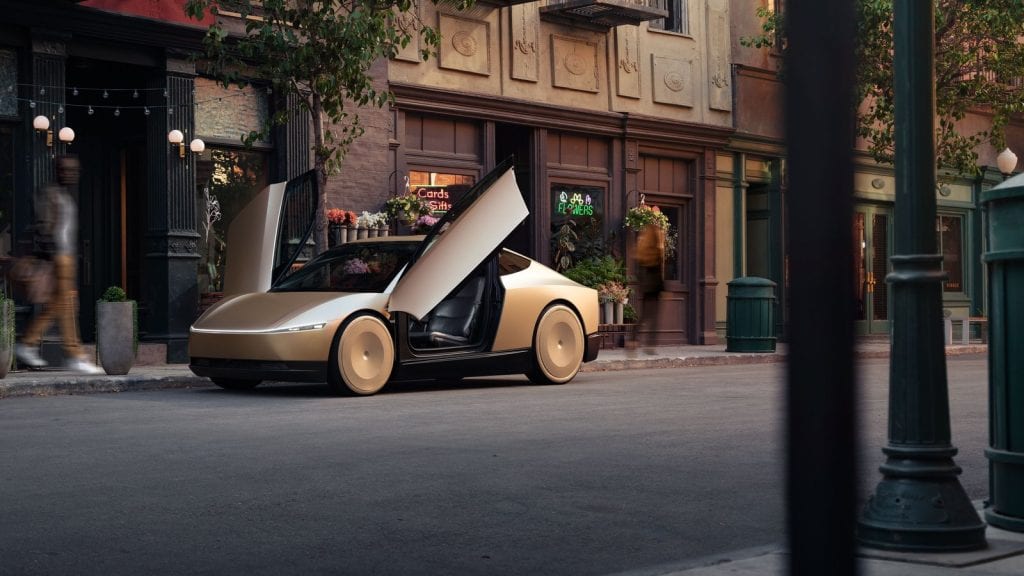
Sure, investors aren’t paying for the auto business alone. Tesla started giving Robotaxi rides in its purpose-built Cybercab in Austin on Sept. 3, and cumulative unsupervised Robotaxi miles rose eightfold from the second quarter to the third.
Also, Tesla finished September with $45.4 billion in cash and short-term investments. So it can afford to keep spending a lot on these projects.
But the spending is coming well ahead of the profits. Research and development expenses climbed 69% year over year in the third quarter to $2.8 billion, helping drive total operating expenses up 39%. These costs are a big reason operating income dropped 56% year over year in the period, even with revenue roughly flat at $28 billion.
Tesla is also spending a lot more on data centers, factories, and its fleet of company-run vehicles. Its capital expenditures more than doubled to $13 billion in the first nine months of 2026. And the company expects capital expenditures above $20 billion for all of 2026. Much of that spending could further weigh on profits, as it will show up as depreciation in the coming years.
Time to buy?
I don’t think a 29% drop is enough to make Tesla stock a buy.
Sure, Tesla could well turn Robotaxi into a big, profitable business over time. But at about 380 times earnings, and almost 100 times its best year’s earnings, the stock arguably already bakes in much of that success while profits are still going the wrong way.
I’d want to see operating income start rising back toward its 2022 level before paying anywhere near today’s price. At roughly $346, I think Tesla stock still costs far more than the underlying earnings justify.
Missed AI’s “Act 1”? Act 2 Could Be 14x Bigger
Most investors think they missed the AI boat because they didn’t buy Nvidia in 2005.
But according to our analysts, we’re only at the end of “Act 1″—the R&D phase. “Act 2” is the global rollout, a massive technology build-out that Google’s CEO says could be more profound than fire or electricity.
While everyone watches the chip designers, one “backbone” company provides the critical technology that Nvidia and AMD literally cannot function without. We’ve detailed this under-the-radar player in our new AI Playbook.
Continue »
Daniel Sparks has clients with positions in Tesla. The Motley Fool has positions in and recommends Tesla. The Motley Fool has a disclosure policy.