Key Points
-
At today’s FOMC meeting, the Fed kept interest rates unchanged.
-
This was the widely expected outcome among analysts and prediction markets alike.
-
The impact of the unchanged rate on the market is expected to be minimal.
-
A December hike is now seen as very likely.
-
No news is usually good news when it comes to the Federal Reserve’s interest rate decisions, and no news was exactly what the market received today.
The Federal Reserve voted 10-2 to hold its benchmark interest rate steady at 3.75%-4%. This was widely expected, with prediction markets putting the odds of a hold at over 90%.
Missed Nvidia in 2009? This Rare Signal Is Flashing Again. In 2009, a “Double Down” signal flashed for a little-known chipmaker called Nvidia. For the first time in years, that same “Total Conviction” signal is flashing for a company 1/100th the size of Nvidia. Continue »
The outcome was such a foregone conclusion that markets reacted with a yawn. The S&P 500 Index rose less than 0.5% in the wake of the announcement, while the Dow Jones Industrial Average and the Nasdaq Composite were up by smaller amounts. The yield on the 10-year Treasury bond increased by about 1%.
But now that the suspense (what little there was) is over, attention has turned to what’s next, and that paints a very different picture for the markets.
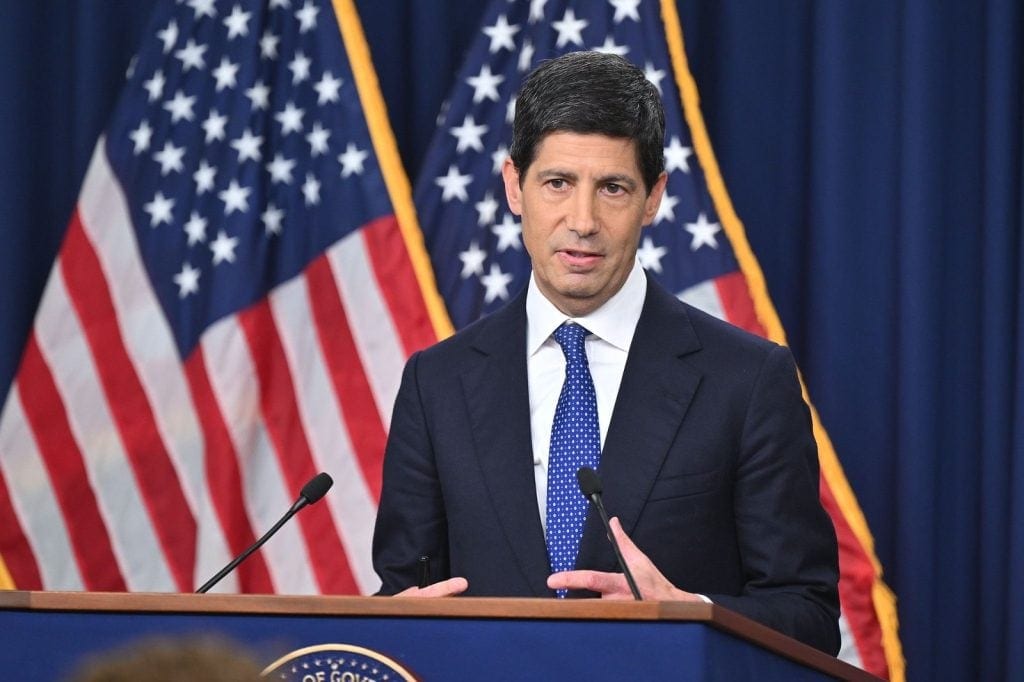
Kevin Warsh. Image source: Official Federal Reserve Photo.
The little differences
After every Federal Open Market Committee (FOMC) meeting, the Fed releases a brief statement with the results of the 12-member committee’s vote and a few short sentences of explanation. If the vote wasn’t unanimous, the dissenters are usually identified and given an opportunity to state the outcome they would have preferred.
Today’s statement was nearly identical to the statement issued after last month’s Fed meeting, at which the FOMC raised its benchmark rate by a quarter-percent to the range of 3.75% to 4%. There were literally only four changes, including the alteration of “raise” to “maintain” that rate.
The second change is that current economic activity is described as expanding at a “strong” pace rather than a “solid” pace, as it was in September, indicating the Fed believes growth numbers have improved. The rest of the description of the economy remained identical to September’s: “While uncertainty remains elevated owing, in part, to geopolitical developments, domestic spending has been resilient. Productivity growth is strong, and capital investment is robust. Job gains have kept pace with the workforce, and the unemployment rate has changed little.”

Image source: Getty Images.
But perhaps the most telling change was the removal of the phrase, “Today’s policy action will support a timelier return to the Committee’s 2 percent goal.” It was replaced with the more cautious language, “The accumulation of more information will help the Committee determine the policy stance appropriate to ensure a timely return of inflation to the Committee’s 2 percent goal.”
The final difference was that while September’s decision was unanimous, today’s decision had two dissenters, Lisa D. Cook and Beth M. Hammack. They indicated they would have preferred to raise the target range by a quarter percentage point.
What it means for the market… and the midterms
If the Fed had raised rates today, the market likely would have reacted negatively, given how unexpected it would have been. With Election Day just around the corner, such a drop might have affected voter sentiment. However, maintaining the status quo is unlikely to move the needle one way or the other.
That said, analysts are now expecting a rate hike at the Fed’s December meeting.
Of the 100 economists polled by Reuters last week about the likelihood of interest rates, 94 correctly expected rates to stay the same this month. But all 100 anticipated a hike at the Dec. 9 meeting. Prediction markets are also strongly favoring a December hike.
That might help tame the bond markets, which are concerned about inflation. But it could be an unwelcome Christmas gift for stock investors, particularly those invested in companies with high debt levels.
Should you buy stock in S&P 500 Index right now?
Before you buy stock in S&P 500 Index, consider this:
The Motley Fool Stock Advisor analyst team just identified what they believe are the 10 best stocks for investors to buy now… and S&P 500 Index wasn’t one of them. The 10 stocks that made the cut could produce monster returns in the coming years.
Consider when Netflix made this list on December 17, 2004… if you invested $1,000 at the time of our recommendation, you’d have $337,166!* Or when Nvidia made this list on April 15, 2005… if you invested $1,000 at the time of our recommendation, you’d have $1,339,143!*
Now, it’s worth noting Stock Advisor’s total average return is 904% — a market-crushing outperformance compared to 213% for the S&P 500. Don’t miss the latest top 10 list, available with Stock Advisor, and join an investing community built by individual investors for individual investors.
See the 10 stocks »
*Stock Advisor returns as of October 28, 2026.
John Bromels has no position in any of the stocks mentioned. The Motley Fool has no position in any of the stocks mentioned. The Motley Fool has a disclosure policy.