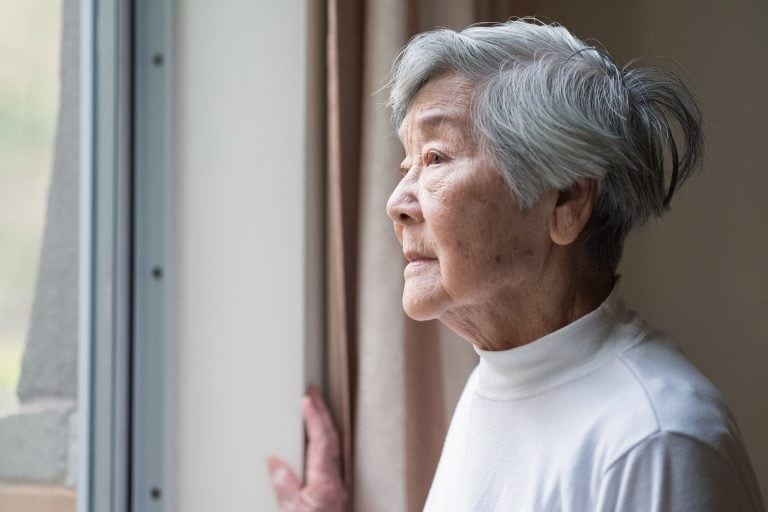
By Fritz Gilbert, originally published at The Retirement Manifesto.
I get a guest-post pitch almost every day and decline about 99.5% of them. This one got through because of a single line in the email:
“15.3 million American seniors now live alone, up 32% in a decade.”
Justin Lindholm, who runs The Canny Vulture, mined U.S. Census data to unearth that number. A second line from his email stayed with me too: “7.4 million people over 65 report serious difficulty doing errands on their own.”
Both numbers point to something I believe: even happily married couples will, in most cases, end up with one spouse on their own, and it’s better to plan while we still can.
Based on his unique research, I agreed to let Justin share his thoughts in the following guest post, The Reality of Living Alone in Retirement. Here’s Justin…
The Reality of Living Alone in Retirement
Guest post by Justin Lindholm
A person can manage a house alone right up until they can’t.
That sentence has been in my head for months, ever since I started pulling Census data on how older Americans live. Most writing about retirement assumes a couple: two incomes winding down, two Social Security checks, two people splitting the errands. For a large and growing share of the country, that picture doesn’t fit.
15,314,180 people aged 65 and over live alone in the United States.
Here’s what that counts. The Census Bureau’s American Community Survey tracks households with someone 65 or older and separates those where that person is the only resident. Summed up across all 3,222 counties, that totals 15.3 million people. Ten years ago the same table showed about 11.6 million.
That’s growth of 32% in a decade.
Some of that is the boomer wave moving through, so the number of seniors is rising, too. Whatever the cause, every one of those households handles its own cooking, bills, medication schedule, and 2 a.m. trip to the bathroom with nobody down the hall.
Where Living Alone is The Norm
The national rate hides how uneven this is.
In the District of Columbia, 50.7% of senior households are one person. North Dakota sits at 44.9%, and Ohio, Iowa, Wyoming, and Nebraska all clear 41%. The Plains and the Midwest dominate the top of the table. The data can’t tell us why, but a likely story is that adult children move to cities for work, parents keep the house, and a surviving spouse stays where the house is paid off and the town is home.
At the other end, Hawaii has the lowest share at 28.3%, with California and Utah close behind. Multigenerational housing likely plays a role, and so may cost: when a one-bedroom apartment gets expensive enough, moving in with family becomes arithmetic more than preference.
The growth map tells a different story, and this surprised me. The fastest increases over the decade came in Alaska (up 75.2%, from a small base), then Wyoming, Nevada, New Mexico, and Arizona, all up roughly 50%. Some of these are retirement destinations, and one possible explanation is that couples who moved there in their sixties are now fifteen years older. Nevada’s sunniest marketing photos never show it, but the number of seniors living alone there grew by half in ten years.
For raw scale, California has 1.35 million seniors living alone, Florida 1.16 million, New York just over a million, and Texas about 981,000. Those four states hold about 30% of the total, though they are also the four most populous.
The Second Number That Matters
Living alone is not a problem by itself. Plenty of people in that 15.3 million are thriving, and the research on
independence and wellbeing cuts both ways.
The number that worries me is a different one.
7,430,081 people over 65 report what the Census calls an independent living difficulty: trouble doing errands alone, such as getting to a doctor’s appointment or the grocery store. That’s 13.2% of the over-65 population.
The obvious move would be to combine the two figures and announce how many people live alone with a difficulty. I won’t, and I’d be suspicious of anyone who does. The Census doesn’t publish the overlap between living arrangement and disability status at the county level, so nobody knows how many of the 15.3 million are also in the 7.4 million. We checked whether the arithmetic forces a minimum overlap, and it doesn’t.
What we can say is that both groups are large and the second is exactly the population for whom living alone stops working.
The decline usually arrives on a slope.
- Errands go first.
- Driving at night gets uncomfortable; driving in general follows later.
- The person who managed fine last year needs a ride this year
- The year after that, they need someone to notice the fridge is empty.
If nobody lives down the hall, noticing falls to whoever calls most often. The “until they can’t” moment is usually the bottom of a slope nobody was watching.
One County Line Apart
When my team mapped this county by county, one contrast stuck with me. Multnomah County, Oregon, which
contains Portland, has 44.2% of its senior households living alone. Clackamas County, immediately south,
suburban, sharing a border, sits more than ten points lower. Same metro area, same weather, same hospitals.
The difference is housing stock, income, and who moved where in 1985.
The lesson for anyone planning is that national averages tell you less than you’d think. Your county has its own number, and it’s probably not the one in the headlines. The full state and county tables are in the Census data, and the state gaps are wide enough to change decisions.
What I’d Do With This if I Were Planning
I spend my days in this data, and it has changed how I think about the later chapters of retirement in three ways.
Start the conversation early. Embrace Age Prepared surveyed 62 healthcare professionals who guide families through senior care decisions, and the finding that stayed with me is how often families wait until a fall or a hospital stay forces the choice. At that point, the options are whatever has a bed available this week. The families with good outcomes talked about care years before they needed it, while the person at the center of the decision could still drive the conversation.
Take an honest look at the house while you’re still strong. The paid-off house is the emotional center of most retirement plans, and it can quietly become a liability when stairs, gutters, and half an acre of yard outlast your knees. I’m not telling anyone to sell. The data show millions of people managing houses alone, and I’d rather see people choose their situation on purpose than arrive there by default.
Treat distance as a plan. The states with the fastest growth in seniors living alone are the states people retire to, so parents often end up far from their kids. That trade can be worth it, because sunshine and cost of living matter. But if the plan has you 1,800 miles from every person who would notice a problem, it deserves the same scrutiny as the withdrawal rate.
None of this argues against living alone.
Independence is the point of retirement, and 15.3 million people are proving it can work. What the data argues against is drifting into age 82 without ever having decided anything. The people who worry me didn’t choose solitude. They got there one small unexamined step at a time, and their families will make every decision in a hospital hallway.
A person can manage a house alone right up until they can’t. The question worth answering is what happens the day after that.
Start the conversation now.
While you still can.
Your Turn: Have you incorporated living alone into your retirement plans? How are you planning to address the potential difficulties? If you’re currently living alone, do you have plans for the future? Let’s share our thoughts in the comments…
Data in this piece comes from the U.S. Census Bureau’s American Community Survey 2024 and 2014 five-year
estimates, tables B11007 and B18107, compiled across 3,222 counties by Embrace Age Prepared
(https://embraceageprepared.com/the-geography-of-aging-alone-in-oregon/). The survey of healthcare
professionals is at https://embraceageprepared.com/why-senior-care-decisions-break-down-a-survey-of-62-
healthcare-professionals/.
The post The Reality of Living Alone in Retirement appeared first on The Retirement Manifesto.
Fritz Gilbert writes at The Retirement Manifesto. Read this article on their site.