Key Points
-
Australia’s retirement system requires employers to divert a portion of employees’ income to retirement accounts.
-
This could increase retirement readiness, but it would likely reduce your take-home pay.
-
It’s not clear that this type of system will gain any traction in the U.S.
Retirement was once supposed to be a time of relaxation and reward after a long career, but it’s increasingly become a time of stress and poverty as seniors manage rising costs on dwindling incomes. There are several reasons for this, including expenses growing faster than wages and Social Security’s buying power slowly eroding over time. Many workers also don’t have access to a retirement plan through their jobs.
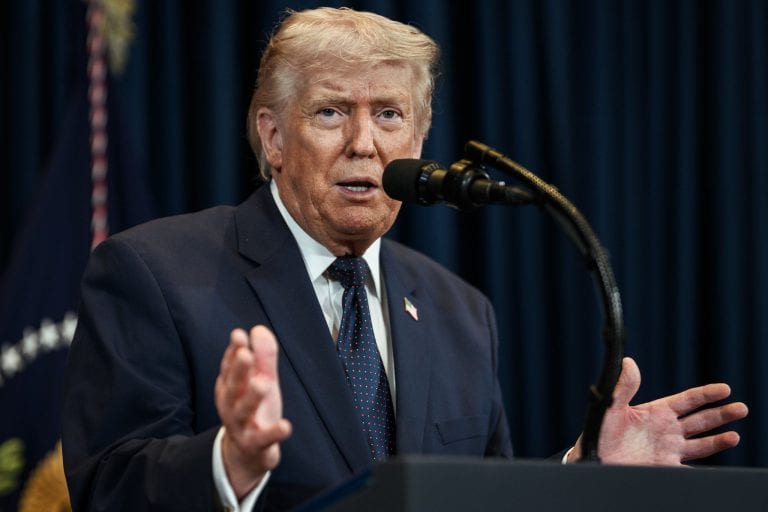
The Trump administration has been exploring ways to help Americans retire more comfortably, and one idea the president floated last month was offering new retirement accounts modeled after Australia’s retirement system. Here’s what that could look like — the good and the bad.
Missed Nvidia in 2009? This Rare Signal Is Flashing Again. In 2009, a “Double Down” signal flashed for a little-known chipmaker called Nvidia. For the first time in years, that same “Total Conviction” signal is flashing for a company 1/100th the size of Nvidia. Continue »
Image source: The White House.
How an Australia-inspired retirement account could help savers
Australia’s retirement system includes a “Superannuation Guarantee” program. Basically, employers are required to withhold 12% of workers’ pay and place it in tax-advantaged retirement accounts where it’s invested until the person reaches age 65, or as young as 60 if they have stopped working by then. It’s essentially a forced savings program. Workers don’t have to think about saving money for their future because their employers do it for them.
A program like this could substantially increase the retirement savings available to a worker by the time they reach 65, compared to the current system, in which Americans save voluntarily and sometimes not at all if they can’t afford it. But whether it’s enough to retire comfortably on depends on factors like the person’s salary, the return on their investments, and what kind of lifestyle they envision in retirement.
There’s also a hidden drawback to this type of approach that could prove devastating to workers. If the government adopted Australia’s system and required all employers to put 12% of employees’ pay into retirement accounts for them, most employers aren’t just going to give all of their employees a 12% raise and eat the losses themselves. That money will come out of employees’ paychecks, leaving them with less cash in the present to fund their current expenses.
That could be a problem if you’re already struggling to cover your bills on the income you have today. However, if such a system were to take effect, it might not happen all at once. The mandatory retirement contribution might start small and increase over several years, giving you time to get used to the new system.
It’s only an idea for now
While the Trump administration is looking into whether Australia-inspired retirement accounts could work for the U.S., there are no concrete plans to make this a reality yet. So there’s no reason to panic if you’re worried about how this move could affect your finances.
For now, focus on saving what you can, and remember to increase your retirement contributions whenever you get a raise.
The $23,760 Social Security bonus most retirees completely overlook
If you’re like most Americans, you’re a few years (or more) behind on your retirement savings. But a handful of little-known “Social Security secrets” could help ensure a boost in your retirement income.
One easy trick could pay you as much as $23,760 more… each year! Once you learn how to maximize your Social Security benefits, we think you could retire confidently with the peace of mind we’re all after. Join Stock Advisor to learn more about these strategies.
View the “Social Security secrets” »
The Motley Fool has a disclosure policy.