Key Points
-
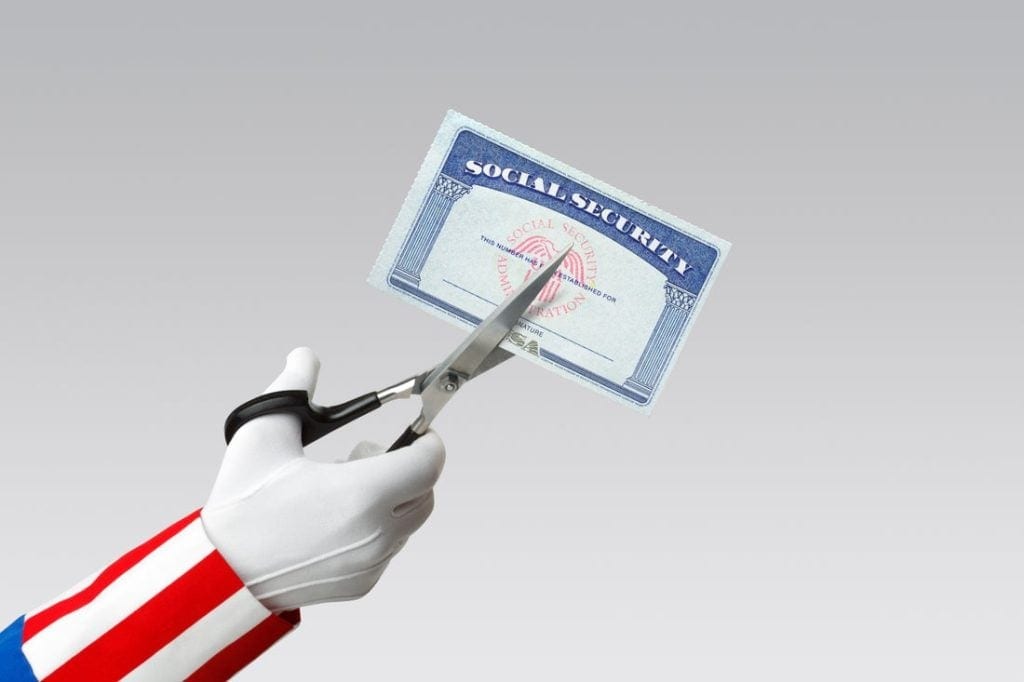
Claiming Social Security at age 62 rather than 67 means receiving 30% less for the rest of your life.
-
But keep in mind that taking a claim now doesn’t insulate you from any future cuts.
-
Claiming early isn’t always a bad decision; there are exceptions.
In a blog post dated June 11, 2026, financial guru Suze Orman discusses a trend she’s seen on social media. According to Orman, there’s been chatter that people are better off claiming Social Security as early as possible — at age 62 — rather than waiting to claim larger benefits.
While there are valid reasons a person may decide to make an early claim, like a serious illness that will lead to a shortened life, here are four points she would like others to consider before making a final decision.
Missed Nvidia in 2009? This Rare Signal Is Flashing Again. In 2009, a “Double Down” signal flashed for a little-known chipmaker called Nvidia. For the first time in years, that same “Total Conviction” signal is flashing for a company 1/100th the size of Nvidia. Continue »
1. It’s a 30% penalty you can never undo
Full retirement age (FRA) for those born in 1960 or later is 67, and it’s when you’re entitled to 100% of your Social Security benefit. If you choose to claim benefits at 62 instead, you receive just 70% of the amount you would have received at 67.
For example, a $2,000 benefit at FRA would be $1,400 at age 62.
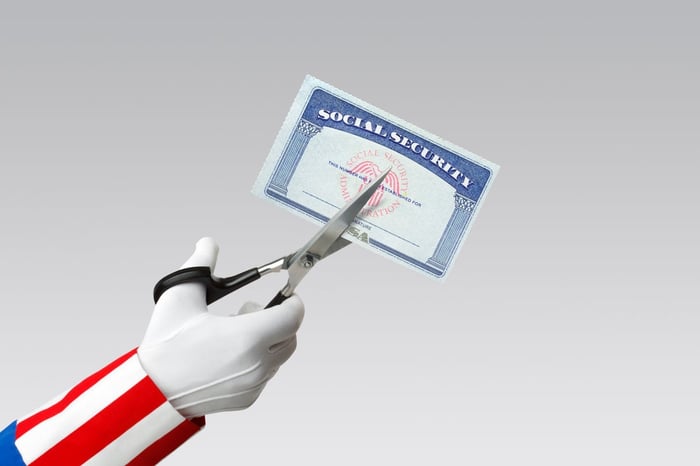
Image source: Getty Images.
2. You may be thinking about break-even the wrong way
Early claimers talk about the “break-even age.” They argue that if you begin collecting benefits at 62 instead of 67, you have years to bank or invest those payments. And, if you wait until age 67 to begin collecting, it will take until around age 79 to catch up with the total amount collected by the person who made their claim early.
Rather than thinking about waiting as a gamble, Orman suggests looking at waiting as insurance against the possibility that you’ll live a long time. And if you do live a long time, there will still be bills to pay.
3. No protection from benefit cuts
One argument is that you should claim as early as possible because Social Security may not be able to pay full benefits after 2032 unless Congress acts. While Orman admits the fear is understandable, she doesn’t believe it holds up to reason.
Imagine two people, each due a monthly Social Security benefit of $2,000 at age 67. Because one of them decided to claim at 62 instead, they’re receiving 30% less, or $1,400 per month. Now, consider what would happen if Social Security were only able to pay 80% of benefits. While the early claimers’ checks would be cut to $1,120 per month, the check for the person who waited would be $1,600.
Orman also reminds followers that this isn’t the first time Congress has faced a shortage issue. In 1983, it developed a set of solutions to shore up the Social Security system without beneficiaries losing benefits.
4. Waiting may provide an important financial gift
If you’re able to put off your claim until age 70, you’ll receive the largest Social Security benefit you’re eligible to have. This matters if you’re married because when one spouse dies, the spouse who’s left receives the larger of your two benefits.
Whether you’re the one left or your partner, deciding to wait can be an important financial gift when it’s needed most.
The $23,760 Social Security bonus most retirees completely overlook
If you’re like most Americans, you’re a few years (or more) behind on your retirement savings. But a handful of little-known “Social Security secrets” could help ensure a boost in your retirement income.
One easy trick could pay you as much as $23,760 more… each year! Once you learn how to maximize your Social Security benefits, we think you could retire confidently with the peace of mind we’re all after. Join Stock Advisor to learn more about these strategies.
View the “Social Security secrets” »
The Motley Fool has a disclosure policy.