Key Points
-
The government may increase Social Security payroll tax rates to avoid a 22% benefit cut in six years.
-
The payroll tax rate could increase by nearly 5% to avoid cuts.
-
Washington could use other strategies to reduce the necessary payroll tax increase.
Social Security is in a tight spot right now. But when you’re decades away from becoming eligible for benefits, it can feel like the program’s current struggles won’t affect you, at least not for a while. The reality is more complicated.
Washington is unlikely to stand by and allow benefits to drop by 22% in 2032, as the latest Trustees’ Report predicted. Instead, it’ll look to increase income to the program, and hiking payroll taxes is a likely possibility that could leave workers in a financial bind just a few years from now.
Where to invest $1,000 right now? Our analyst team just revealed what they believe are the 10 best stocks to buy right now, when you join Stock Advisor. See the stocks »
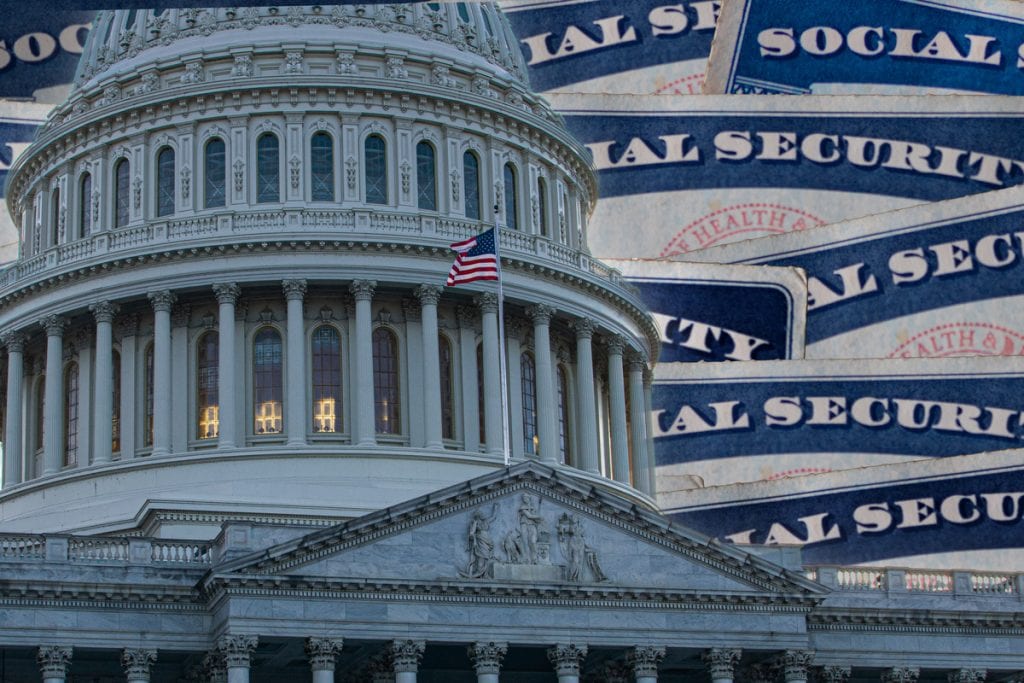
Image source: Getty Images.
The Social Security payroll tax rate could rise by nearly 5 percentage points
Currently, the Social Security payroll tax rate is 12.4%, split evenly between employee and employer. Self-employed individuals pay the full amount themselves. But it’s looking likely that this rate will increase in the future.
Forcing workers to pay more into the program would help it minimize or avoid benefit cuts. But how much the payroll tax rate would increase and when this would occur depends a lot on what Washington decides.
If it enacted a payroll tax increase in 2026, rates would jump from 12.4% to 16.65%, assuming the goal was to eliminate the entire funding shortfall in one move. The longer Congress waits to act, the bigger the increase will be, though. Put it off until 2034, and the necessary increase jumps from 4.25 to 4.9 percentage points. That would make the new rate 17.30%. But the news isn’t quite as bad as it would first appear.
Why it may not be as bad as it seems
Traditionally employed workers wouldn’t shoulder this entire burden on their own. They only pay half the Social Security payroll tax rate on their own. So they would only see their portion rise by 2.13 to 2.45 percentage points.
And it might not even be that bad. Raising the payroll tax rate isn’t the only strategy for fixing the shortfall.
The government might also decide to raise benefit taxes on seniors, to raise the full retirement age (FRA), or to raise the cap on wages subject to Social Security payroll taxes ($184,500 in 2026). It may also do a combination of these things.
Any of these moves would lessen the necessary payroll tax rate increase. But it’s still likely to go up a little in the future. It’s important to save as much as you can for retirement on your own.
When the government announces a strategy to fix Social Security, you’ll probably need to update your retirement plan to account for the changes. This might mean adjusting your savings rate or changing when you plan to retire. Making these alterations as soon as possible will give you the best chance at retiring comfortably.
The $23,760 Social Security bonus most retirees completely overlook
If you’re like most Americans, you’re a few years (or more) behind on your retirement savings. But a handful of little-known “Social Security secrets” could help ensure a boost in your retirement income.
One easy trick could pay you as much as $23,760 more… each year! Once you learn how to maximize your Social Security benefits, we think you could retire confidently with the peace of mind we’re all after. Join Stock Advisor to learn more about these strategies.
View the “Social Security secrets” »
The Motley Fool has a disclosure policy.